
If you were sitting across the desk from me here in my Georgia office, I’d probably start this conversation the same way I always do—with a sigh and a half-smile. General Bill of Sale Georgia questions usually come from people who thought the document was “just paperwork” until something went wrong.
Here’s the reality, and I say this as someone who has handled real vehicle transfers, title disputes, DMV delays, and private-party sales across Georgia for years: a General Bill of Sale Georgia is a written legal record that proves a sale took place, identifies the buyer and seller, and documents the transfer of personal property. It sounds simple—but in practice, it’s one of the most misunderstood documents I deal with.
“Most bill of sale problems don’t start with bad intentions. They start with people assuming a template alone will protect them.”
I’ve seen people download a generic form, scribble a few names, and walk away thinking they’re covered. Sometimes they are. Sometimes they absolutely are not—and that’s usually when they end up sitting in my office, frustrated and confused.
So let me explain how a General Bill of Sale actually works in Georgia—not theory, not internet checklists, but what I’ve personally seen go right, go wrong, and cost people far more time and stress than they expected.
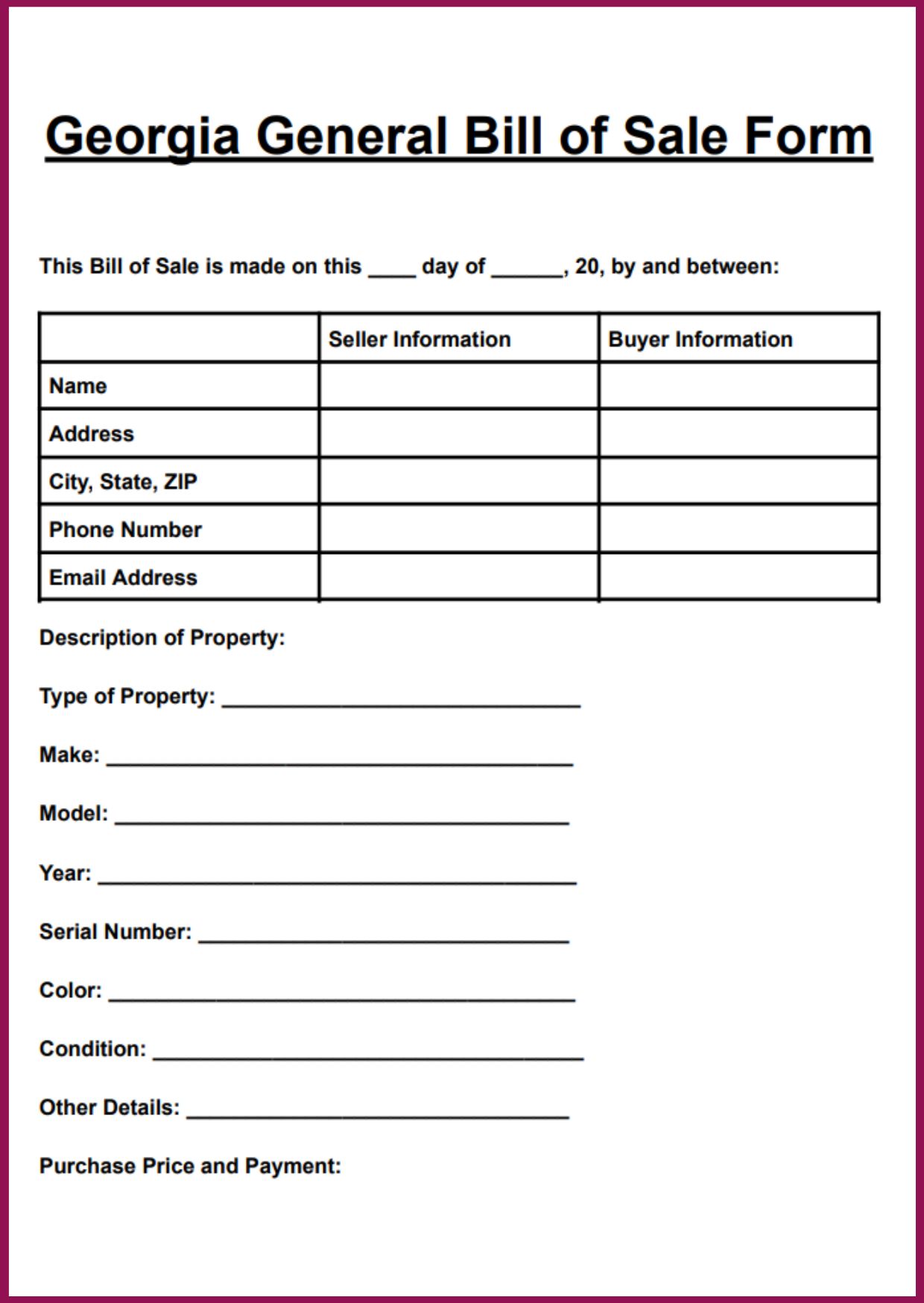
Free Printable General Bill of Sale Georgia Template
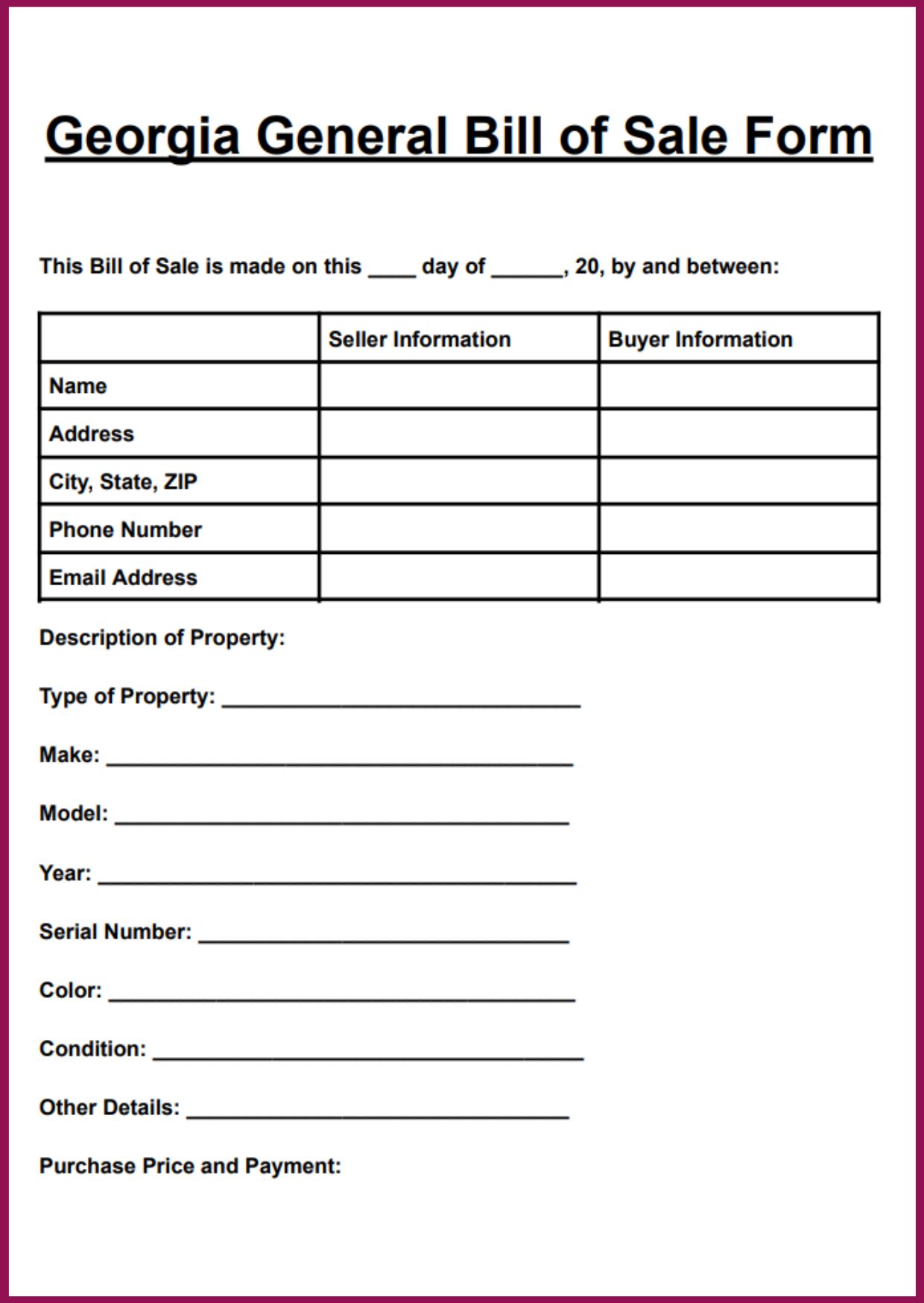
In my Georgia practice, this is the document people ask me for most often. A General Bill of Sale Georgia template is usually needed when someone wants quick, written proof that a private sale took place—without complicated legal language or unnecessary forms. I’ve seen it used for everything from furniture and tools to equipment and personal property. When done correctly, it can be a very useful record. When rushed or vague, it can become almost meaningless.
What I always tell clients is this: a printable template is only as good as the information you put into it. Full legal names, a clear description of the item, the exact sale date, and the purchase price matter far more than people expect. If there’s ever a disagreement later, that clarity is what protects you. For your convenience, I’ve added this free printable General Bill of Sale Georgia template in both PDF format and Word format, so you can download and use it easily.
Firearm General Bill of Sale Georgia
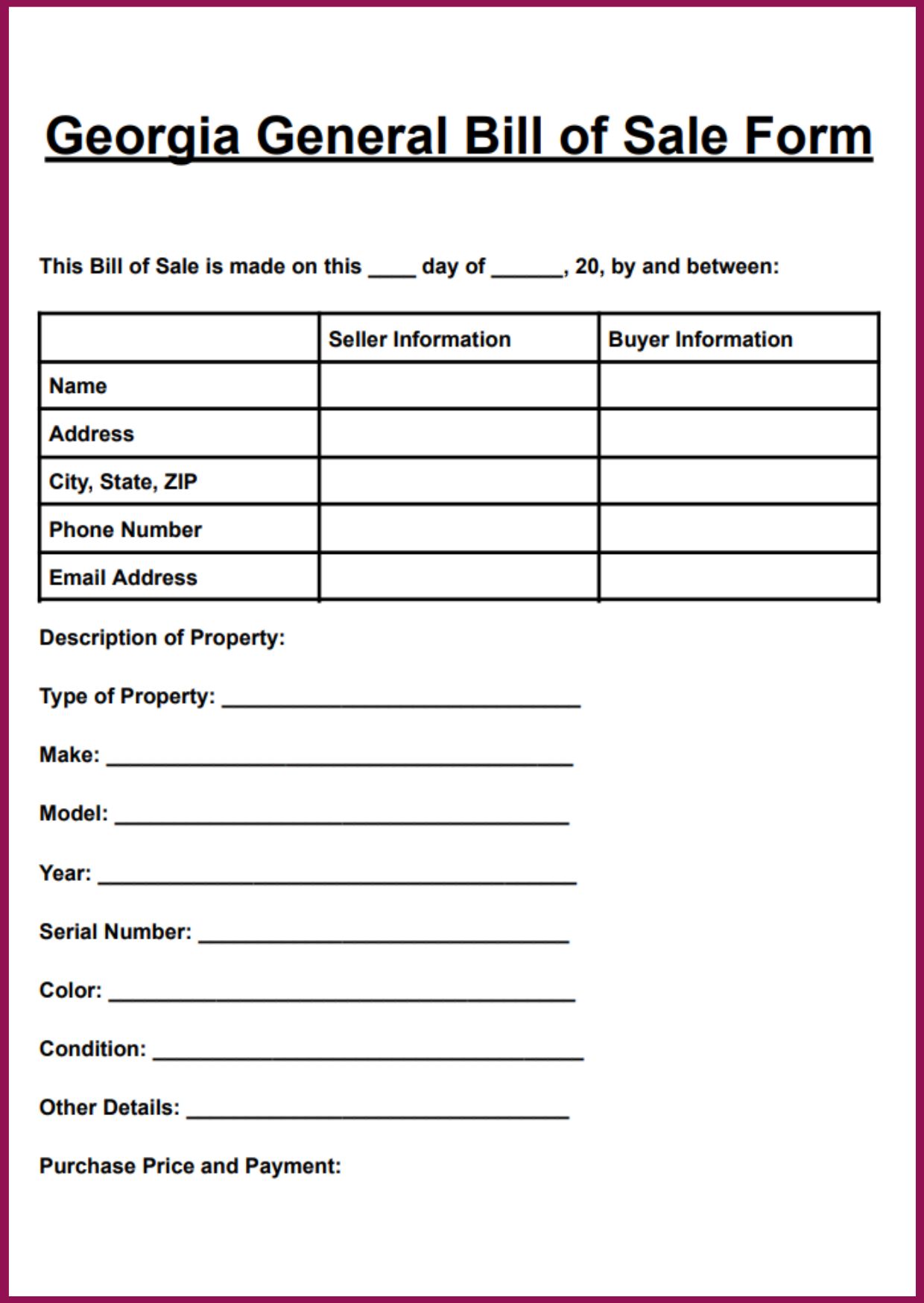
Firearm sales are where I see people get nervous—and honestly, they should. In Georgia, private firearm sales are legal, but that does not mean they should be handled casually. I’ve advised many clients who wanted a firearm general bill of sale Georgia document because they wanted a clear paper trail showing the transfer was lawful and intentional. That instinct is absolutely right.
In my experience, a firearm bill of sale should be more detailed than a standard one. You want precise identification of the firearm, clear buyer and seller information, and a firm sale date. While the bill of sale doesn’t replace background check laws or federal requirements, it does create a written record that can matter greatly later. To make this easier, I’ve included the firearm general bill of sale Georgia in both PDF and Word format, which you can download directly and complete properly.
Georgia General Bill of Sale Rules Most People Learn Too Late
| Topic / Issue | Georgia Legal Rule | Governing Statute |
|---|---|---|
| Jurisdiction & Controlling Law | General bills of sale involving personal property and goods in Georgia are governed under Georgia’s Commercial Code sales provisions. | O.C.G.A. Title 11, Article 2 |
| Statute of Frauds | A written and signed bill of sale is legally required when personal property or goods are sold for $500 or more. | O.C.G.A. § 11-2-201 |
| Execution Formalities | Georgia does not require witnesses for a general bill of sale transferring personal property or goods. | No statutory requirement; governed by general contract law. |
| Notary Public Requirements | Georgia does not require notarization for a general personal property bill of sale. | No statutory requirement; governed by general contract law. |
| Electronic Execution | Electronic signatures and digital bills of sale carry the same legal validity as paper contracts in Georgia. | O.C.G.A. § 10-12-7 |
| Passage of Title | Unless the parties agree otherwise in writing, ownership transfers when the seller physically delivers the property to the buyer. | O.C.G.A. § 11-2-401 |
| Conspicuous Warranty Disclaimer Rule | Georgia requires highly visible “AS IS” or “WITH ALL FAULTS” wording to properly disclaim implied warranties. | O.C.G.A. § 11-2-316(2) & § 11-2-316(3)(a) |
| Filing & Registration Requirements | General bills of sale remain private contracts and are not filed with Georgia state agencies or county courts. | No state registration requirement exists under Georgia law. |
| Void Title on Stolen Property | A bill of sale cannot transfer valid ownership of stolen property, even to a good-faith buyer. | O.C.G.A. § 11-2-403 |
| Judicial Striking for Unconscionability | Georgia courts may refuse to enforce a bill of sale or strike unfair contract terms deemed unconscionable. | O.C.G.A. § 11-2-302 |
| Felony Falsification of Material Facts | Knowingly falsifying transaction details, identities, or prices on a bill of sale may constitute a felony offense. | O.C.G.A. § 16-10-20 |
One of the most important Georgia rules people overlook is the $500 threshold under the Statute of Frauds. Once a sale crosses that amount, a written and signed bill of sale becomes legally important if a dispute happens later. I’ve seen people rely on text messages or verbal agreements, only to realize they had very little proof once money or ownership was challenged.
The stolen-property rule surprises people too. Many buyers assume that if they paid honestly, they automatically own the item legally. Georgia law does not work that way. If the property was stolen originally, the rightful owner can still reclaim it, and the buyer may lose both the property and the money paid for it.
The “AS IS” language matters more than most sellers realize as well. Without a clear warranty disclaimer, buyers sometimes argue that promises were made about the condition or quality of the item after the sale.
To avoid those kinds of problems, download the free Georgia General Bill of Sale template and document the transaction properly from the start.
Georgia General Bill of Sale PDF
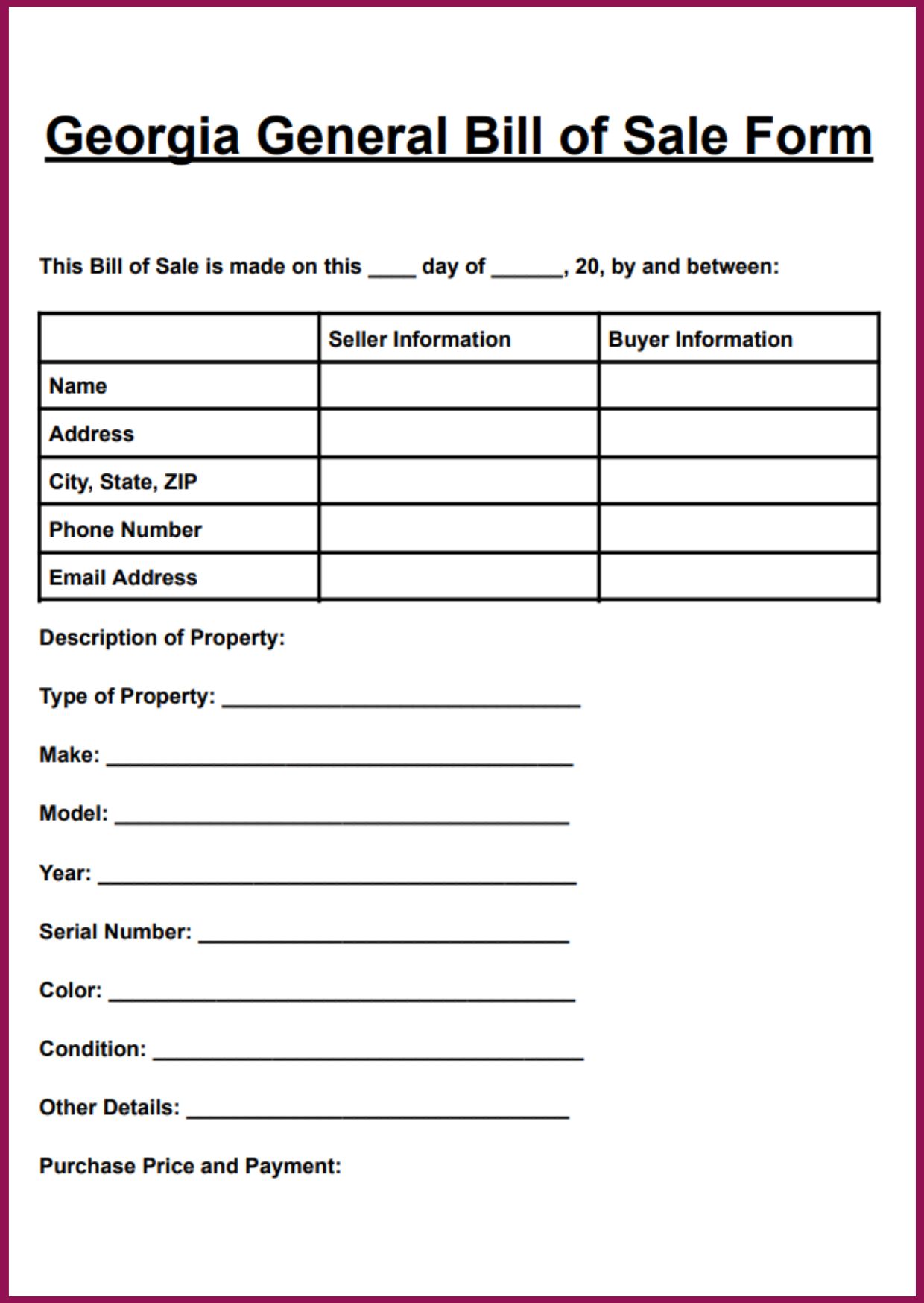
Some people prefer digital documents, and I completely understand why. A Georgia General Bill of Sale PDF is often requested by clients who want something clean, printable, and easy to store for records. I’ve seen PDFs used successfully when they’re filled out carefully and saved properly—especially when both parties keep copies.
That said, I always remind people that the format doesn’t matter nearly as much as the content. A PDF with missing details is no better than a handwritten note. Accuracy and completeness are what give the document weight if questions ever come up. To help with that, I’ve made the Georgia General Bill of Sale available in both PDF format and Word format, so you can download, edit, and store it in the way that works best for you.
Get PDF
What a General Bill of Sale Really Does in Georgia
In plain terms, a General Bill of Sale is proof that a transaction happened. It shows who sold what to whom, for how much, and when. That’s it.
Here’s where people get tripped up:
In Georgia, a bill of sale does not automatically transfer ownership for everything. Especially vehicles.
I’ve had clients come in furious because they “sold the car months ago,” yet parking tickets, toll violations, or even accident notices are still landing in their mailbox. When I ask for the paperwork, I get handed a handwritten bill of sale on notebook paper—with no title transfer done at the county tag office.
That bill of sale didn’t protect them the way they thought it would.
When a General Bill of Sale Works Well (And When It Doesn’t)
In my experience, a general bill of sale works best for things like:
Personal property (furniture, equipment, tools)
Private sales of non-titled items
Situations where you need proof of payment or transfer
Where it doesn’t work alone:
Motor vehicles
Boats
Trailers
Anything requiring a Georgia title or registration
For vehicles, Georgia still expects the title to be properly signed and submitted, along with the MV-1 Title/Tag Application at your local county tag office. I strongly prefer clients treat the bill of sale as supporting evidence, not the main event.
The Georgia-Specific Details People Miss
This is where my real-world cases usually start.
1. Not Listing the Exact Vehicle Details
I’ve seen bills of sale that say “blue Honda.” That’s not enough.
Personally, I always insist on:
Full VIN
Year, make, and model
Exact sale date
Purchase price (even if it’s $1)
When something goes wrong later, those details matter more than people realize.
2. Forgetting the Date (Yes, Really)
It sounds minor, but I’ve handled disputes where the date determined tax responsibility or liability. No date means arguments. Arguments mean stress—and sometimes legal fees that cost more than the item sold.
3. Assuming Notarization Is Always Required
In Georgia, a general bill of sale usually does not need to be notarized. That said—here’s my opinion after years in practice—I prefer notarization anyway, especially for vehicles or higher-value items. It shuts down a lot of “that’s not my signature” nonsense before it ever starts.
A Realistic Scenario I See All the Time
Someone sells a car privately. They sign the title, hand over the keys, and write up a quick bill of sale. The buyer promises to “handle the tag stuff next week.”
Three months later, my client gets a letter about unpaid ad valorem taxes—or worse, an accident report.
What went wrong?
The seller didn’t go with the buyer to the county tag office. In Georgia, until that title transfer is properly processed, the state still sees the seller as connected to that vehicle.
What I’ve learned is simple: trust is not a legal strategy.
What I Personally Recommend (After Seeing the Fallout)
If you’re selling something using a General Bill of Sale in Georgia, here’s how I’d handle it myself:
Be specific. Vagueness causes disputes.
Match names exactly to IDs.
Keep copies—digital and paper.
For vehicles, treat the bill of sale as backup, not protection.
Whenever possible, complete transfers at the county tag office together.
Is it more effort? Yes.
Does it save headaches later? Almost always.
Legal Reality Check
I’ll say this the same way I say it to clients: I’m not giving you personalized legal advice through a blog post. Every situation has its quirks. But everything I’ve shared here comes from real Georgia cases, real mistakes, and real outcomes I’ve handled firsthand.
Final Thoughts From My Desk to Yours
A General Bill of Sale in Georgia can be helpful—or it can give a false sense of security. The difference usually comes down to how seriously it’s treated.
If something feels rushed, unclear, or “good enough,” that’s usually when problems show up later in my office.
If you’ve got questions, a weird situation, or just want a second set of experienced eyes on what you’re doing, feel free to reach out. And if you’ve been burned before by a bill of sale gone wrong, you’re not alone—I’ve heard that story more times than I can count.
Drop a comment, ask a question, or get in touch. I’m always happy to talk through Georgia-specific issues before they turn into bigger problems.
FAQ
Is a General Bill of Sale legally valid in Georgia?
Yes, a General Bill of Sale is legally valid in Georgia, and I’ve relied on it many times to prove that a transaction actually happened. But here’s what I always make clear to clients: it proves the sale, not automatic ownership in every situation. In real cases I’ve handled, the bill of sale helped establish dates, payment, and intent—but it didn’t replace title transfers or DMV filings where those were required.
Personally, I view a General Bill of Sale as a supporting legal document, not a magic shield. It works best when it’s detailed, properly signed, and used for the right type of property. When people try to use it as a shortcut around Georgia title laws, that’s when problems start.
Do I need to notarize a General Bill of Sale in Georgia?
Georgia law does not require notarization for a general bill of sale in most situations. That said—and this comes from years of dealing with disputes—I strongly prefer notarization whenever possible. I’ve seen too many cases where someone later claims, “That’s not my signature,” or “I never agreed to that.”
A notary doesn’t make the document more official in the eyes of the law, but it does make it much harder to challenge later. If you’re selling a vehicle, equipment, or anything valuable, notarizing the bill of sale is a simple step that can save serious headaches down the road.
Can I use a General Bill of Sale to sell a car in Georgia?
You can use a General Bill of Sale Georgia as part of a vehicle sale, but—and this is critical—it does not replace the title transfer. I’ve had clients come in shocked that they were still legally tied to a car they “sold months ago.” The problem wasn’t the bill of sale—it was that the title was never properly transferred at the county tag office.
In Georgia, the title and the MV-1 Title/Tag Application are what actually matter for ownership. The bill of sale helps document the transaction, but by itself, it won’t protect you from taxes, tickets, or liability if the buyer doesn’t follow through.
What information should always be included in a Georgia General Bill of Sale?
From my experience, the most effective General Bill of Sale Georgia documents all include the same basics—done correctly. That means full legal names, clear property description, exact sale date, purchase price, and signatures from both parties. For vehicles, I always insist on including the full VIN, even if it’s also on the title.
What I’ve learned the hard way is that vague descriptions create room for disputes. The clearer and more specific the bill of sale, the easier it is to defend later if something goes sideways. When in doubt, I always tell clients: write it as if a stranger might read it in court one day.