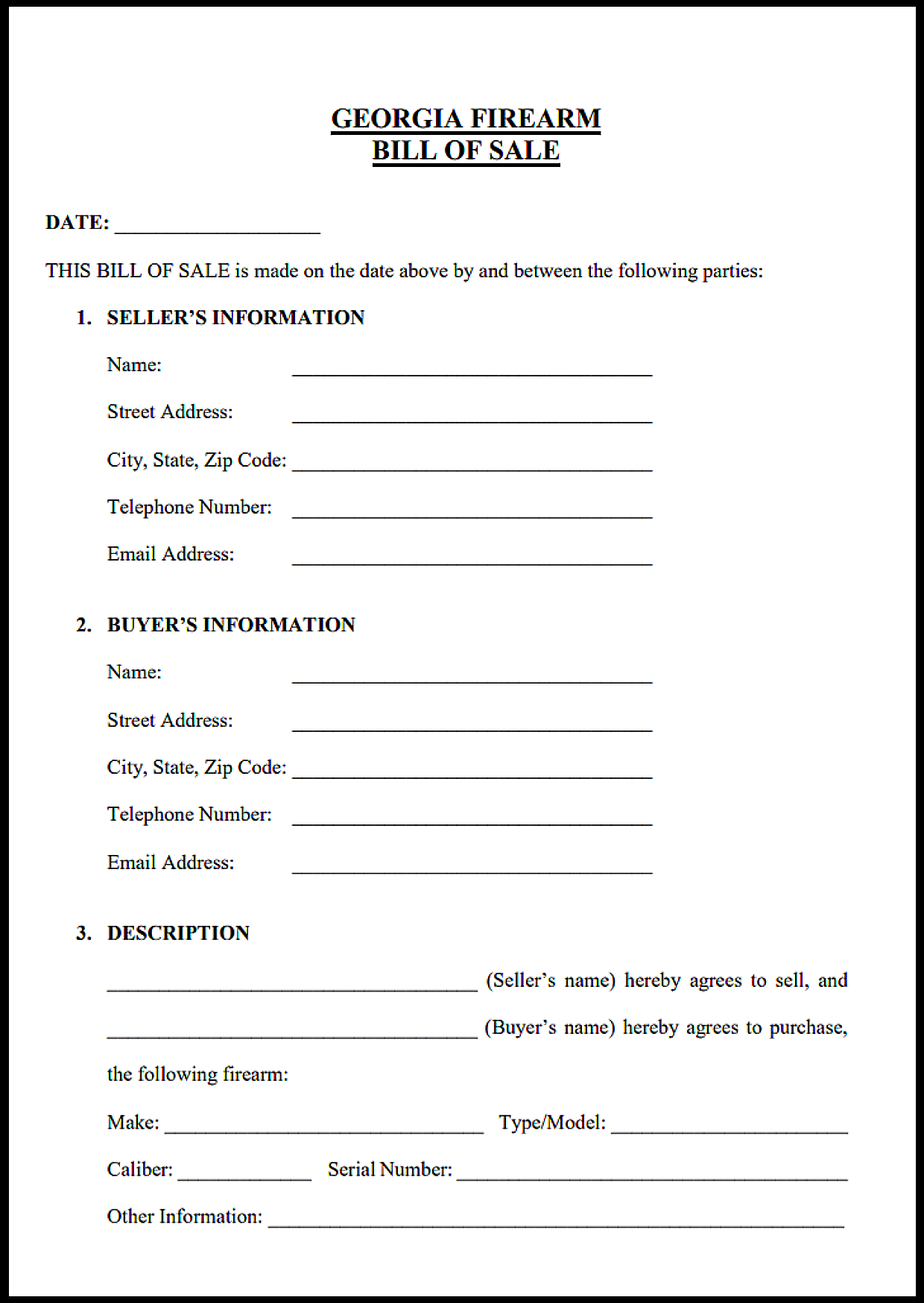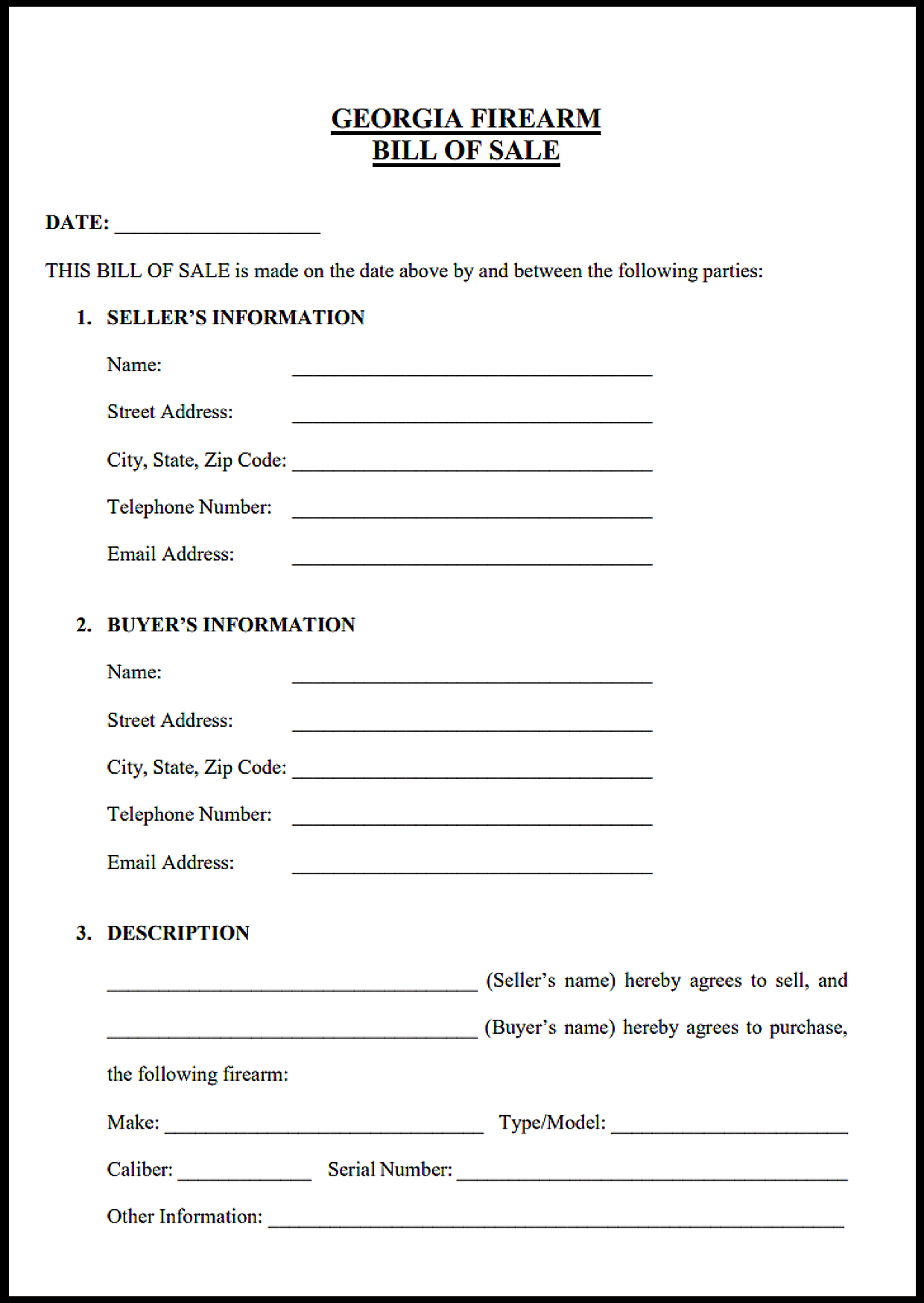
I’ve spent years as a Georgia attorney sitting across the table from folks who are nervous, confused, or just plain unsure about how to properly handle a Bill of Sale for Firearm in Georgia. And I don’t blame them — the law in our state is simple on paper, but in real life, that simplicity often tricks people into skipping the documentation that protects them later. A firearm sale isn’t just a handshake; it’s a transfer of responsibility, and the paperwork matters more than most people realize.

In my practice, I’ve helped everyone from first-time gun owners to longtime collectors, and I’ve seen what happens when a sale isn’t documented correctly. So let me walk you through this the same way I would if you were sitting in my office in Gainesville or calling me from your truck in a Walmart parking lot before meeting a buyer — because having a proper Georgia firearm bill of sale is the one thing that keeps a clean transaction from turning into a legal headache down the road. Here’s what I’ve learned after years of dealing with these cases, and why I insist on doing it the right way every single time.
Bill of Sale for Firearm in Georgia

Free Printable Firearm Bill of Sale Georgia Template
Free Printable Firearm Bill of Sale Georgia Template

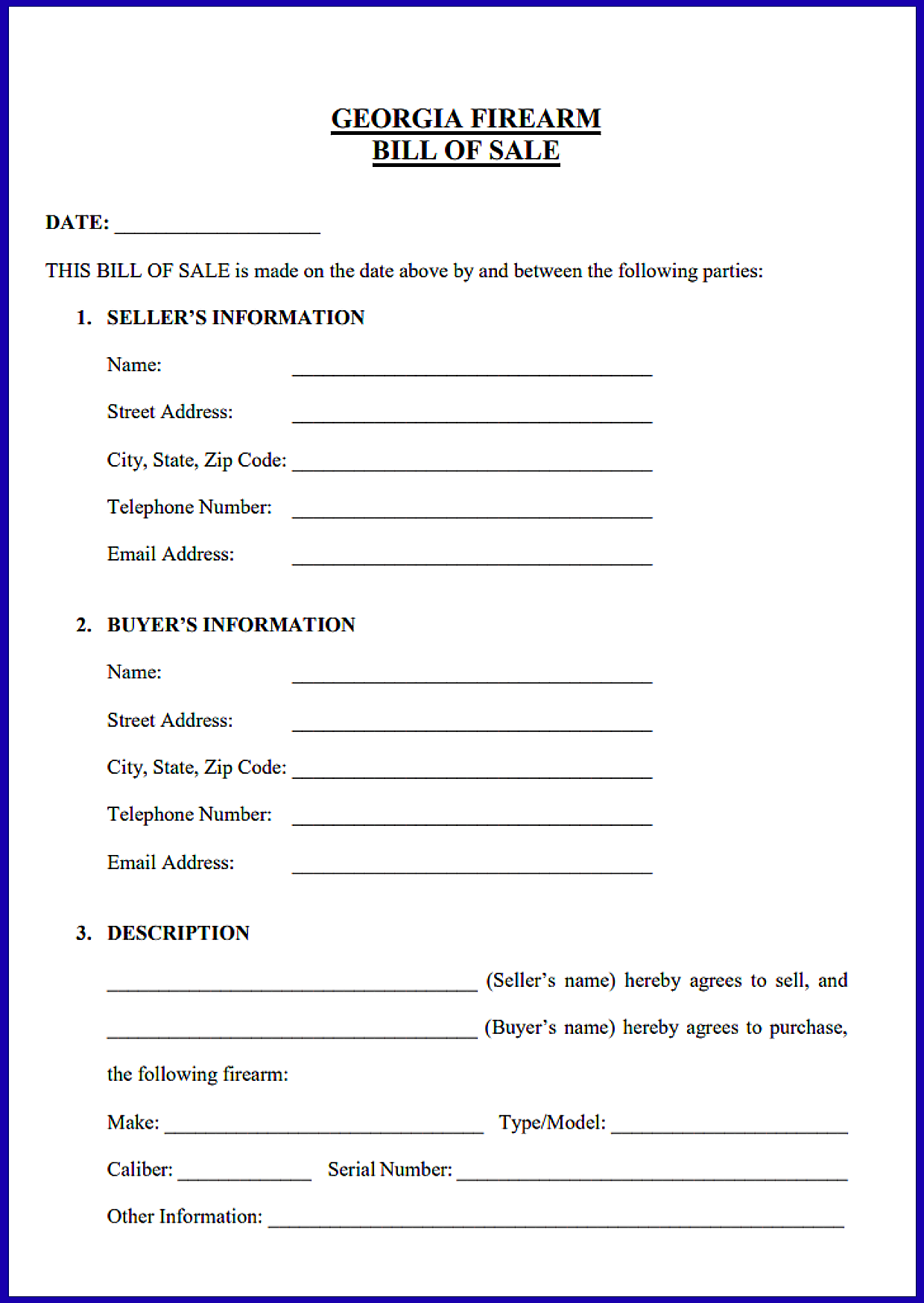
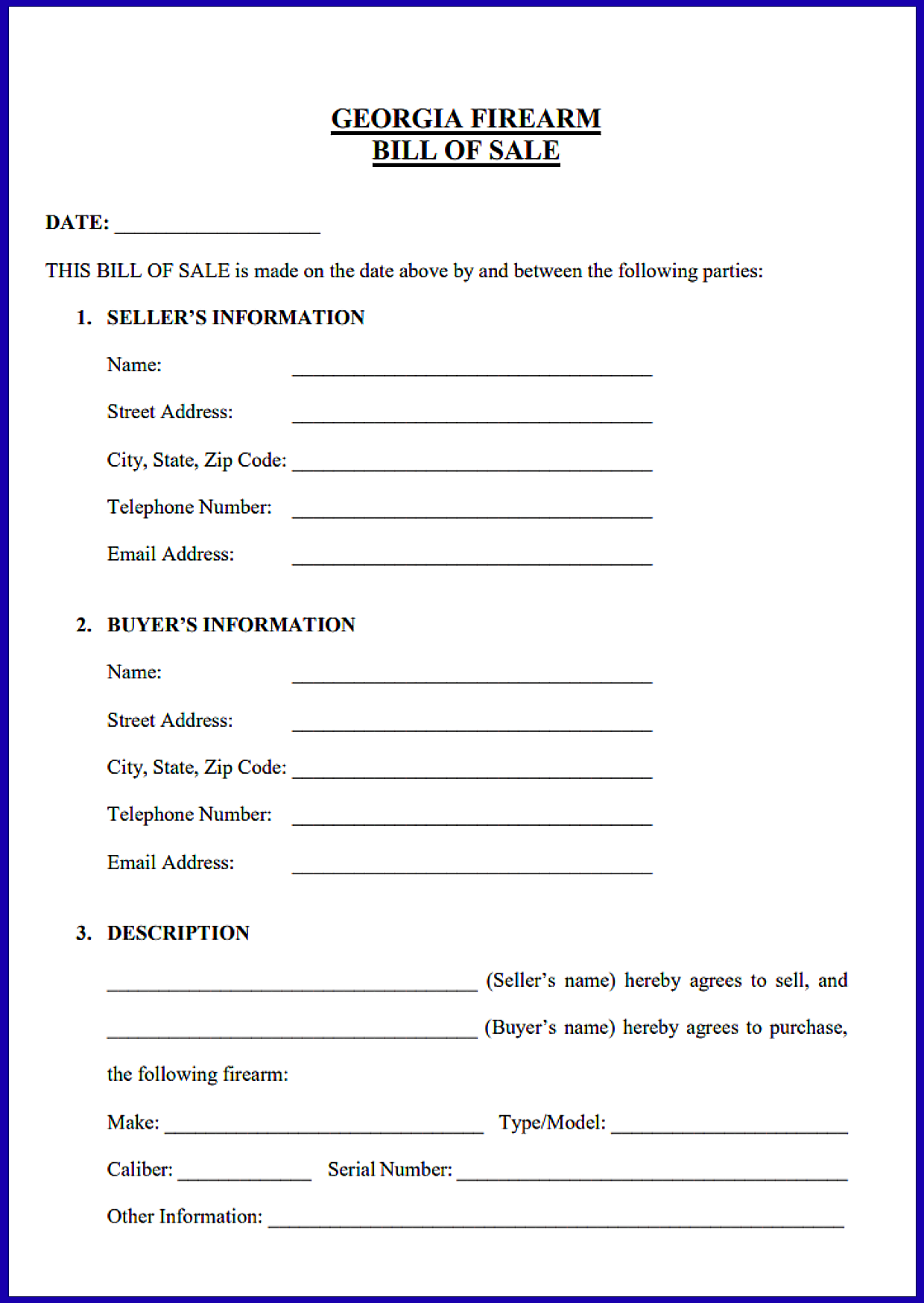
I’ve had countless folks walk into my office asking for a “simple, clean firearm bill of sale” that they can print at home without dealing with complicated legal jargon. That’s exactly why I keep a Georgia-friendly, plain-language template ready. A firearm transfer looks easy from the outside, but documenting it properly is what protects you years down the line — especially if that gun is ever questioned by law enforcement. This printable version covers the essentials I personally insist on: ID details, firearm description, and the buyer’s legal affirmation.

If you need something you can fill out quickly before meeting a buyer in a parking lot, this template does the job. It’s structured the same way I draft bills of sale for clients who want peace of mind without the legal fuss. And if you prefer digital versions, I’ve included both PDF and Word options you can grab and save for future use — whichever format fits your workflow.

Get PDF | WORD

Firearm Bill of Sale Form Georgia

Firearm Bill of Sale Form Georgia

When someone sits across from me and says, “Dale, I just want the proper form — the one lawyers actually use,” this is the version I hand them. It’s more structured and polished than the quick printable template, and it includes a couple of extra lines that help clarify the intent behind the sale. In my experience, clarity prevents disputes later. This form is perfect for sellers who want to feel absolutely confident they’ve covered themselves.

A lot of private sellers in Georgia underestimate the importance of buyer verification, so this form makes space for those details without overwhelming the page. It’s designed for repeat use too — whether you’re selling one firearm a year or a small collection. And yes, if you’d rather download it, I’ve made it available in both Word and PDF versions so you can choose the format that’s easier for you to edit or print.

Georgia Firearm Bill of Sale PDF

Some folks prefer a read-only, clean, no-nonsense PDF — especially those who don’t want formatting to shift on their computer or phone. I get it. A PDF is stable, professional looking, and hard to accidentally alter. I’ve had plenty of clients who like to keep these PDFs stored in their records, right alongside their insurance and title documents. It’s a straightforward way to keep proof of firearm transfers neatly organized.

This PDF version looks almost identical to what I use in my practice when someone needs a polished, attorney-prepared document. You can print it, save it, or send it electronically — whatever helps you maintain clear documentation. I’ve added a downloadable PDF copy right alongside a Word version, so you can use whichever format works best with your device.

Get PDF | WORD

Firearm General Bill of Sale Georgia

Firearm General Bill of Sale Georgia

This is the version I recommend for people who buy or sell multiple types of firearms — maybe a mix of handguns, rifles, shotguns, or older collectible pieces. It’s a broader, more flexible document that still captures all the critical Georgia requirements but doesn’t lock you into a single type of weapon. I’ve used this general form countless times when working with families sorting through inherited firearms or long-time collectors downsizing safely.

The general form gives you room to note condition, accessories, or any agreements about safes, ammo, or holsters included in the sale — details that matter more than people realize. If you want to keep things organized, I’ve provided this general bill of sale in both PDF format and an editable Word file, so you can choose whichever version feels easiest to complete and store.

Get PDF | WORD

Why I Always Use a Firearm Bill of Sale — Even Though Georgia Doesn’t Require It

Georgia doesn’t legally require a bill of sale for private-party firearm transfers. No registration. No mandatory form. No state-run check between two private individuals.

But in my experience?
I would never, ever complete a private firearm sale without one.

A bill of sale protects both people.

  • It proves when the firearm left your possession.

  • It documents who took responsibility for it.

  • And it gives you something solid if, three years from now, an investigator knocks and asks, “Mr. Preiser, do you still own a Glock 19 with serial number XYZ?”

I’ve had that exact scenario happen to clients. Without documentation, you’re relying on memory — and memory doesn’t hold up great under pressure.

What I Usually Include in a Georgia Firearm Bill of Sale

There’s no state-issued form (unlike the T-7 for vehicles), but over the years I’ve learned what actually matters.

These are the essentials I put in every bill of sale I draft:

  • Full legal names and addresses of both buyer and seller
    I prefer to also note the county — it’s just cleaner for future reference.

  • Driver’s license numbers
    I know some folks hesitate, but personally I insist on it. If you’re not comfortable sharing an ID with the person you’re buying a firearm from, that’s already a red flag.

  • Make, model, caliber, and serial number of the firearm
    I’ve seen people forget the serial number entirely. That defeats half the purpose of documenting the sale.

  • A clear statement that the buyer is legally allowed to own a firearm
    Something simple like:
    “Buyer affirms that they are not a felon, not prohibited from owning a firearm under federal or Georgia law, and are purchasing this firearm for lawful purposes.”

  • Signatures and date
    And yes, I prefer both parties sign two copies — one for each.

If you’ve ever read the generic templates floating around the internet, you’ll notice most of them include these pieces… but they don’t explain why they matter. In real cases, these details are what investigators, insurance adjusters, or courts look for.

The Quiet Legal Reality Most Folks Don’t Realize

A firearm bill of sale doesn’t “register” the gun.
It doesn’t go to the state.
It doesn’t create a public record.

It’s purely for your protection.

But here’s what I’ve seen repeatedly:
When something goes wrong — a stolen weapon, a disputed sale, or a buyer claiming “that wasn’t the gun you sold me” — your handwritten bill of sale becomes the most valuable piece of paper in the room.

I once had a client who sold a revolver to a coworker. No bill of sale. A month later, that same revolver turned up in a break-in. My client spent weeks untangling himself simply because he had nothing showing he no longer owned it. A simple one-page bill of sale would’ve saved him all that stress.

My Personal Rules When Meeting a Buyer or Seller in Georgia

Over the years, I’ve adopted a few practices that I strongly recommend:

  • I always meet somewhere public
    Parking lot of a police station is my favorite choice. Most departments are used to private transactions happening there.

  • I always look at the buyer’s ID, even if they’re “a friend of a friend.”
    If someone refuses to show ID, I walk away. No exceptions.

  • If anything feels off, I cancel the sale.
    The firearm marketplace attracts all types — 99% are perfectly fine people. It’s that remaining 1% you need to protect yourself from.

  • I keep my copy of the bill of sale for at least 10 years.
    That might sound excessive, but firearm issues can surface long after the sale.

Common Georgia Pitfalls I See Over and Over

These are the mistakes that bring people to my office frustrated and scared:

1. Selling to someone under 18 (for long guns) or under 21 (for handguns)
Even in private sales, you can’t legally sell a handgun to someone under 21. I’ve had to clean up situations where the seller genuinely didn’t know the rule.

2. Not checking whether the firearm was stolen
I always recommend you run the serial number through your local sheriff’s office. They’ll tell you if it’s flagged.

3. Paying cash with no documentation
And then hoping everyone’s memory stays honest. That’s not how real life works.

4. Thinking a bill of sale avoids all liability
It doesn’t cover you if you knew or reasonably suspected the buyer was prohibited from owning a firearm. Use common sense.

A Quick Word on Legal Advice

Everything I’m sharing comes from years of real-world Georgia firearm transactions, investigations, and disputes I’ve helped folks navigate. It’s general guidance — not a substitute for talking with an attorney about your specific situation. I always say: if something feels uncertain, give a lawyer a quick call before you hand over a weapon.

If You Want My Personal Template

I’ve spent years tweaking the firearm bill of sale I use. If you want a clean, trustworthy version you can fill out, just let me know — I’m happy to share one.

And if you’ve got a question about your own firearm sale, a sticky situation, or just want clarity before meeting a buyer, drop a comment or reach out. I’m always glad to help a fellow Georgian stay safe and protected.

FAQ

Do I legally need a bill of sale to sell a firearm in Georgia?

No, Georgia doesn’t legally require a bill of sale for a private firearm transfer. But in my professional experience, it’s still one of the smartest things you can do. A simple one-page document can save you from months of stress if that gun ever ends up stolen, misused, or questioned by law enforcement. I’ve seen too many people regret skipping it.

What information should I always include in a Georgia firearm bill of sale?

At minimum, I always include full names, addresses, driver’s license numbers, the firearm’s make/model/serial number, and a clear statement that the buyer is legally allowed to own a gun. These aren’t “lawyer-only” details — they’re the exact details investigators ask for when something goes wrong. I’ve been in that situation with clients more than once.

Can I ask to see the buyer’s ID before selling my firearm?

Absolutely — and personally, I insist on it. In fact, if a buyer refuses to show ID, I walk away. You’re responsible for making sure you’re not selling to someone who’s prohibited from owning a firearm. A quick look at a valid Georgia driver’s license is the simplest way to protect yourself.

Does a bill of sale register my firearm with the state of Georgia?

Not at all. Georgia has no firearm registration system. Your bill of sale stays with you — it doesn’t go to the state or the sheriff’s office. Think of it as your personal proof of when ownership ended. It’s purely for your protection, and trust me, when an officer asks “Do you still own this weapon?” you’ll be glad you have it.


Leave a Reply

Your email address will not be published. Required fields are marked *