
If you were sitting across the table from me in my Georgia office, I’d probably start this conversation with a sigh and a half-smile and say something like:
“Most bill of sale problems don’t come from bad intentions — they come from people thinking it’s just paperwork.” That misunderstanding is exactly why a Generic Bill of Sale Georgia so often turns into a legal mess later.
In simple terms, a Generic Bill of Sale Georgia is a written record that proves a private sale took place — who sold what, to whom, for how much, and on what date. In Georgia, this document often becomes the only proof of ownership transfer when questions come up with the DMV, tax office, insurance companies, or even in court. I’ve seen it used to settle disputes over vehicles, trailers, boats, firearms, and other personal property more times than I can count.
I’ve spent years handling real vehicle transfers, title disputes, and private-party sales across Georgia, and I can tell you this from experience: people underestimate this document until it’s the only thing standing between them and a serious legal problem. I’ve seen families argue over it, buyers stuck with vehicles they can’t register, and sellers dragged back into issues they thought were long behind them.
Let me walk you through this the same way I explain it to clients sitting right here in my office — plainly, honestly, and based on what actually happens in Georgia, not just what the statute says on paper.
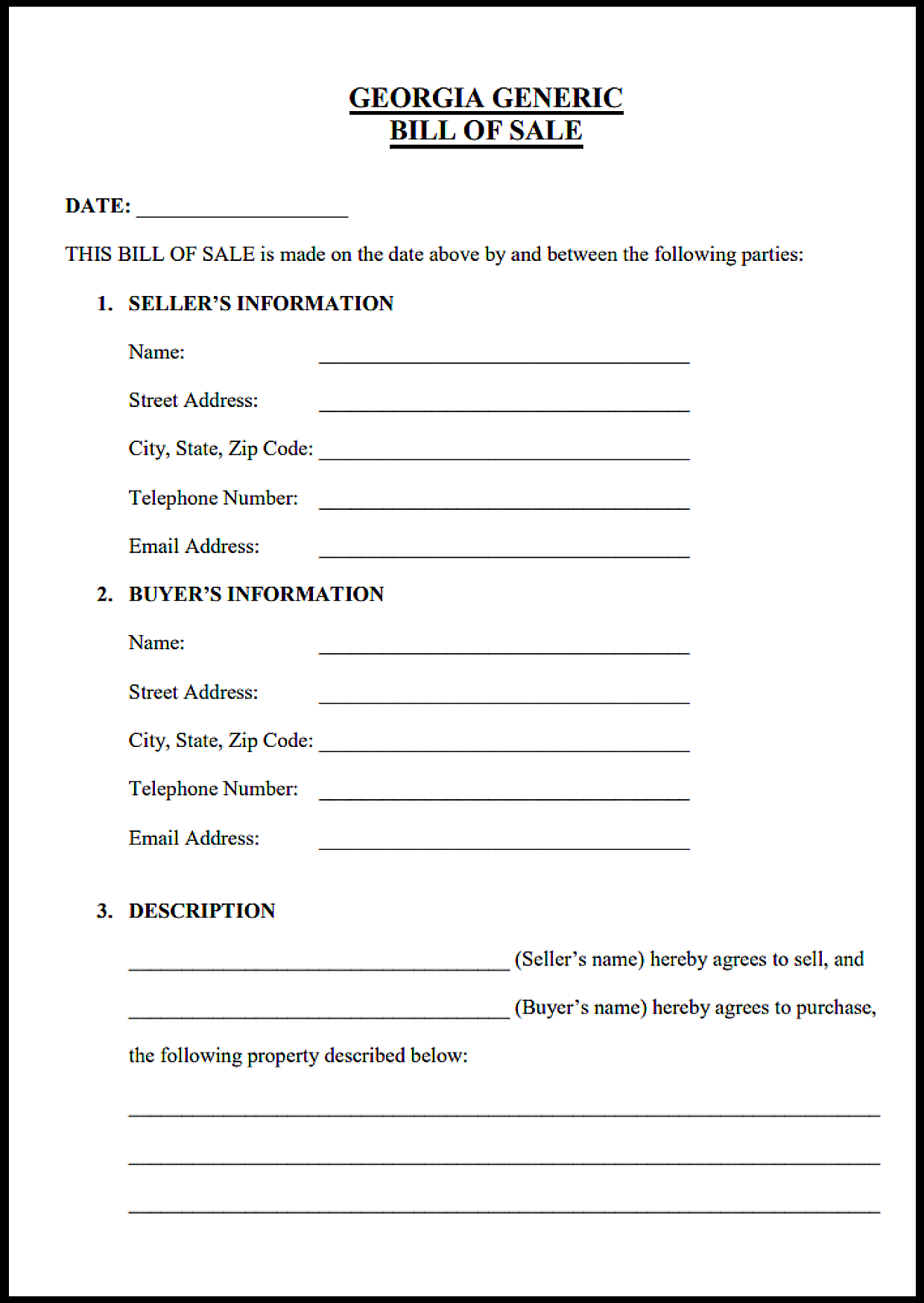
Free Printable Generic Bill of Sale Georgia Template
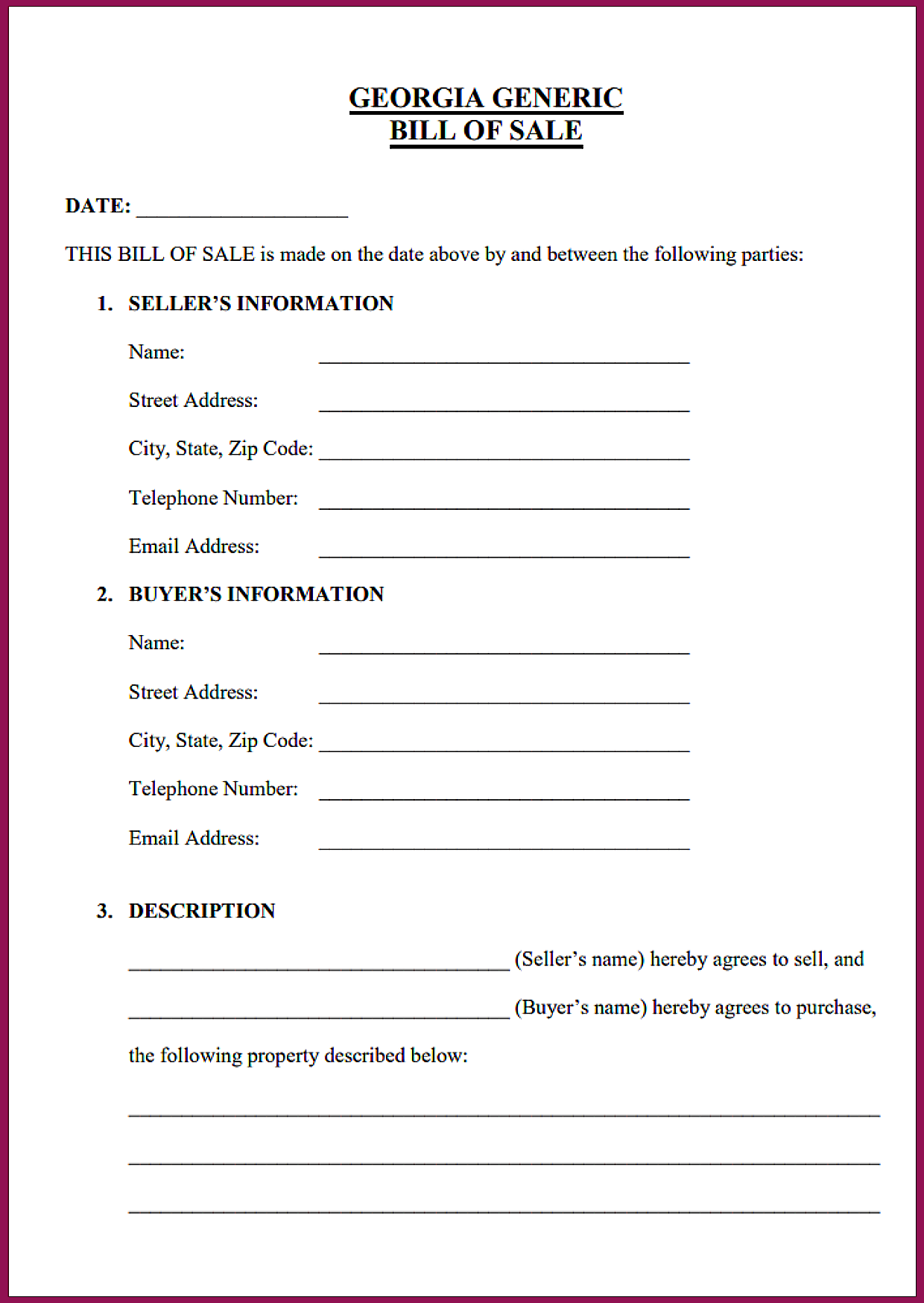
When people ask me for a “simple” bill of sale, this is usually what they’re looking for. A free printable Generic Bill of Sale Georgia template gives you a clean, no-nonsense way to document a private sale without overcomplicating things. In my practice, I’ve seen this template work well for everyday transactions — especially when people just want something clear, legally usable, and easy to understand.
That said, what matters is how you fill it out. I’ve handled disputes where the template itself was fine, but key details were missing — no date, vague descriptions, or unclear pricing. In Georgia, those small omissions are exactly what cause problems at the DMV or tax office later. Personally, I always tell clients: a simple form is fine, but it still needs to be completed carefully and honestly.
For convenience, I’ve included this Free Printable Generic Bill of Sale Georgia template in both PDF and Word formats, so you can download, fill it out, and keep a copy for your records.
Generic Bill of Sale for Car Georgia
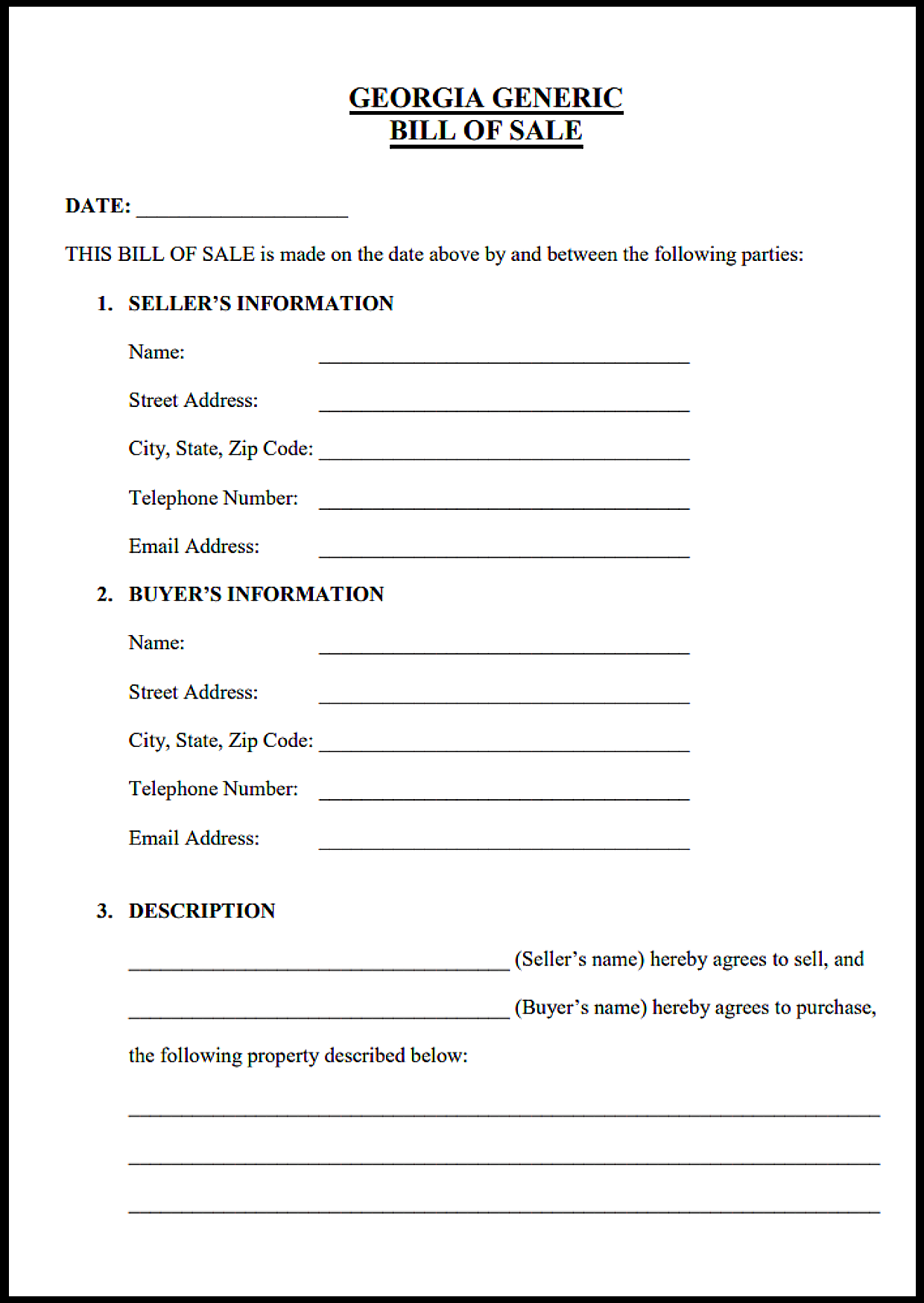
A generic bill of sale for car Georgia situations usually come up during private vehicle sales — cash deals between individuals, family transfers, or sales where no dealership is involved. I’ve worked with countless buyers and sellers who assumed the title alone was enough, only to discover later that the DMV or county office wanted proof of the actual transaction.
In real Georgia cases, this document often becomes the missing link. It helps establish the sale date, purchase price, and transfer of possession — all things that matter when taxes, registration, or liability questions arise. From my experience, including the VIN, mileage, and clear “as-is” language can prevent a lot of arguments down the road. I strongly prefer having this document even when the law doesn’t strictly demand it.
To make things easier, I’ve added a Generic Bill of Sale for Car Georgia in PDF and Word formats, which you can download and use based on your situation.
Generic Auto Bill of Sale Georgia
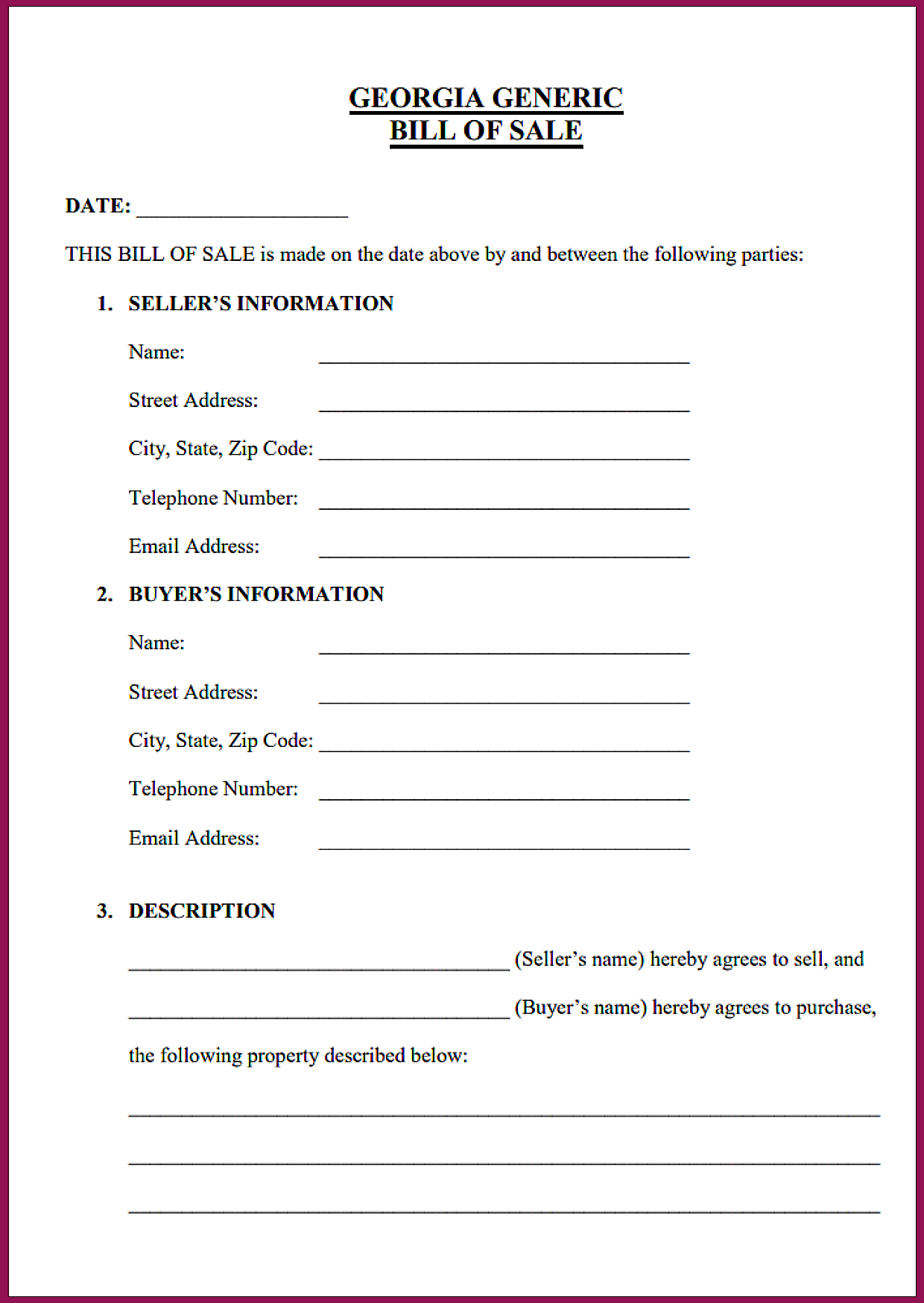
People often ask me whether there’s any real difference between a “vehicle” bill of sale and a generic auto bill of sale Georgia form. Practically speaking, this version is designed to cover automobiles broadly — cars, trucks, and similar motor vehicles — without locking you into overly technical language. I’ve seen this format work especially well for private-party sales where flexibility matters.
What I’ve learned over the years is that clarity beats complexity every time. A well-written generic auto bill of sale can help protect both buyer and seller if questions come up about ownership, taxes, or timing. Without it, I’ve watched sellers get pulled back into toll violations and buyers stuck unable to register what they paid for. That’s why I rarely let a client walk away from a private auto sale without one.
You’ll find the Generic Auto Bill of Sale Georgia available for download in both PDF and Word formats, so you can choose whichever works best for you.
Why a “Generic” Bill of Sale Still Matters in Georgia
In my experience, people hear the word generic and assume it means optional or informal. That’s where things go sideways.
Georgia doesn’t always require a bill of sale for every transaction — especially for vehicles titled after 1986 — but the moment something goes wrong, everyone suddenly wishes they had one. I’ve watched DMV clerks ask for proof of purchase, tax assessors request documentation, and insurance companies demand clarity. A simple bill of sale often becomes the only neutral evidence left.
Personally, I always recommend having one — even when the law doesn’t strictly force you to. It’s cheap protection against expensive problems.
What I’ve Seen Go Wrong Without One
Let me give you a very real scenario I’ve seen more than once.
A seller hands over a car, takes the cash, and assumes signing the title is enough. Months later, toll violations, parking tickets, or even an accident show up — and the vehicle is still tied to their name. No bill of sale means no clear proof of when possession changed hands.
On the flip side, I’ve represented buyers who paid in full but couldn’t register the vehicle because the seller disappeared, the title had an issue, or the DMV wanted confirmation of the purchase price for taxes.
That single piece of paper could have saved everyone time, money, and stress.
What a Proper Generic Bill of Sale in Georgia Should Include
I strongly prefer keeping it simple but thorough. In Georgia, a solid generic bill of sale should clearly state:
-
Full legal names and addresses of buyer and seller
-
Date of sale (this matters more than people think)
-
Description of the item being sold (vehicle, trailer, boat, firearm, equipment, etc.)
-
Sale price — even if it’s a gift or nominal amount
-
Clear “as-is” language if no warranties are intended
-
Signatures from both parties
What I’ve learned over the years is this: ambiguity causes disputes. Clear language prevents them.
If it’s a vehicle, I always include the VIN — even when someone says, “It’s already on the title.” Redundancy is not a bad thing in legal documents.
Georgia-Specific Pitfalls I See All the Time
Here’s where my Georgia clients get tripped up most often:
Undervaluing the price.
People try to write a lower sale amount to save on taxes. I’ve seen county tax offices reject registrations or reassess values anyway. Worse, it can raise fraud concerns. Personally, I don’t play games with numbers. Write what actually changed hands.
Missing dates.
That date can determine tax responsibility, liability, and even insurance coverage. Leaving it blank is asking for trouble.
Assuming the title replaces the bill of sale.
It doesn’t — especially when disputes arise. They serve different purposes.
Using a sloppy online template.
Some templates floating around don’t reflect Georgia practices at all. I’ve seen forms missing basic elements that Georgia offices expect to see.
Do You Need It Notarized in Georgia?
This question comes up in almost every meeting.
In Georgia, a bill of sale generally does not have to be notarized to be valid. That said — and this is my opinion based on years of disputes — notarization adds credibility. When things are contested later, a notarized document carries more weight.
If it’s convenient, I say do it. If it’s not, at least make sure both parties sign in each other’s presence.
A Friendly but Important Legal Reminder
I’ll say this the same way I say it to clients:
A bill of sale is not a magic shield. It doesn’t fix a bad title, hidden liens, or illegal sales. It’s one layer of protection — an important one — but not the whole structure.
If something feels off during a sale, trust that instinct. I’ve learned the hard way that rushed deals usually become expensive ones.
My Practical Advice After Years of Doing This
What I’ve seen work best is simple:
-
Write it clearly
-
Be honest with the details
-
Keep copies for both parties
-
Don’t assume “we trust each other” replaces documentation
Most of the people I help aren’t trying to do anything wrong. They’re just unaware of how fast small oversights can turn into legal problems.
Final Thoughts
I’ve sat with people who were stressed, frustrated, and confused — all over a transaction they thought was finished months ago. A Generic Bill of Sale Georgia may feel minor at the moment, but it often becomes the anchor that keeps everything else from drifting into chaos.
If you’re unsure whether your situation needs something more specific, or if you’re already dealing with a dispute, don’t ignore it. These issues rarely fix themselves.
You’re always welcome to reach out, ask questions, or leave a comment below. If nothing else, I’m happy to point you in the right direction — the same way I would if you were sitting right here across my desk.
FAQ
Is a Generic Bill of Sale legally required in Georgia?
This is one of the first questions people ask me, and the honest answer is: sometimes yes, sometimes no — but that’s not the whole story. Georgia law doesn’t always require a bill of sale for every private transaction, especially for newer titled vehicles. But in real life, I’ve seen the DMV, county tax offices, and even insurance companies ask for one when something doesn’t line up. When there’s a missing title, a valuation dispute, or confusion about transfer dates, a Generic Bill of Sale Georgia often becomes the document that fills in the gaps. Personally, I treat it as essential, even when the statute doesn’t strictly demand it.
Does a Generic Bill of Sale Georgia need to be notarized?
Legally speaking, Georgia does not require a generic bill of sale to be notarized in most situations. That said, after years of dealing with disputes, I’ll tell you this — notarization can save you a lot of arguing later. I’ve watched cases fall apart because one party claimed, “That’s not my signature.” A notary shuts that down fast. If notarizing is convenient, I strongly prefer doing it. If not, at least make sure both parties sign in each other’s presence and keep copies.
Can I use a Generic Bill of Sale Georgia for vehicles and other property?
Yes, and this is where people often get confused. A Generic Bill of Sale Georgia can be used for vehicles, trailers, boats, firearms, equipment, and other personal property sold privately. However, it does not replace a title when a title is required. I’ve seen buyers assume the bill of sale alone gives them ownership of a vehicle — only to get stuck at the tag office. The bill of sale supports the transaction, but the title still controls. Think of it as evidence, not a substitute.
What happens if I don’t use a Generic Bill of Sale in Georgia?
I’ve handled enough messes to say this plainly: skipping the bill of sale usually comes back to haunt someone. Sellers get dragged into toll violations, tax issues, or accidents months later. Buyers struggle to register or insure what they paid for. Without a Generic Bill of Sale Georgia, it becomes one person’s word against the other — and that’s never a comfortable position to be in. From my perspective, this document is cheap insurance against very expensive problems.

Dale Preiser is the Assistant Director of Legal Services at the Southern States Police Benevolent Association, where he provides legal support and counsel for law enforcement professionals facing job-related legal issues. With a strong foundation in law and public service, Dale brings years of experience working across legal and professional sectors, including law enforcement and healthcare industries. He holds a Juris Doctor degree from Oklahoma City University and previously ran a private law practice in McDonough, Georgia before joining SSPBA in 2012. Dale is also the voice behind Bill of Sale Georgia, a dedicated resource on bill of sale forms and legal documentation for Georgia residents and businesses. His commitment to legal clarity and member advocacy underscores his contributions to both the website and the law enforcement community.