
If you were sitting across the desk from me in my Georgia office, I’d probably start by clearing up one common misunderstanding I see every single week. Most private car sales don’t fall apart because someone is trying to cheat — they fall apart because people believe a handshake is enough. In Georgia, that assumption often leads straight into legal trouble, which is exactly why a Georgia Private Car Bill of Sale plays such an important role in private vehicle transactions.
I’ve spent years handling real Georgia cases involving private car sales — title disputes, DMV rejections, unpaid tickets showing up months later, and sellers getting dragged into problems they thought were long behind them. More times than I can count, someone has sat across from me and said, “Dale, we trusted each other… we didn’t think paperwork mattered.” By the time they reach my office, that missing or poorly written bill of sale is usually at the center of the problem.
A Georgia Private Car Bill of Sale isn’t just a form or a technical requirement — it’s the legal record that shows when ownership actually changed hands, who was responsible, and what was agreed to. When it’s done right, it protects both buyer and seller. When it’s skipped or rushed, I’ve seen it turn a simple private sale into months of stress, phone calls, and avoidable legal costs.

Free Printable Georgia Private Car Bill of Sale Template
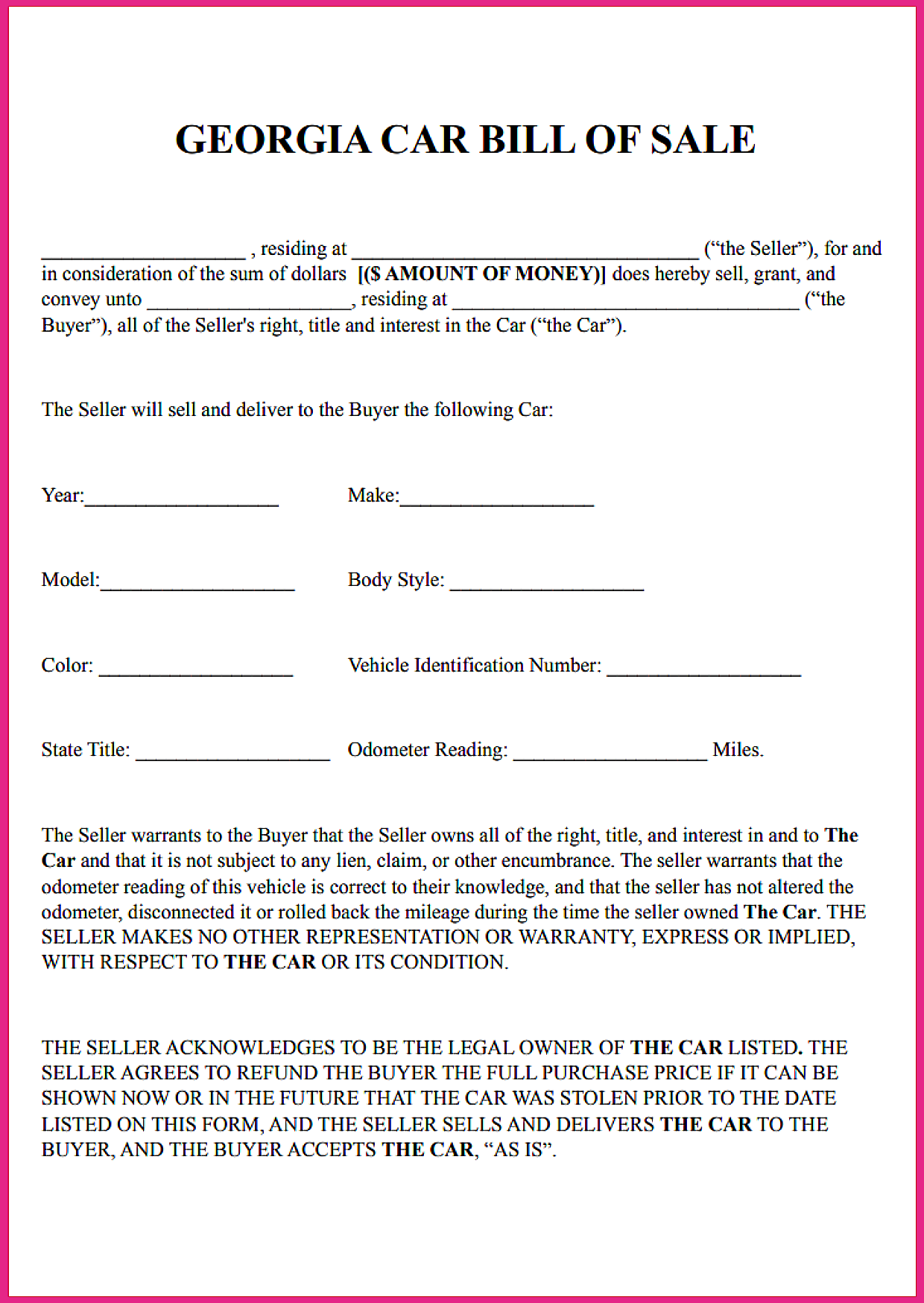
When clients ask me for something simple, clean, and accepted across Georgia tag offices, this is usually where I point them first. A free printable Georgia private car bill of sale template works well for most straightforward private transactions — especially when both parties just want clarity without legal confusion. I’ve seen this template save sellers months of stress when buyers delayed title transfers or tickets showed up later.
From my experience, the biggest value of using a printable template is consistency. It forces you to include the essentials Georgia looks for — buyer and seller details, vehicle information, sale price, and the exact date of transfer. I always tell clients not to rush through it. Take five extra minutes, double-check the VIN, and make sure names match the title exactly. That small care upfront often prevents a call back to my office later.
If you prefer convenience, you can download this free printable Georgia private car bill of sale template in both PDF and Word formats, making it easy to print, edit, or store digitally for your records.
Private Party Vehicle Bill of Sale Georgia
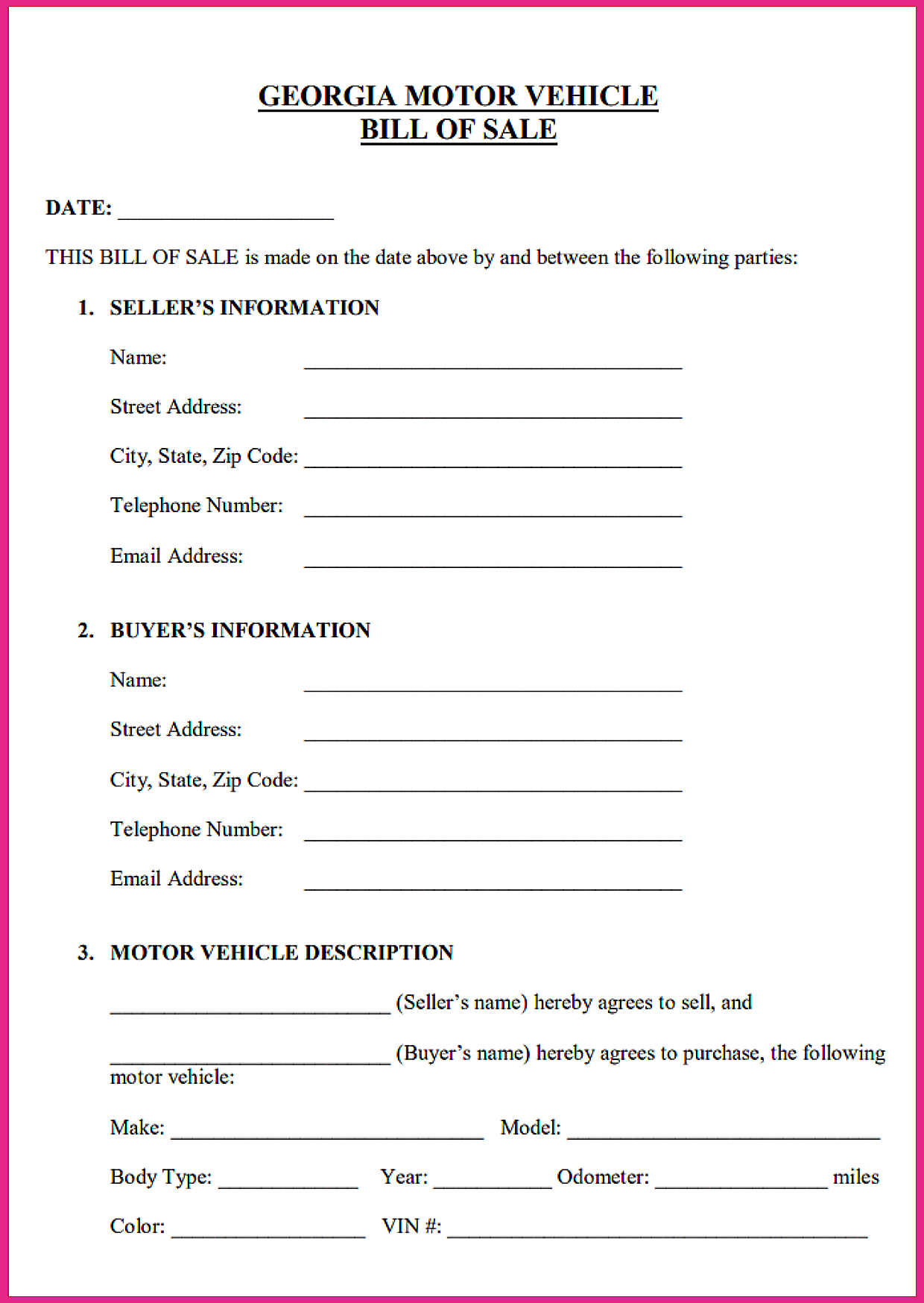
Private party vehicle sales are where I see the most confusion — and the most disputes. When there’s no dealership involved, people tend to assume the rules are relaxed. In reality, a private party vehicle bill of sale in Georgia often matters more, because there’s no third party keeping records or explaining the process. It’s just buyer, seller, and whatever paperwork you put in place.
I’ve handled cases where friendships soured simply because expectations weren’t written down. A proper private party bill of sale clearly shows when responsibility changed hands — which is critical if the buyer waits weeks to register the vehicle. In my opinion, this document protects sellers just as much as buyers, especially when questions come up about taxes, registration delays, or liability after the sale.
For ease and flexibility, this private party vehicle bill of sale Georgia is available to download in both PDF and Word formats, so you can choose what works best for your situation and keep a clean copy for your files.
Georgia Auto Bill of Sale Private Owner
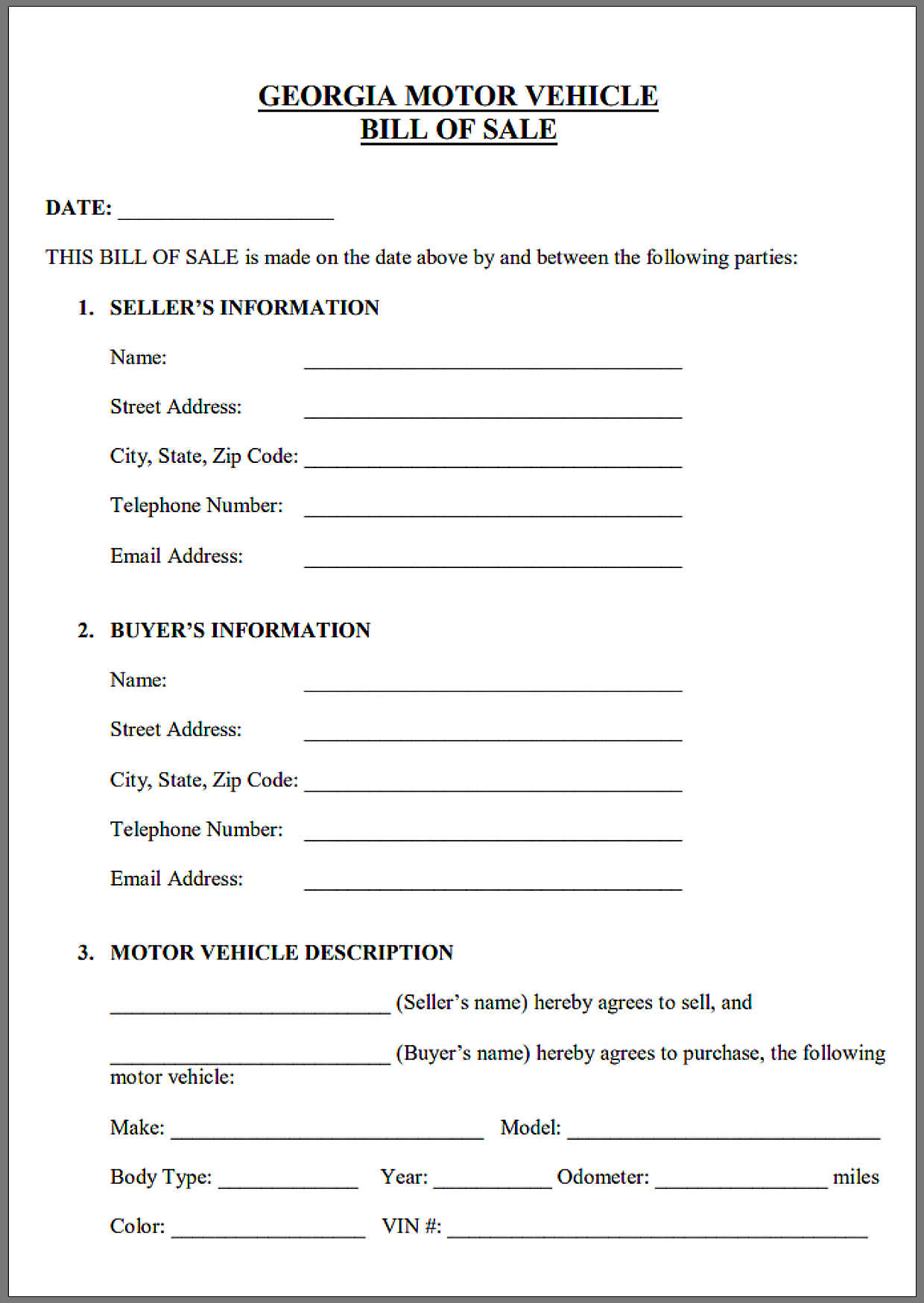
When a vehicle is sold directly by a private owner, I always recommend extra care with documentation. A Georgia auto bill of sale for a private owner acts as the written proof that the vehicle was sold “as-is” and on specific terms. I’ve seen too many sellers pulled into disputes months later simply because nothing clearly showed when the deal was finalized.
From a legal standpoint, this version of the bill of sale helps establish ownership transfer when questions arise with the DMV or county offices. I personally like language that clearly states the sale date, price, and condition of the vehicle — it removes guesswork. When paperwork is clear, problems tend to resolve faster, and sometimes don’t arise at all.
To make things simple, you can download this Georgia auto bill of sale for private owner use in both PDF and Word formats, allowing you to edit, print, or save it based on how you plan to complete the sale.
Why I Always Push for a Bill of Sale (Even When Georgia Doesn’t “Force” It)
Here’s a Georgia-specific truth that surprises people: Georgia does not strictly require a bill of sale for every private vehicle transaction if the title is properly assigned. But in real life? I strongly prefer one, and I insist my clients use it.
Why? Because when something goes sideways — unpaid tickets, toll violations, tax questions, or a buyer who disappears — the bill of sale becomes your paper shield.
I’ve seen sellers dragged into problems months later because the buyer never transferred the title. Without a bill of sale showing the date and time of transfer, it becomes a “he said, she said” situation. And trust me, that’s not where you want to be.
The Georgia Form I See Used Most: Form T-7
In Georgia, the Department of Revenue provides Form T-7 (Bill of Sale). I’ve seen it used in tag offices from Fulton to Chatham County.
Personally, I like T-7 because:
-
It’s recognized statewide
-
Tag offices are familiar with it
-
It clearly shows buyer, seller, vehicle details, and sale price
That said, Georgia does allow custom bills of sale, as long as the essential information is there. I’ve drafted plenty myself when a situation called for it — estate sales, family transfers, or messy private deals.
What Actually Needs to Be on a Georgia Private Car Bill of Sale
I’ll tell you what I look for when someone brings me paperwork to review:
-
Full legal names and addresses of buyer and seller
-
Vehicle details (VIN, year, make, model)
-
Exact sale price
-
Date of sale (this matters more than people realize)
-
Signatures of both parties
Now here’s an opinion I’ve formed from experience: I prefer adding the time of sale too, not just the date. When traffic cameras or toll violations show up later, that timestamp can save a seller a real headache.
Do You Need a Notary in Georgia?
Legally? No, Georgia does not require a bill of sale to be notarized.
Practically? I often recommend it.
I’ve handled disputes where one party later claimed, “That’s not my signature.” A notarized bill of sale shuts that argument down fast. Most banks, UPS stores, and shipping centers will notarize for a small fee. In my opinion, it’s worth the extra 10 minutes.
Titles, Odometers, and the Mistakes I See Repeated
Let me share a common scenario.
A seller signs the title but forgets the odometer disclosure. Buyer drives off happy. Weeks later, the tag office refuses the transfer. Suddenly both parties are scrambling.
For most vehicles under federal law, odometer disclosure is mandatory, and Georgia enforces it. I always tell sellers: don’t rush the title. Sit down, fill it out carefully, and double-check before handing over the keys.
Another big one? Leaving the buyer’s name blank on the title. I’ve seen this lead to title jumping issues that turn into serious legal problems. If the buyer’s name isn’t known yet, the sale shouldn’t happen yet — period.
Taxes, Tag Offices, and Georgia Reality
In Georgia, the buyer pays TAVT (Title Ad Valorem Tax) when they register the vehicle. The sale price on the bill of sale often gets looked at closely if it seems suspiciously low.
I’ve watched tag clerks flag transactions where the price didn’t line up with the vehicle’s value. My advice? Be honest. Trying to shave taxes by underreporting the sale price can backfire fast.
Also remember: tag offices are county-based. Practices can vary slightly. What slides through in one county might get questioned in another. That’s not theory — that’s lived Georgia experience.
Emissions Testing — A Quiet Deal Breaker
If you’re in a metro Atlanta emissions county, this matters. I’ve seen buyers furious because they didn’t realize they couldn’t register the car without passing emissions.
While it’s not legally required for the seller to guarantee emissions compliance, I personally recommend addressing it clearly in the bill of sale: sold as-is, emissions responsibility acknowledged by buyer. Clear language prevents later arguments.
“As-Is” Isn’t Just a Phrase — It’s Protection
Georgia allows private vehicle sales as-is, and I always include that language unless there’s a specific agreement otherwise.
I’ve handled cases where buyers came back weeks later claiming mechanical problems. Without an as-is clause, those conversations can turn uncomfortable fast.
This isn’t about being harsh — it’s about clarity. When expectations are clear on paper, disputes are less likely to land in my office.
A Quick, Human Disclaimer (Because I’m Still a Lawyer)
I’m sharing this based on years of Georgia legal practice and real cases I’ve handled. It’s not a substitute for personalized legal advice. Every situation is different — and sometimes one small detail changes everything.
Final Thoughts From Across the Desk
What I’ve learned over the years is simple: good paperwork preserves good relationships. Most people selling or buying a car privately aren’t trying to cut corners — they just don’t know where problems can pop up later.
If you’re doing a private car sale in Georgia, slow down, document it properly, and protect yourself on both sides. I’ve seen the stress that comes from skipping these steps, and I wouldn’t wish it on anyone.
If you’ve got questions, a weird situation, or you’re staring at paperwork that doesn’t quite make sense, feel free to comment or reach out. I’m always happy to talk through real Georgia situations — that’s what I do every day.
FAQ
Do I legally need a Georgia Private Car Bill of Sale for a private sale?
Technically, Georgia doesn’t always require a bill of sale if the title is properly completed and transferred. That said, in my experience, relying only on the title is where people get burned. When a buyer delays registration, racks up tickets, or a tax issue pops up, the bill of sale is often the only document that clearly proves when ownership changed. Personally, I always recommend having one — even when the law doesn’t strictly force it.
What information must be included on a Georgia Private Car Bill of Sale?
At a minimum, it should clearly list the buyer and seller’s full names and addresses, the vehicle details (VIN, year, make, model), the sale price, and the date of sale. I strongly prefer adding the exact time of sale as well — that small detail has helped resolve more than one dispute involving toll violations or traffic cameras. Both parties should sign it, and if you want extra protection, get it notarized.
Does a Georgia Private Car Bill of Sale need to be notarized?
No, Georgia law doesn’t require notarization for a private car bill of sale. But here’s my honest opinion after years of disputes: notarization prevents arguments later. I’ve handled cases where someone claimed a signature wasn’t theirs. A notary ends that conversation immediately. For the small effort involved, it’s a smart move — especially if you don’t know the other party well.
Will a Georgia Private Car Bill of Sale protect me if the buyer never transfers the title?
It can make a huge difference. I’ve represented sellers who were still getting parking tickets and tax notices months after selling a vehicle because the buyer never went to the tag office. A properly written Georgia Private Car Bill of Sale helps show the exact date ownership changed, which is critical when dealing with the DMV or county authorities. It’s not magic protection, but it’s often the strongest evidence you have when problems show up later.

Dale Preiser is the Assistant Director of Legal Services at the Southern States Police Benevolent Association, where he provides legal support and counsel for law enforcement professionals facing job-related legal issues. With a strong foundation in law and public service, Dale brings years of experience working across legal and professional sectors, including law enforcement and healthcare industries. He holds a Juris Doctor degree from Oklahoma City University and previously ran a private law practice in McDonough, Georgia before joining SSPBA in 2012. Dale is also the voice behind Bill of Sale Georgia, a dedicated resource on bill of sale forms and legal documentation for Georgia residents and businesses. His commitment to legal clarity and member advocacy underscores his contributions to both the website and the law enforcement community.