
If you were sitting across the desk from me in my Georgia office, I’d probably say this first: boats are meant for freedom and fun, but in my legal practice, they’re also one of the most common sources of paperwork problems. Over the years, handling real vessel transfers, registration disputes, and ownership issues across Georgia, I’ve learned one thing very clearly—the Georgia Vessel Bill of Sale isn’t just a form, it’s the legal foundation of boat ownership in this state.
In simple terms, a Georgia Vessel Bill of Sale is the written legal proof that ownership of a boat has been properly transferred from one party to another. I’ve dealt with countless cases where that document was missing, incomplete, or casually written, and those situations almost always trace back to the same mistake: people assuming a handshake or verbal agreement is enough. That’s usually when I end up explaining why a properly drafted Georgia true bill of sale for vessel matters far more than most buyers or sellers expect—because once a problem surfaces, “we’ll fix it later” stops being an option.
So let’s talk honestly about the Georgia Vessel Bill of Sale—what it legally represents, where people go wrong in real life, and why, based on my experience practicing law in Georgia, I’m very particular about how this document should be handled.
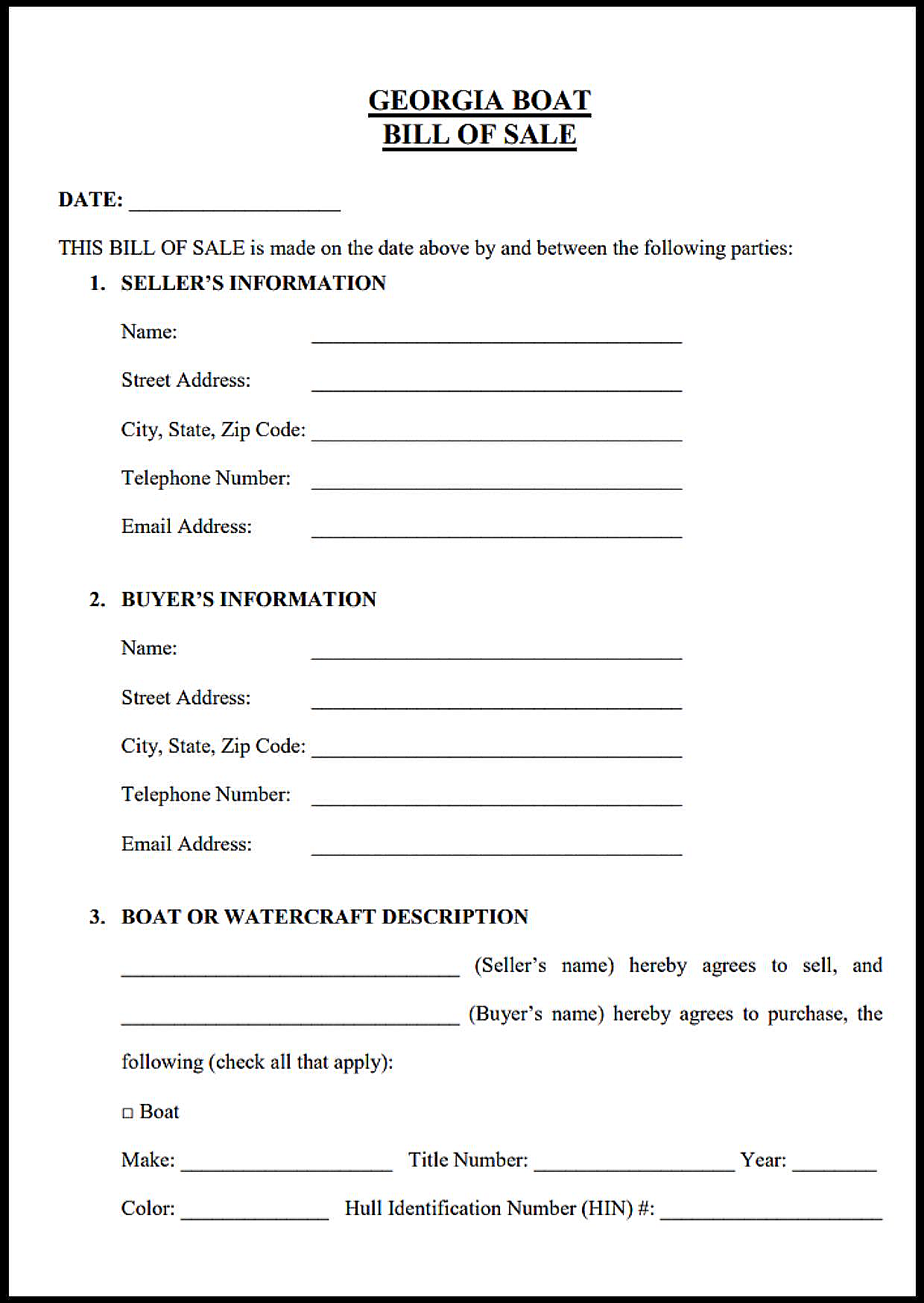
Free Printable Georgia Vessel Bill of Sale Template

When clients ask me for a starting point, this is usually where I guide them. A free printable Georgia Vessel Bill of Sale template gives structure to what is otherwise a very casual transaction. In my experience, people don’t mess this up because they don’t care—they mess it up because they don’t know what Georgia actually expects to see on paper. A proper template ensures the buyer, seller, vessel details, HIN, sale date, and price are all clearly documented the way Georgia DNR looks for.
What I personally like about using a clean template is that it reduces arguments later. When everything is written clearly from day one, there’s less room for “I thought this was included” or “that’s not what we agreed on.” For convenience, I’ve made this template available so you can access it in both PDF and Word formats, allowing you to either print it out or edit it digitally before signing.
Georgia Certified True Bill of Sale for Vessel
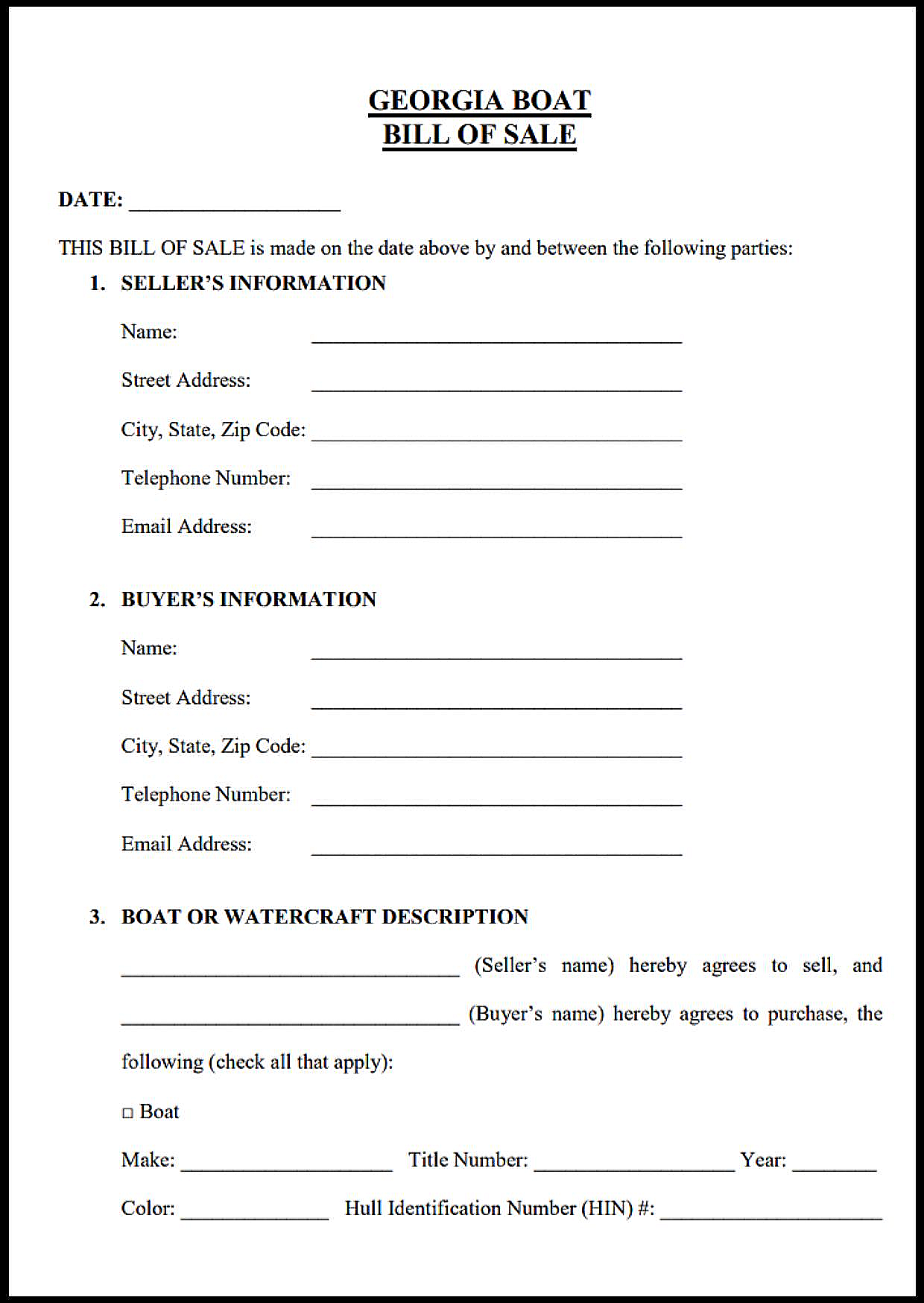
This is the version that becomes important when things need to be official—and I use that word carefully. A Georgia certified true bill of sale for vessel is often requested when there’s a registration issue, prior ownership confusion, or a question raised by Georgia DNR. I’ve seen cases where a regular bill of sale wasn’t enough because it lacked clarity or credibility, especially when older vessels or private marina sales were involved.
In situations like those, I strongly prefer a certified true bill of sale because it adds an extra layer of legitimacy. It clearly confirms that the information provided is accurate and truthful to the best of the seller’s knowledge. To make things easier, I’ve included access to this document in editable Word format as well as a ready-to-print PDF, so you can choose whichever works best for your situation.
Bill of Sale for Vessel and Trailer Georgia

This section exists because people forget one thing all the time—the trailer. In Georgia, a bill of sale for vessel and trailer should never be treated as a single casual mention. I’ve had buyers come into my office shocked to learn that the boat paperwork didn’t automatically transfer ownership of the trailer. That’s a separate item, and Georgia takes that distinction seriously.
From a legal standpoint, I always recommend clearly listing the vessel and trailer details separately, even if they were sold together as a “package deal.” It avoids confusion, protects both parties, and keeps registration and title issues from popping up later. For this reason, I’ve provided this combined bill of sale option in downloadable PDF and Word versions, so you can document everything properly without having to start from scratch.

Dale Preiser is the Assistant Director of Legal Services at the Southern States Police Benevolent Association, where he provides legal support and counsel for law enforcement professionals facing job-related legal issues. With a strong foundation in law and public service, Dale brings years of experience working across legal and professional sectors, including law enforcement and healthcare industries. He holds a Juris Doctor degree from Oklahoma City University and previously ran a private law practice in McDonough, Georgia before joining SSPBA in 2012. Dale is also the voice behind Bill of Sale Georgia, a dedicated resource on bill of sale forms and legal documentation for Georgia residents and businesses. His commitment to legal clarity and member advocacy underscores his contributions to both the website and the law enforcement community.