
If you were sitting across the desk from me here in my Georgia office, this is probably how I’d start the conversation. I’m Dale Preiser, a Georgia attorney, and over the years I’ve handled more vehicle transfers, title disputes, and DMV problems than I can count. Most bill of sale issues I see don’t start with bad intentions. They start with someone saying, “It’s just a piece of paper—we’ll figure it out later.” That’s usually the moment a Sample Bill of Sale Georgia goes from being ignored to becoming the most important document in the deal.
In simple terms, a Sample Bill of Sale Georgia is written proof that ownership actually changed hands. It records who sold what, to whom, for how much, and when — details the Georgia Department of Revenue and county tag offices often rely on when questions come up. In my experience, when something goes wrong, this single document often decides who’s protected and who’s stuck fixing the mess.
I’ve seen handshake deals between neighbors turn into legal headaches. I’ve watched private sellers get pulled into disputes months later because the paperwork was vague or missing. I’ve also helped buyers who genuinely believed they owned a vehicle, only to find out the State of Georgia didn’t see it that way.
That’s why I’m particular — maybe even a little opinionated — about how a Sample Bill of Sale in Georgia should be written and used. When it’s done right, it quietly protects everyone involved. When it’s done wrong, it’s usually why people end up sitting across the desk from me in the first place.

Free Printable Sample Bill of Sale Georgia Template
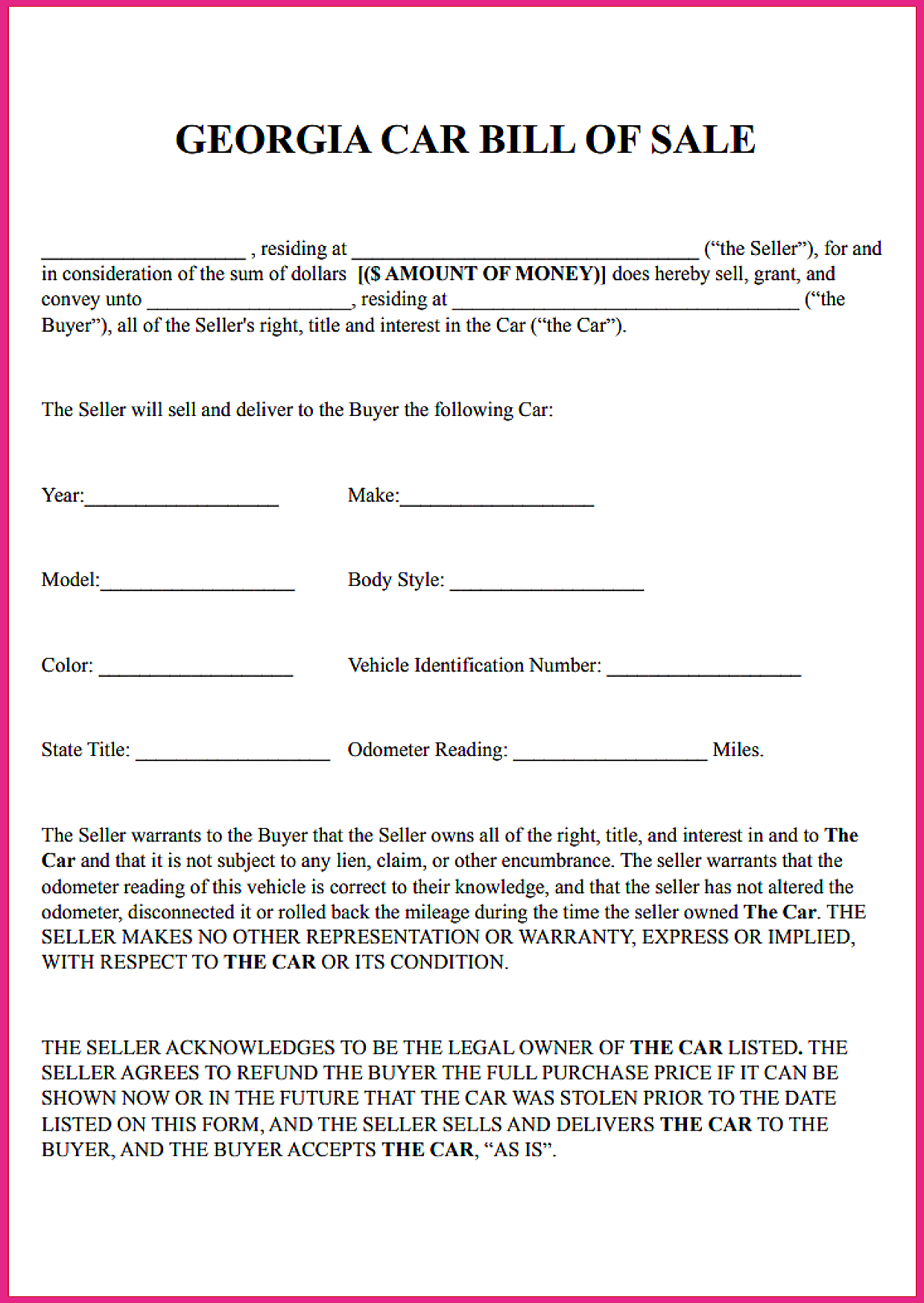
When people ask me for a “simple template,” what they usually mean is something they can trust without guessing whether it’ll actually work in Georgia. Over the years, I’ve reviewed plenty of homemade bills of sale that looked fine on paper but caused real problems later. A free printable Sample Bill of Sale Georgia template works best when it follows Georgia norms—clear buyer and seller details, proper vehicle identification, and language that doesn’t leave room for interpretation.
I always tell clients this: printing a proper template and filling it out carefully is far better than scribbling details on a blank page. The goal isn’t just to record the sale—it’s to create a document that still makes sense months later if the DMV, a tag office, or even a judge looks at it. For convenience, I’ve included this template in both PDF and Word format, so you can download it, print it, or edit it digitally—whatever works best for your situation.
Sample Bill of Sale for Car in Georgia
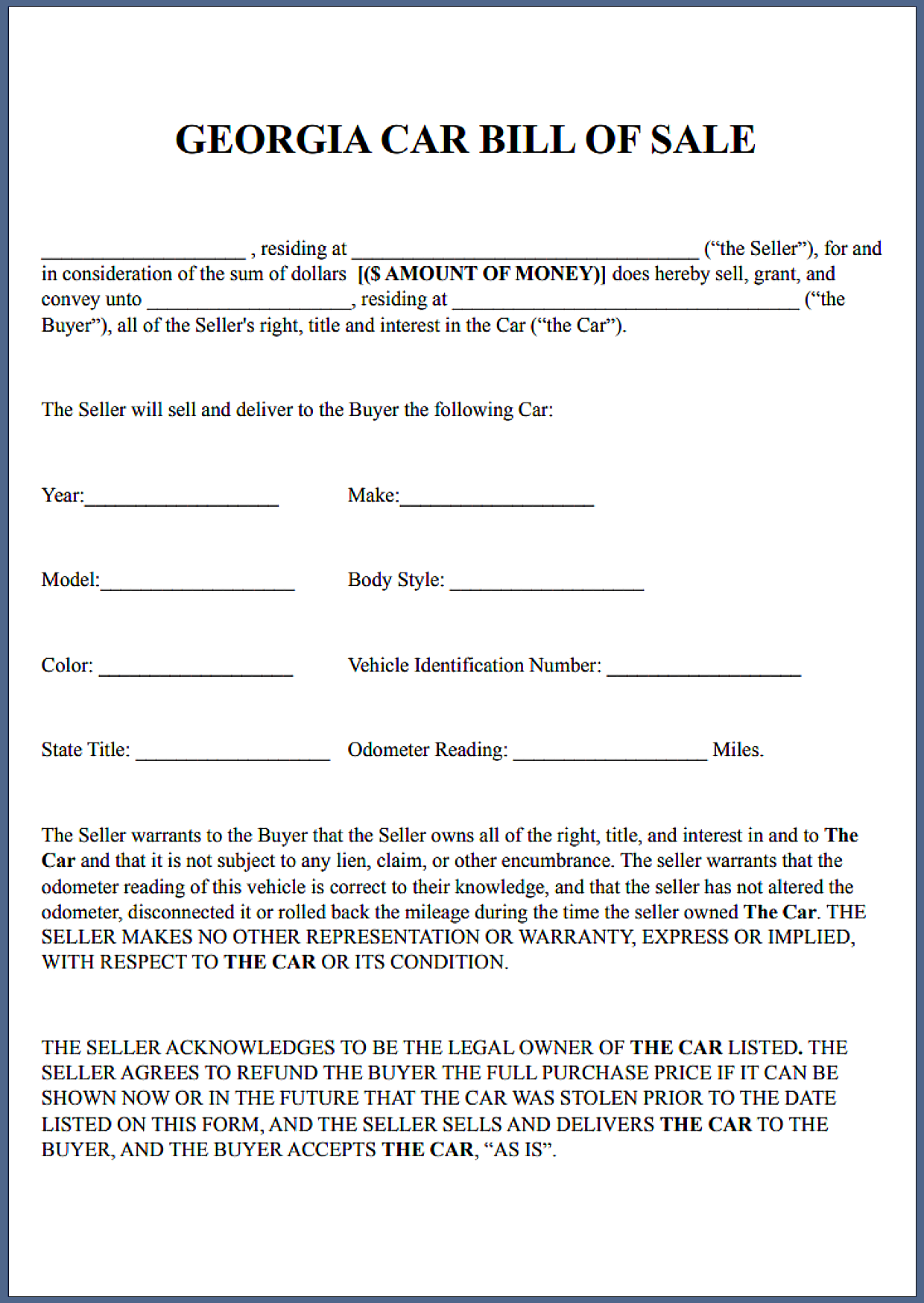
A car sale in Georgia might feel straightforward, but I’ve learned that these are the transactions where people cut corners the most. Whether it’s a private sale between neighbors or a deal made through an online listing, a Sample Bill of Sale for car in Georgia helps establish exactly when ownership changed hands. That detail matters more than most people realize, especially when registration delays or tax questions pop up later.
In my practice, I’ve seen sellers get contacted weeks after a sale because the buyer never transferred the title. When that happens, the bill of sale often becomes the seller’s strongest proof that the vehicle was no longer theirs. That’s why I prefer a clear, car-specific bill of sale that matches Georgia expectations. To make things easier, I’ve provided this form in PDF and Word versions, so you can download and use the format you’re most comfortable with.
Sample Bill of Sale for Used Car Georgia
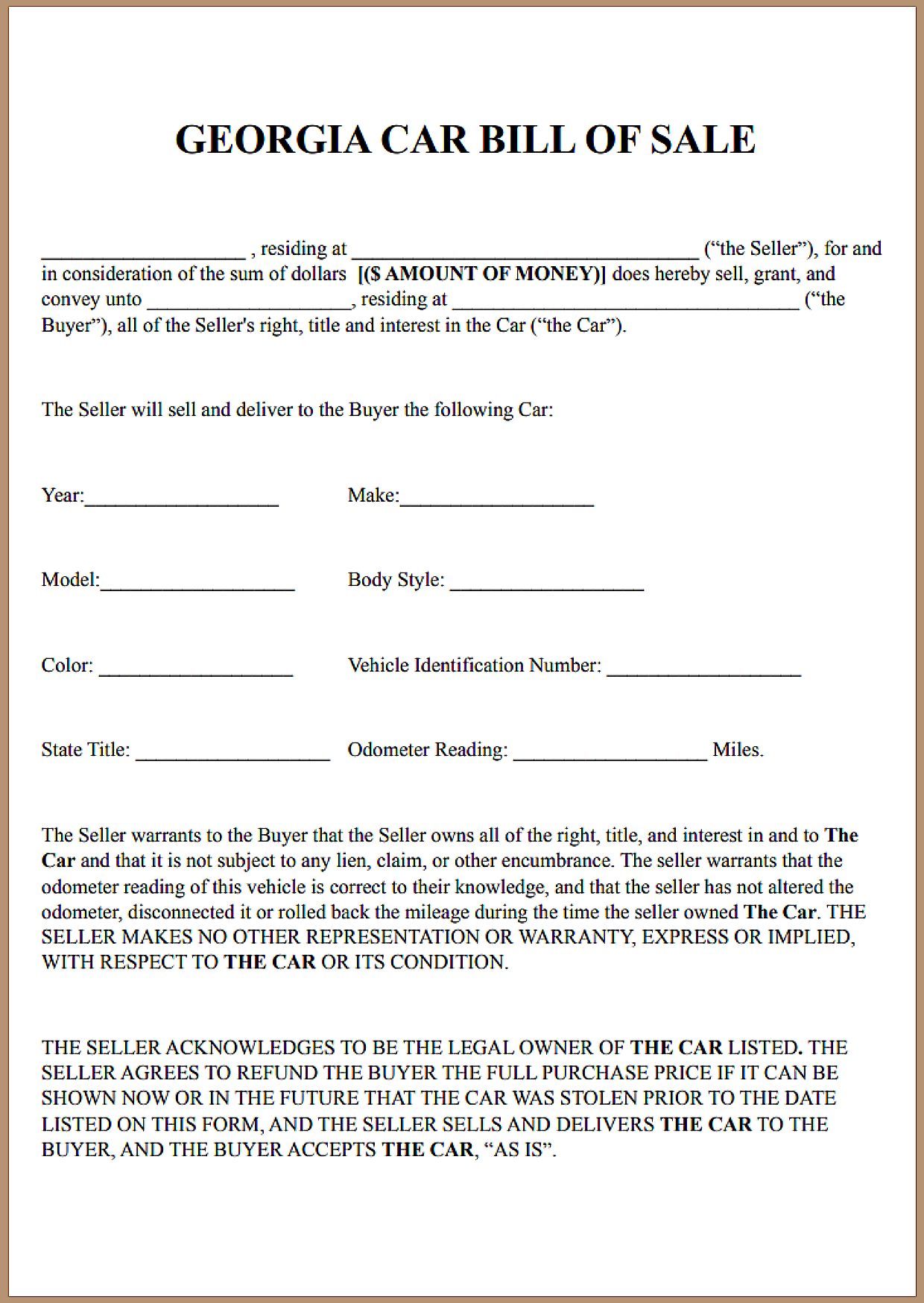
Used car sales are where misunderstandings show up fast. I’ve helped buyers who assumed “used” meant as-is, only to realize later that nothing was clearly documented. A Sample Bill of Sale for used car Georgia should spell out the condition of the vehicle, the agreed price, and the exact date of sale—no assumptions, no loose ends.
From my experience, clarity upfront prevents arguments later. When both parties sign a well-written used car bill of sale, it reduces the chances of disputes over condition, timing, or responsibility. It’s not about distrust—it’s about documentation. For your convenience, this sample is available to download in both PDF and Word format, so you can choose whichever option makes completing and saving the document easier.
What a Georgia Bill of Sale Really Does (Beyond the Paper)
In Georgia, a bill of sale isn’t just proof that money changed hands. In real life, it often becomes:
-
The only written evidence of a private-party sale
-
Backup documentation when a title is missing, delayed, or disputed
-
A timeline marker when the DMV asks, “When did ownership change?”
-
Protection when tickets, taxes, or accidents show up after the sale
I’ve handled cases where a seller swore they sold a car months earlier—but had nothing in writing. Meanwhile, toll violations and registration issues kept coming back to them. A clean, dated bill of sale could’ve stopped that cold.
Georgia-Specific Reality: What the State Actually Cares About
Here’s something people outside Georgia don’t always understand: Georgia doesn’t require a bill of sale for every transaction, but that does not mean it’s optional in practice.
In my experience, the Georgia Department of Revenue (DOR) and county tag offices often expect one—especially when:
-
The title is older or incorrectly filled out
-
A vehicle is gifted or sold for a low amount
-
There’s a delay between sale and registration
-
A dispute pops up later
Georgia Form T-7 Bill of Sale exists for a reason. I strongly prefer using it or closely matching its structure because it aligns with how Georgia offices already think.
Personally, I would never let a private sale leave my office—or my driveway—without a signed bill of sale.
What I Always Include in a Sample Bill of Sale (Georgia Style)
I’ve reviewed hundreds of these over the years. The ones that hold up share a few non-negotiables:
-
Full legal names and addresses of buyer and seller
-
Vehicle details exactly as on the title (VIN matters more than people think)
-
Purchase price, even if it’s a gift—$0 should still be written clearly
-
Date of sale, not “sometime last week”
-
Odometer reading, when applicable
-
Signatures from both parties
I’ve seen deals fall apart because someone forgot to write the sale date. That single blank can create confusion about taxes, liability, and ownership timing.
Common Mistakes I See Over and Over Again
Let me save you from repeating mistakes I’ve already watched play out in real cases:
“We didn’t think we needed one.”
That’s usually said right before someone gets a letter from the DMV or a call from a lawyer.
Using a generic online template.
Some forms look fine until you realize they don’t match Georgia practices—or leave out key details Georgia offices ask for.
Not signing in front of each other.
I’ve seen people argue later that a signature wasn’t real. Sitting together and signing avoids that.
Leaving blanks “to fill in later.”
Later rarely comes. And when it does, it’s often in court.
A Realistic Scenario I’ve Seen More Than Once
A seller sells a car privately in Georgia. They trust the buyer. No bill of sale. A month later, parking tickets start arriving. The buyer never transferred the title. The seller insists, “I sold it already.”
Without a bill of sale? Proving when that sale happened becomes a lot harder than it should be.
What I’ve learned is this: paperwork doesn’t protect you when everything goes right—it protects you when something goes wrong.
Do You Need It Notarized in Georgia?
This comes up all the time.
For most vehicle bill of sale situations in Georgia, notarization isn’t required. That said, I’m a fan of notarizing when possible—especially for higher-value vehicles or sales between strangers.
It’s not about formality. It’s about cutting off future arguments.
A Quick, Honest Legal Note (No Corporate Tone Here)
I’ll say this the same way I say it to clients: every situation is a little different. A bill of sale helps in most cases, but it doesn’t fix a badly handled title transfer or override Georgia law.
If something feels unclear—or if money, liability, or disputes are already involved—it’s worth getting real legal advice before things snowball.
My Bottom-Line Advice
If you remember nothing else from this, remember this:
In Georgia, a clear, signed bill of sale is one of the simplest ways to protect yourself in a private sale.
I’ve seen what happens without one. I’ve also seen how smoothly things go when people take ten extra minutes to do it right.
Personally, I would never skip it—and I don’t recommend you do either.
If you’ve got questions, a unique situation, or just want to sanity-check what you’re dealing with, feel free to reach out. Or drop a comment below—chances are, if you’re wondering about it, someone else is too.
FAQ
Is a Sample Bill of Sale required in Georgia for private vehicle sales?
This is one of the most common questions I hear in my office. Legally speaking, Georgia doesn’t require a bill of sale for every vehicle transaction if the title is properly completed. That said, in real life, I strongly recommend having one. I’ve handled too many disputes where the title alone didn’t answer key questions—like when the sale actually happened or how much was paid. A Sample Bill of Sale Georgia fills in those gaps and often becomes the document the DMV or a judge looks at when there’s confusion later.
What information should a proper Sample Bill of Sale Georgia include?
From my experience, a good Georgia bill of sale should clearly list the buyer’s and seller’s full legal names, addresses, the vehicle description (including VIN), sale price, date of sale, and signatures from both parties. I always tell clients: if the information wouldn’t make sense to someone reviewing it six months from now, it’s not clear enough. Georgia problems usually start when details are missing, vague, or handwritten in a rush without thinking about future consequences.
Does a Sample Bill of Sale Georgia need to be notarized?
In most Georgia vehicle sales, notarization is not required for the bill of sale itself. However, personally, I prefer notarization when possible—especially in private-party sales between people who don’t know each other well. I’ve seen situations where someone later claimed a signature wasn’t theirs. A notary doesn’t just add formality; it adds credibility and can shut down arguments before they start.
Can a Sample Bill of Sale Georgia protect me if something goes wrong later?
A bill of sale won’t fix every problem, but I’ve seen it protect people more times than I can count. When tickets, taxes, or ownership disputes come up after a sale, a properly written Sample Bill of Sale Georgia often proves when responsibility actually transferred. Without it, you’re usually relying on memory, text messages, or trust—and none of those carry much weight when the state or a court gets involved.

Dale Preiser is the Assistant Director of Legal Services at the Southern States Police Benevolent Association, where he provides legal support and counsel for law enforcement professionals facing job-related legal issues. With a strong foundation in law and public service, Dale brings years of experience working across legal and professional sectors, including law enforcement and healthcare industries. He holds a Juris Doctor degree from Oklahoma City University and previously ran a private law practice in McDonough, Georgia before joining SSPBA in 2012. Dale is also the voice behind Bill of Sale Georgia, a dedicated resource on bill of sale forms and legal documentation for Georgia residents and businesses. His commitment to legal clarity and member advocacy underscores his contributions to both the website and the law enforcement community.