
I’ve been practicing law here in Georgia long enough to see just about every mistake a person can make during a private vehicle sale. And if there’s one document that shows up on my desk more than anything else, it’s a confused, half-filled “bill of sale” someone downloaded from the internet. Folks walk in holding that crumpled paper and ask me, “Dale, will this work for a Georgia Bill of Sale for Car?”
Most of the time, my answer is: not the way you hope it will.
For those who don’t know me, I’m an attorney who has spent years dealing with Georgia title disputes, messy private-party car sales, DMV back-and-forth battles, and those unfortunate situations where someone buys a vehicle and only later discovers the seller wasn’t even the legal owner. When you sit across from as many frustrated buyers and worried sellers as I do, you start to understand how a simple document—done right or done wrong—can completely change the outcome of a sale.
So let me say this clearly:
A Georgia Bill of Sale Form is simply a written record of the transaction, but the problems that come from a bad or incomplete one can be enormous.
I’ve watched deals fall apart, registrations get denied, and honest people lose money because they didn’t understand what this piece of paper really needs to accomplish.
That’s exactly why I’m writing this—not to scare you, but to help you avoid the same traps I’ve seen over and over again in real Georgia cases.

Free Printable Georgia Bill of Sale Form Template
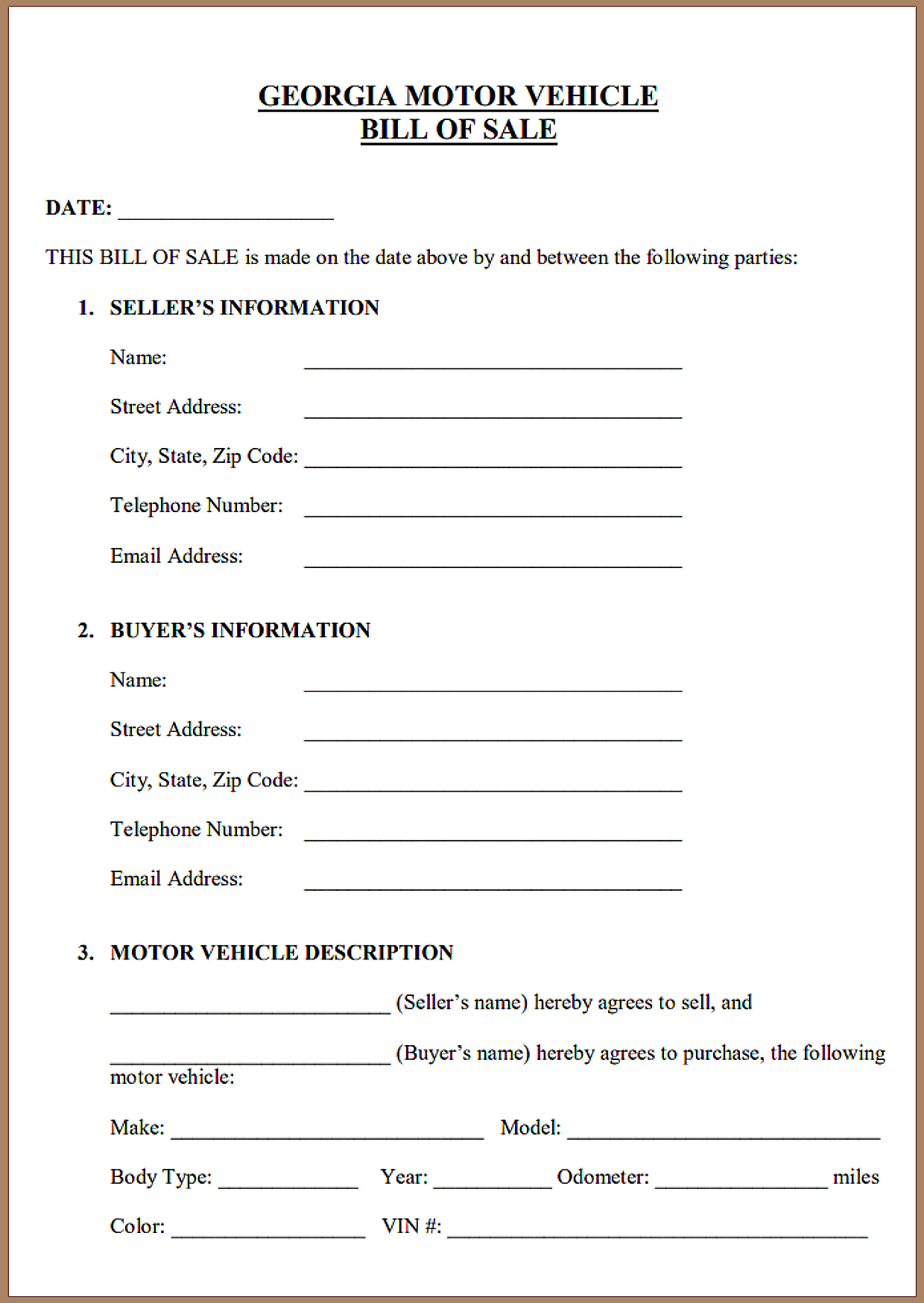
Over the years, I’ve met plenty of folks who walked into my office thinking a simple printable form they grabbed from somewhere online would “do the job.” Sometimes it does—but only if it’s structured correctly and follows what Georgia tag offices actually look for. When I create a free printable template, I’m designing it from real situations I’ve seen in county tag offices all across Georgia—from Fulton to Hall County—so you aren’t left struggling with missing information.
If you want something straightforward but still legally reliable, this template covers the essentials Georgia buyers and sellers forget most often: VIN accuracy, full party details, and clear “as-is” language. And if you’re the type who prefers having documents ready to go, I’ve made this template available in both PDF and Word formats so you can print it or edit it however you like.
Georgia Vehicle Bill of Sale Form
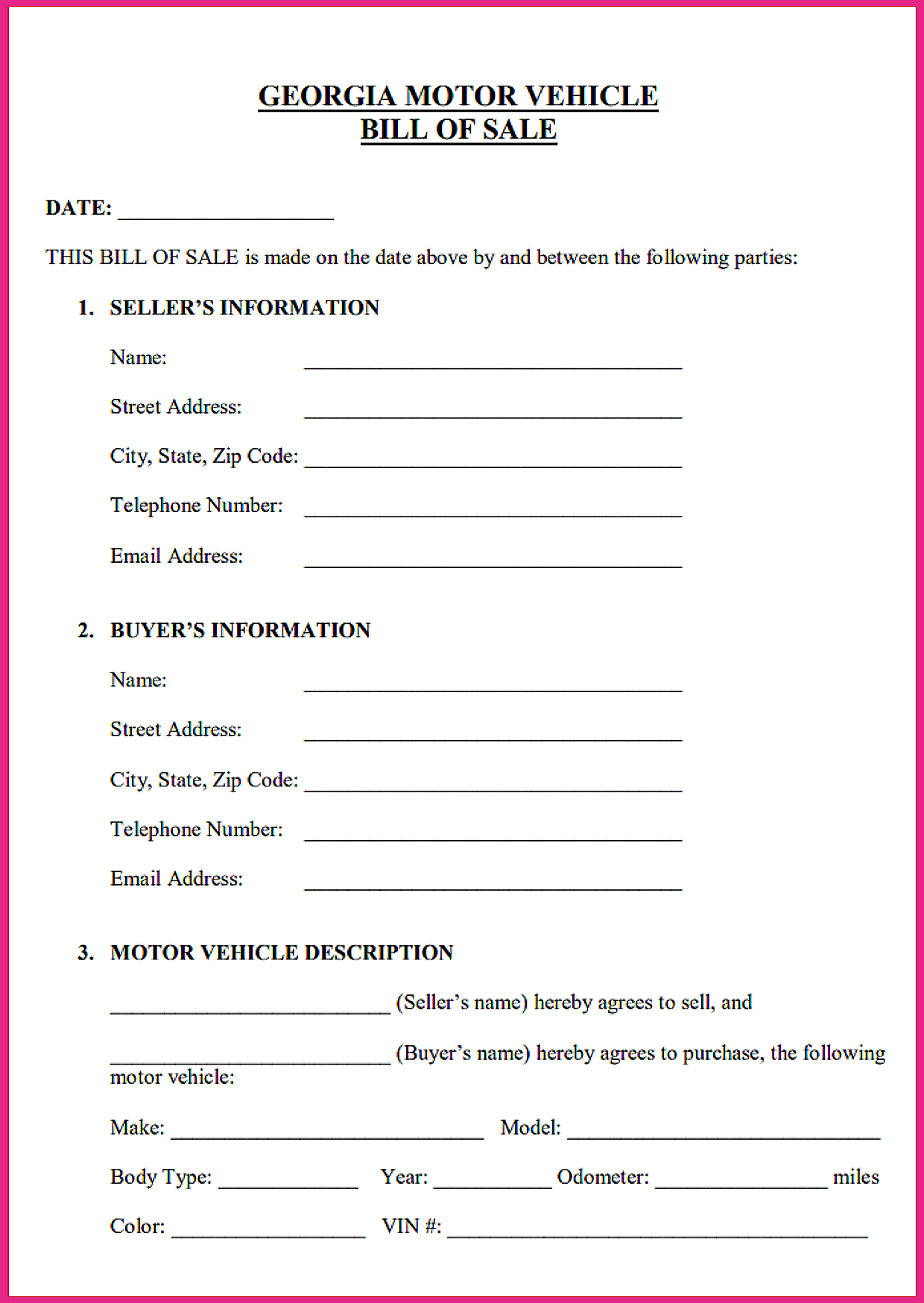
Whenever a vehicle changes hands in Georgia, the bill of sale becomes your paper trail—and in my practice, that paper trail can decide whether the DMV accepts your transaction without a fuss. I’ve dealt with frustrated sellers who skipped this step and later found themselves explaining “why the buyer never registered the car.” A proper Georgia vehicle bill of sale prevents those headaches.
This version includes the details every tag clerk double-checks: VIN, odometer reading, and accurate seller identification. It’s written in a clean, easy-to-understand way so you don’t end up scribbling corrections at the counter. For convenience, you can save or print this form in either PDF or Word, whichever fits your workflow.
Auto Bill of Sale Form Georgia
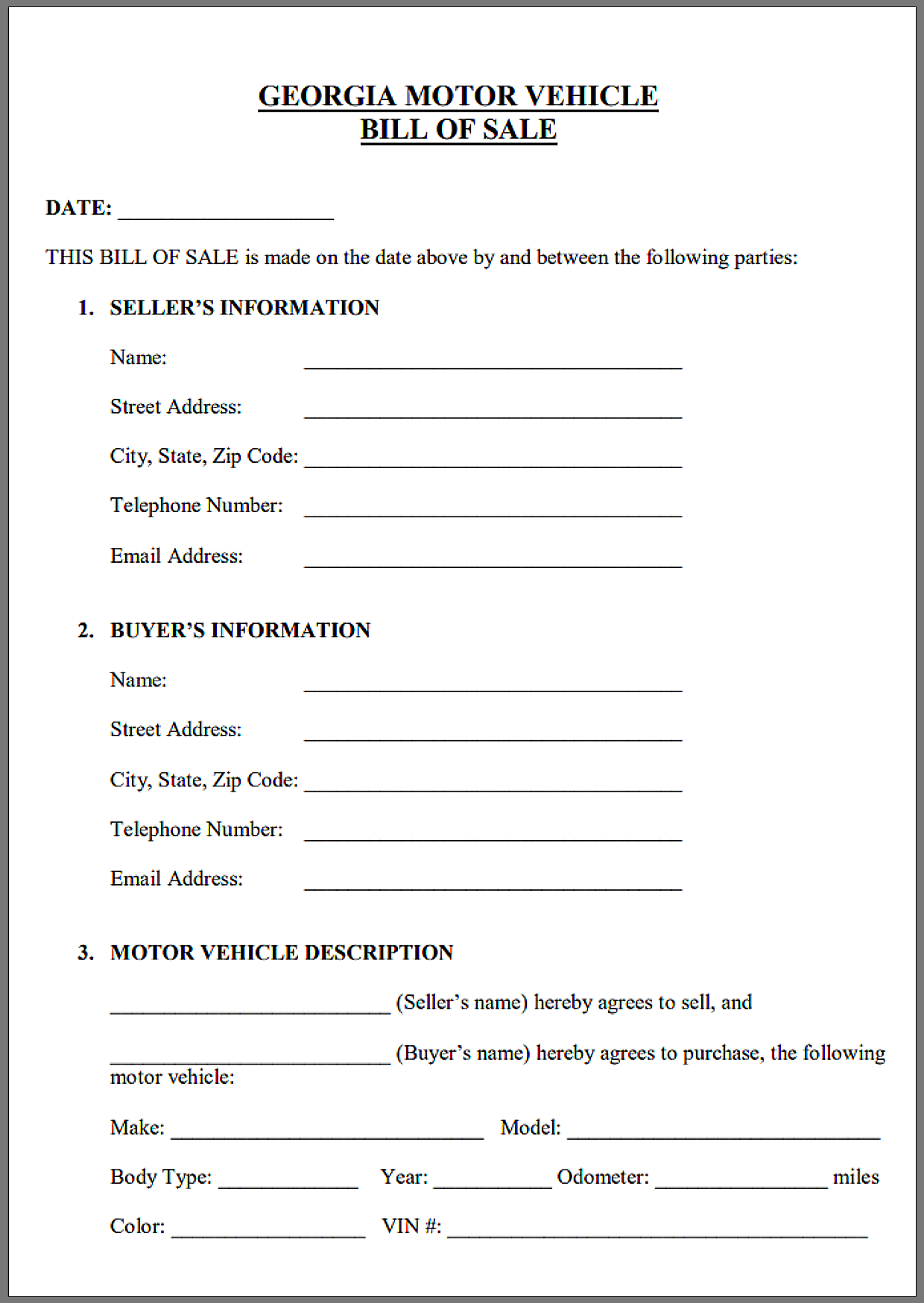
When clients come to me after buying a used car from Craigslist or Facebook Marketplace, the first thing I ask for is the auto bill of sale. Half the time, they don’t have one—or they have something so barebones that it’s almost useless. That’s why I prefer an auto-specific bill of sale form that leaves no room for confusion between cars, SUVs, and light trucks.
This auto-focused version gives you space for everything a private-party car sale tends to involve, including lien disclosures and any special conditions you and the buyer agree to. And because I know everyone likes documents in different formats, I’ve prepared this one in editable Word form and a clean PDF layout you can print instantly.
Georgia Bill of Sale Form T-7
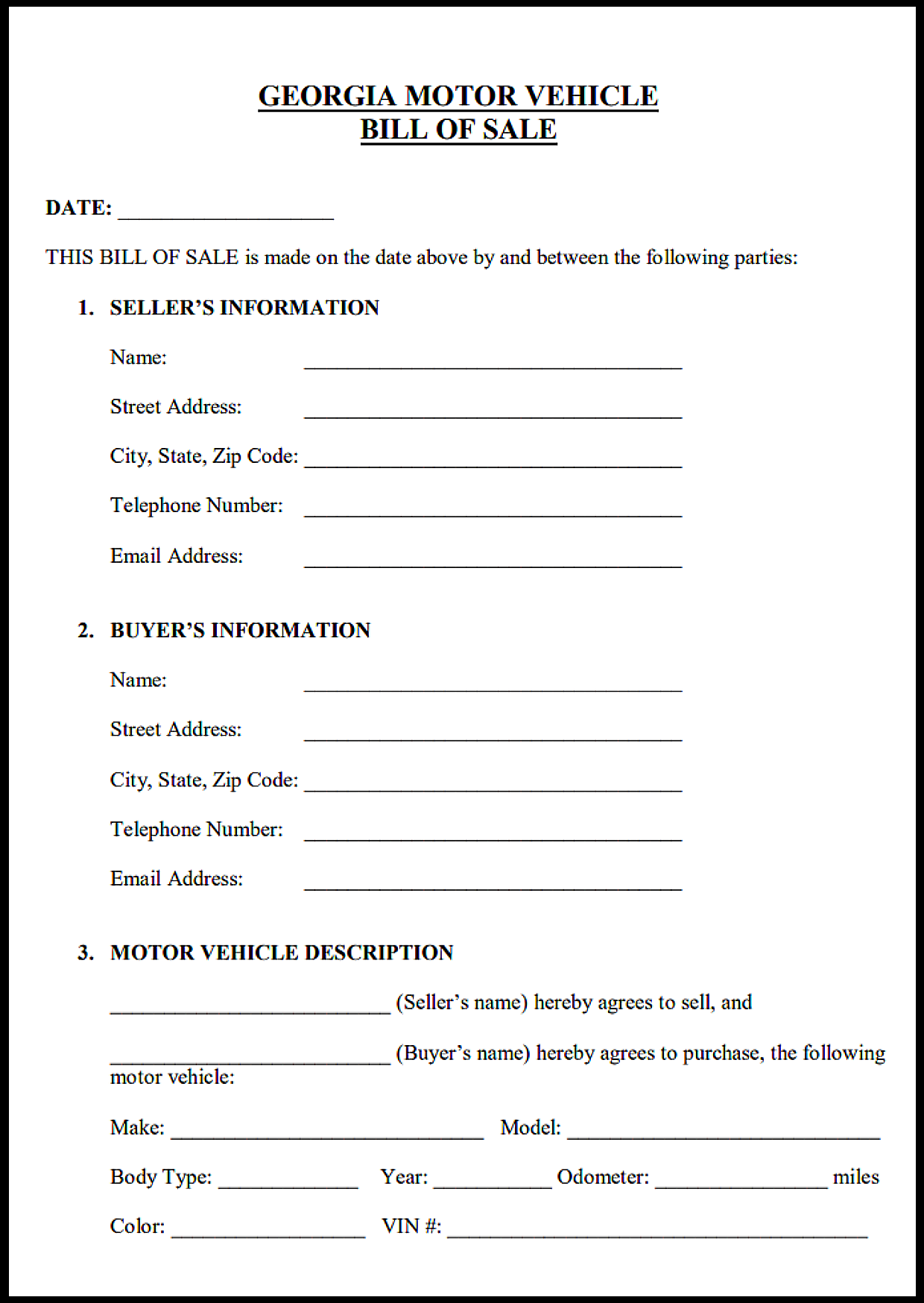
This is the form I rely on the most in my day-to-day practice. Georgia’s official T-7 is recognized in every county tag office, and I’ve watched many transactions go smoothly simply because the parties used this exact form. It’s clean, concise, and familiar to DMV staff, which saves you from the endless “let me check with my supervisor” delays.
If you’re dealing with a normal private sale, T-7 is almost always the path of least resistance. I’ve included copies you can access easily—if you prefer a ready-to-print version, there’s a PDF available, and for those who want to fill in the fields on their computer, there’s a Word version as well.
Firearm Bill of Sale Form Georgia
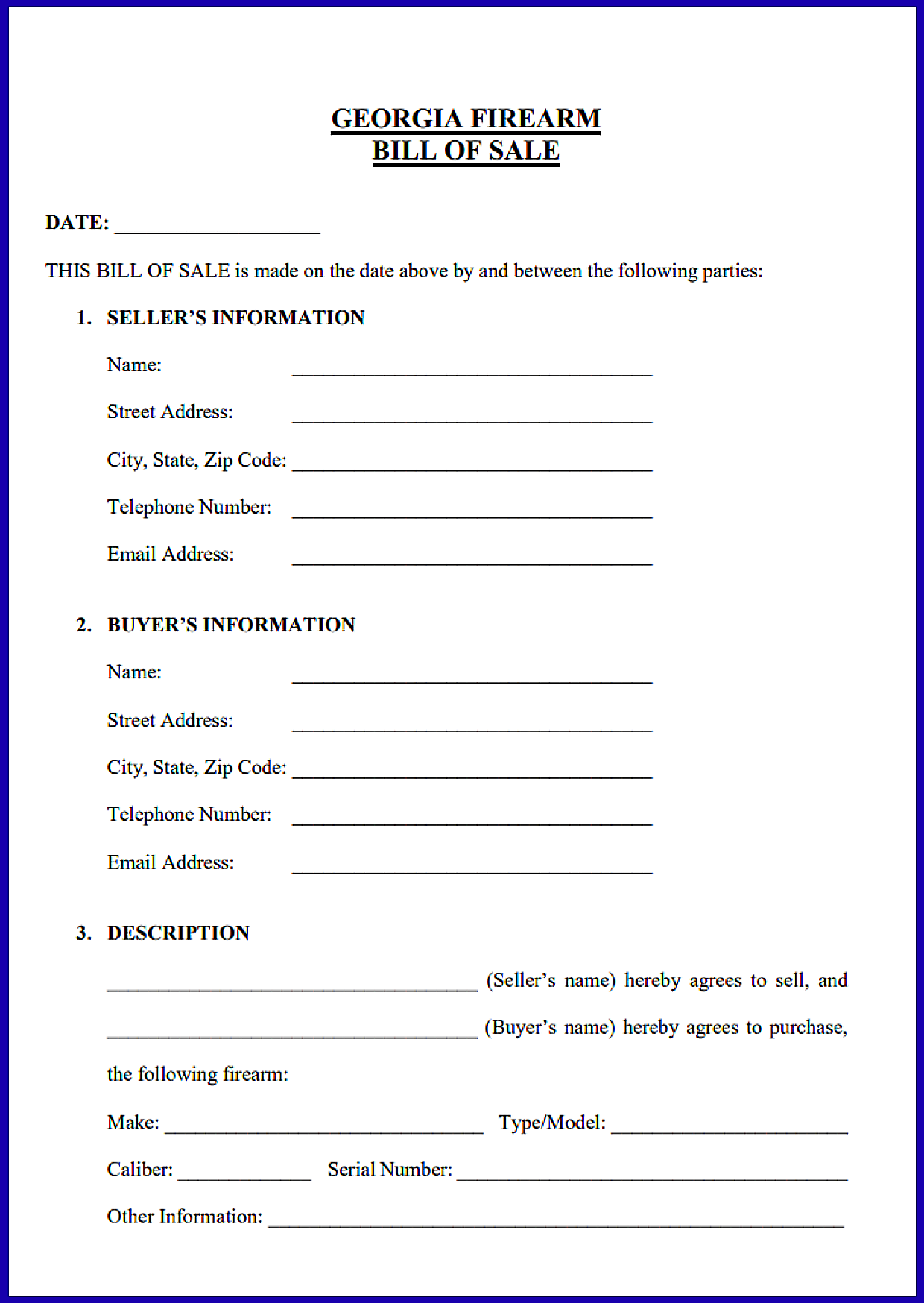
Firearm sales make a lot of people understandably nervous, and in Georgia, documentation matters more than most folks realize. I’ve had clients who ended up in uncomfortable conversations with law enforcement because they sold a gun years ago with no written record. A solid firearm bill of sale protects both the seller and the buyer.
This form includes identifying details, serial numbers, and certification that the buyer is legally allowed to own a firearm—critical points that come up often in real cases. And since people like keeping firearm documents organized, I’ve made this form accessible in downloadable PDF and editable Word formats so you can store it however you’re comfortable.
Georgia Boat Bill of Sale Form
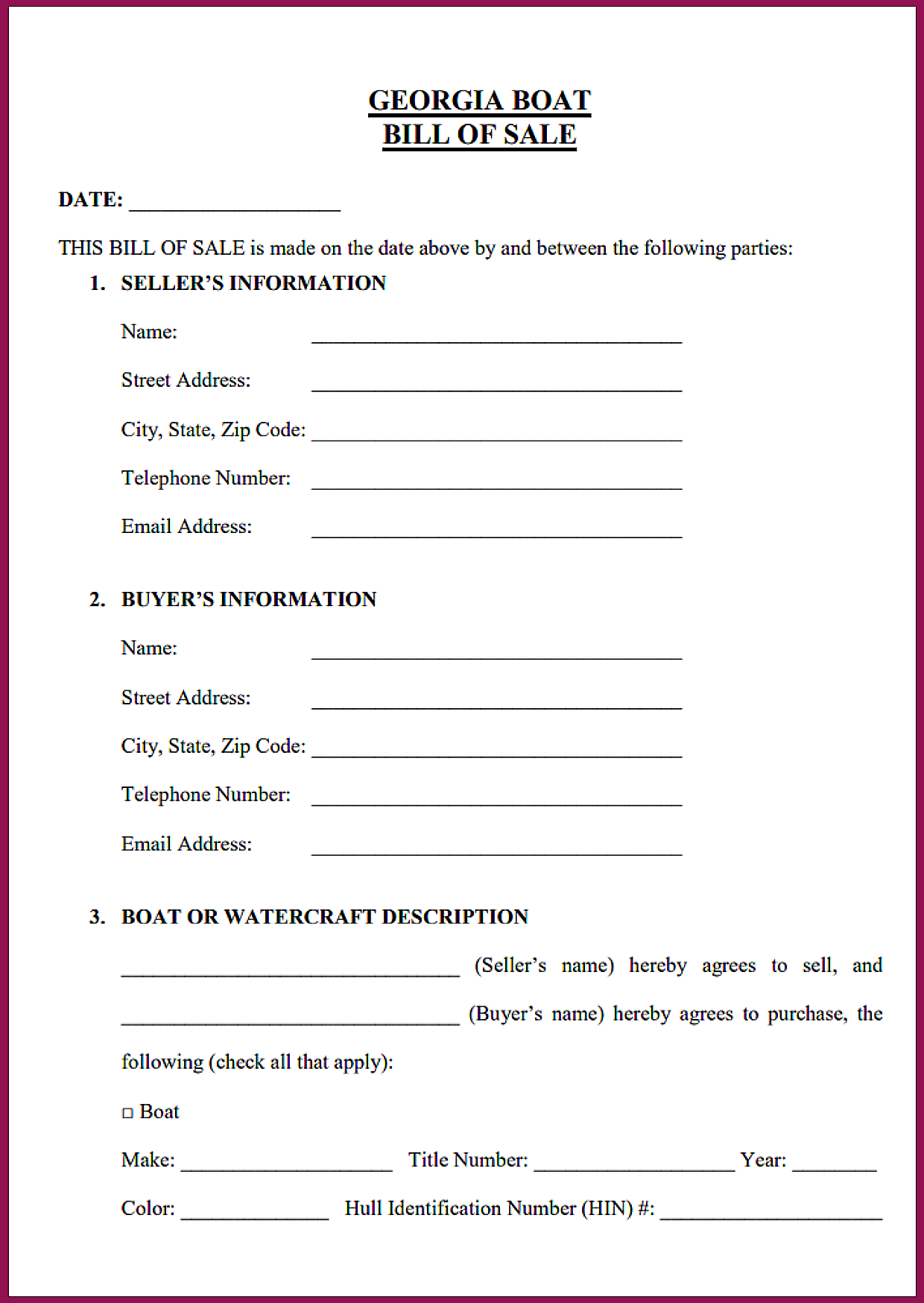
Boat transactions in Georgia can be trickier than car sales because the Department of Natural Resources has its own rules—and trust me, DNR officers pay attention to details. I’ve helped many folks untangle registration issues simply because their bill of sale didn’t match the hull identification number exactly.
This boat-specific form captures everything DNR expects: HIN, length, motor details, and trailer information when applicable. To make things easier for buyers and sellers, this form is available in print-ready PDF format and also in a Word version if you prefer to fill it out digitally before heading to DNR.
Georgia Car Bill of Sale Form
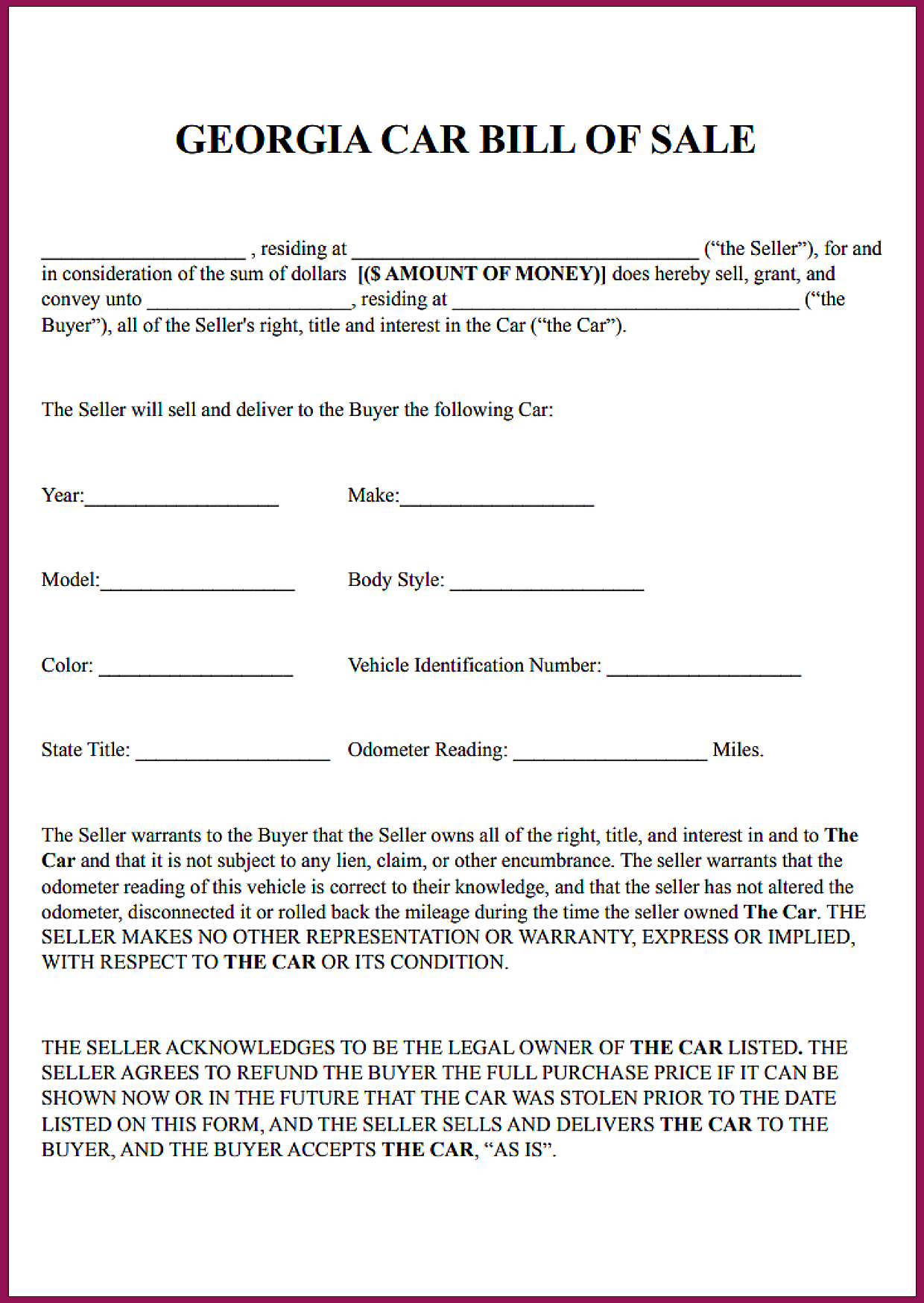
When it comes to car sales, especially those friendly “neighbor-to-neighbor” deals, people often treat paperwork casually. I’ve seen handshake deals turn into expensive misunderstandings because the parties didn’t put the basics in writing. A Georgia car bill of sale is your first line of protection.
This version includes clear spaces for lien information, payment method, and the condition of the vehicle—details that buyers and sellers forget until it’s too late. If you like to prepare documents ahead of time, you can get this one in both a fillable Word file and a clean-print PDF for your records.
Georgia Department of Revenue Bill of Sale Form
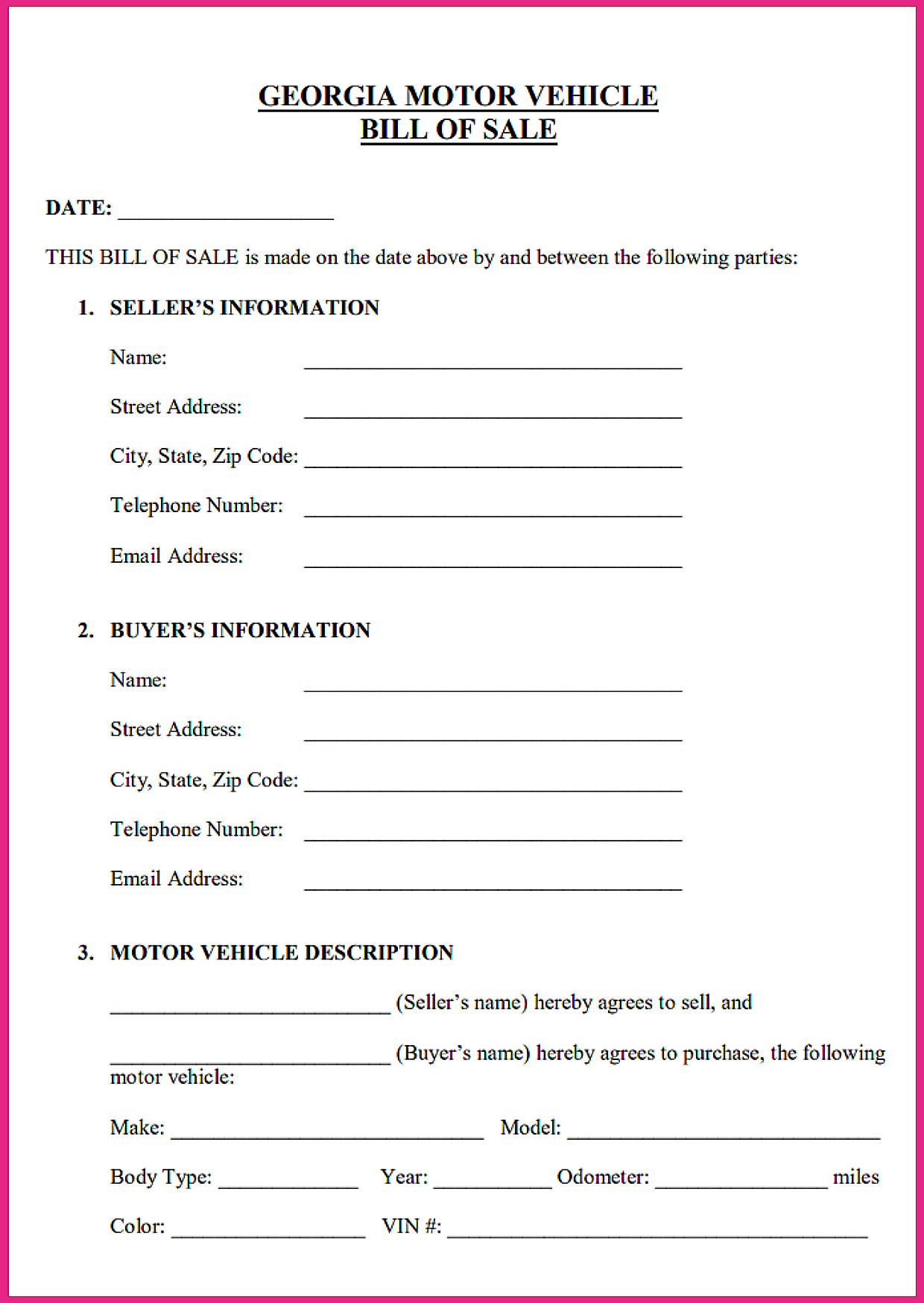
The Department of Revenue (DOR) likes consistency, and when you use a bill of sale that matches their expectations, things move faster. I’ve stood in enough tag office lines with clients to know that the paperwork that looks “official” gets far fewer questions.
This DOR-style bill of sale includes the data points state systems are built around, which reduces the odds of clerks asking you for extra documentation. I’ve made it easy to access in PDF if you prefer printing or Word if you like filling electronically.
Georgia Motor Vehicle Bill of Sale Form T-7
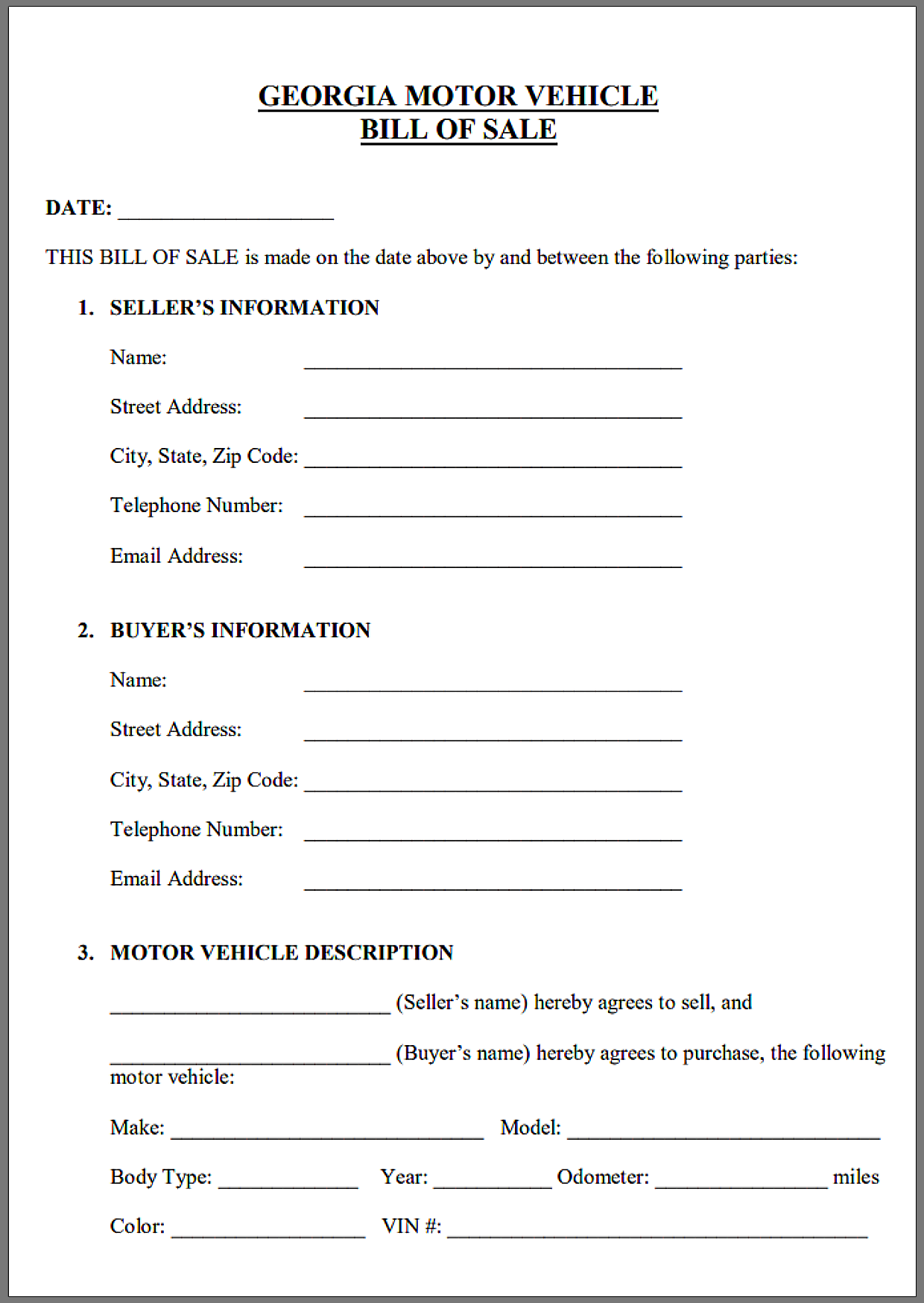
If you’re transferring a motor vehicle in Georgia—cars, trucks, SUVs, motorcycles—T-7 is the go-to. I’ve watched people bring handwritten notes or copied forms from other states and then wonder why the clerk sent them back. Georgia is very particular, and T-7 clears those hurdles.
This motor vehicle-focused version of the T-7 includes everything you need to satisfy state requirements. Whether you want a form you can type into or one you can handwrite neatly, I’ve included both a Word file and a polished PDF version for your convenience.
Bill of Sale Form Georgia Trailer
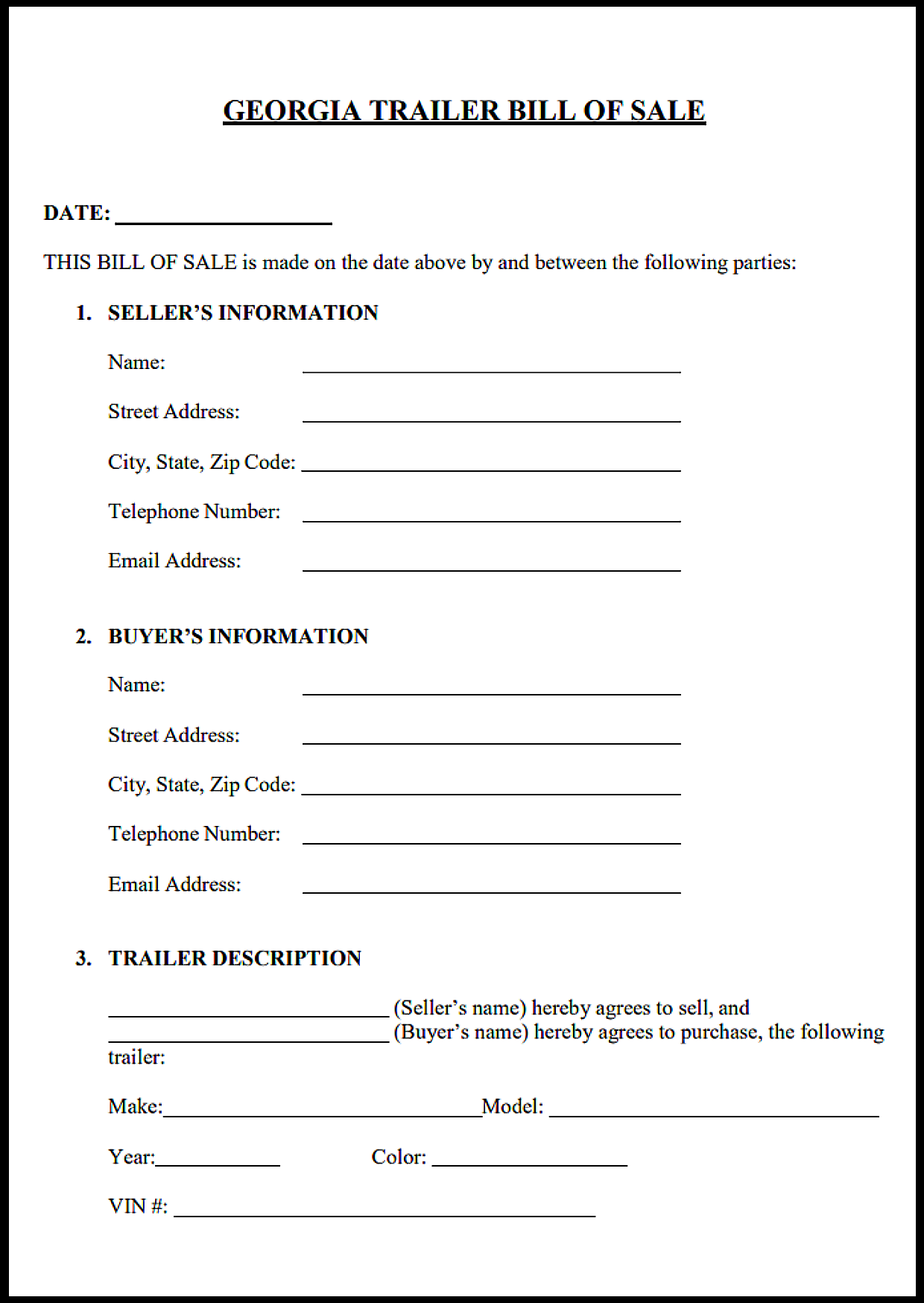
Trailers are often bought and sold casually—yard sales, farm swaps, “my buddy’s got one.” But trailer registration in Georgia can get messy fast without a good bill of sale. I’ve helped people chase down serial numbers weeks after they bought a trailer simply because nothing was recorded properly.
This trailer-specific form gives you space for serial numbers, axle details, size, and whether the trailer is homemade—a detail that can change your entire registration process. For easy recordkeeping, this form is available as a downloadable PDF and also as a Word document you can edit before printing.
Why a Bill of Sale Matters in Georgia (More Than People Realize)
Georgia doesn’t technically require a bill of sale for every vehicle transfer, especially when a title is present. But in real life? I’ve seen too many disputes, DMV mix-ups, and “he said/she said” arguments to ever recommend skipping it.
A good bill of sale protects both sides.
A sloppy bill of sale protects no one.
Just last month, I helped a guy from Bartow County who bought a 1998 F-150 from a coworker. No bill of sale—just a folded-up title someone scribbled on. Turns out the seller had never registered the truck in his own name. Try explaining that to the Georgia Department of Revenue without proper documentation. A simple bill of sale would’ve saved him weeks of back-and-forth.
What I Always Make Sure Is On a Georgia Bill of Sale
Over the years, I’ve developed a mental checklist. Whenever I draft or review a bill of sale, I want to see:
1. Full legal names and addresses
Not “Mike from work.” Full name, exactly as it appears on the ID. Georgia DMV LOVES matching inconsistencies.
2. A complete description of the item
For vehicles, that means:
-
VIN
-
Year, make, model
-
Odometer reading
-
Color (optional but helpful)
For boats, ATVs, trailers—include serial numbers and registration numbers when applicable.
I once handled a case where two identical utility trailers got mixed up because neither had a clear identifying number on the bill of sale. Cost both parties a lot of grief.
3. The purchase price
Be honest about it. Underreporting the value to save on taxes is one of the fastest ways to end up in trouble with the Department of Revenue—and yes, they do audit.
4. Date of sale and signatures
Georgia doesn’t require notarization for most private-party sales, but I always encourage it. For high-value items, a notary can save you from a future argument about whether the sale even happened.
5. Any special conditions
“As-is” is the classic phrase, and yes, it matters.
I’ve had folks try to come after a seller for a blown transmission three months after buying a 20-year-old truck. If your bill of sale clearly says “sold as-is, no warranties,” you’re in much better shape.
Georgia-Specific Forms You Should Know About
People often think a generic template is enough, but Georgia actually provides a few official forms that make your life easier.
For vehicles, trailers, and motorcycles:
-
Form T-7 — Georgia Bill of Sale
This is the one I use the most. It’s clean, straightforward, and recognized by every County Tag Office I’ve ever dealt with.
For vessels (boats):
-
The Georgia DNR has its own bill of sale format that includes hull ID numbers and horsepower details. Use their version—trust me. The DNR is strict about documentation.
For private-party odometer disclosures:
-
Form T-107 (when required)
Federal law is picky about odometer statements. If your vehicle is newer than 20 years, don’t skip this.
Common Pitfalls I See All the Time
1. Buying from someone who isn’t the titled owner
This is the number one source of headaches.
If the seller’s name isn’t on the title, walk away—or call me first. A bill of sale won’t fix an improper chain of ownership.
2. VIN mistakes
One digit off can throw your Tag Office into chaos.
I’ve watched folks spend hours in line only to get turned away because the VIN on their bill of sale didn’t match the one on the frame.
3. No proof of payment
If you’re paying cash, mention it in the bill of sale.
If you’re paying electronically, keep the receipt.
4. Not keeping copies
I always tell clients:
Make three copies—one for you, one for the other party, one for your glovebox.
When a Bill of Sale Won’t Be Enough
There are times when a bill of sale is only the start of what you’ll need.
For example:
-
No title vehicles older than 1985
-
Homemade trailers
-
Abandoned vehicles on private property
-
Estate sales involving deceased owners
Each of these situations can turn simple paperwork into a puzzle. In my practice, I’ve helped people through these dozens of times, and the key is always: documentation and patience.
My Personal Advice for a Smooth Georgia Private-Party Sale
-
Meet somewhere safe (a police department lot is my personal preference).
-
Make sure both parties bring ID.
-
Use the official T-7 form whenever possible.
-
Never let someone “take the vehicle now and I’ll bring the title later.”
-
Take photos of the VIN plate and the seller’s ID—just in case.
-
Don’t rush. The fastest deals are often the sloppiest.
I’ve watched too many good people get burned because they trusted a handshake more than a properly documented sale.
A Friendly Legal Note
Everything I’m saying here comes from real cases I’ve worked on and real folks I’ve helped. But of course, this is general guidance—not formal legal advice for your specific situation. If you’ve got a messy title, a missing seller, or an odd situation, it’s worth talking to a Georgia attorney who handles these issues regularly.

Dale Preiser is the Assistant Director of Legal Services at the Southern States Police Benevolent Association, where he provides legal support and counsel for law enforcement professionals facing job-related legal issues. With a strong foundation in law and public service, Dale brings years of experience working across legal and professional sectors, including law enforcement and healthcare industries. He holds a Juris Doctor degree from Oklahoma City University and previously ran a private law practice in McDonough, Georgia before joining SSPBA in 2012. Dale is also the voice behind Bill of Sale Georgia, a dedicated resource on bill of sale forms and legal documentation for Georgia residents and businesses. His commitment to legal clarity and member advocacy underscores his contributions to both the website and the law enforcement community.