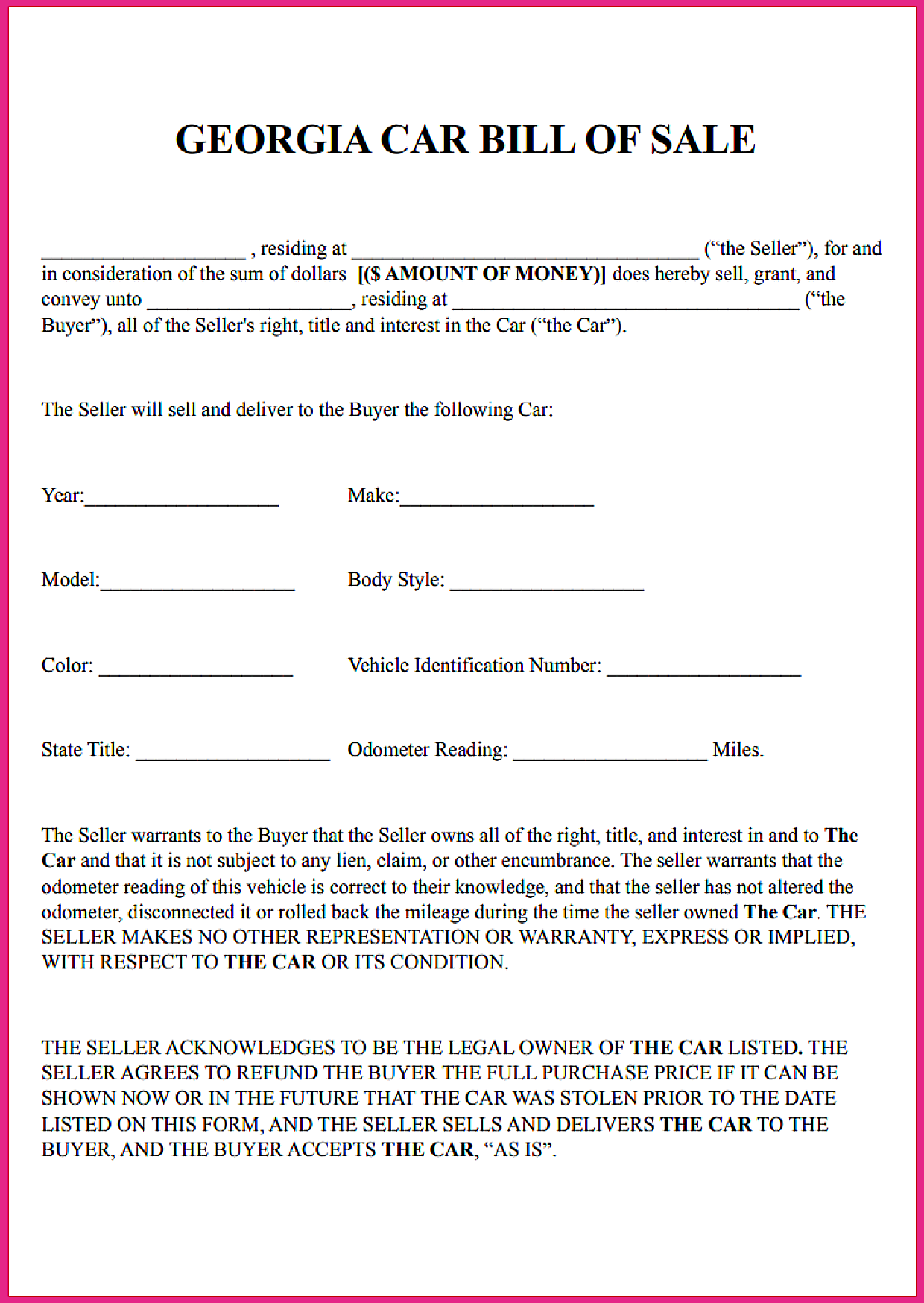
I’ve been practicing law here in Georgia for a long time, and I’ve handled more used-car transactions than most folks would believe—some smooth as butter, others the kind that make you swear off private sales forever. Over the years, I’ve learned that a Used Car Bill of Sale Georgia isn’t just a piece of paper. It’s the document that proves ownership changed hands, protects both sides from future disputes, and gives you something solid to stand on if anything goes sideways.

And when someone sits across my desk—usually clutching a wrinkled title, a little cash, and a whole lot of confusion—I can instantly tell whether their deal will end clean or turn into one of those “Dale, I wish I’d come to you sooner” situations. A Georgia bill of sale used car may look simple, but in my experience it’s the one form that separates a safe transaction from a long, expensive headache. Georgia gives folks plenty of freedom when selling used vehicles, but it does not forgive sloppy paperwork, missing disclosures, or unclear ownership transfers.
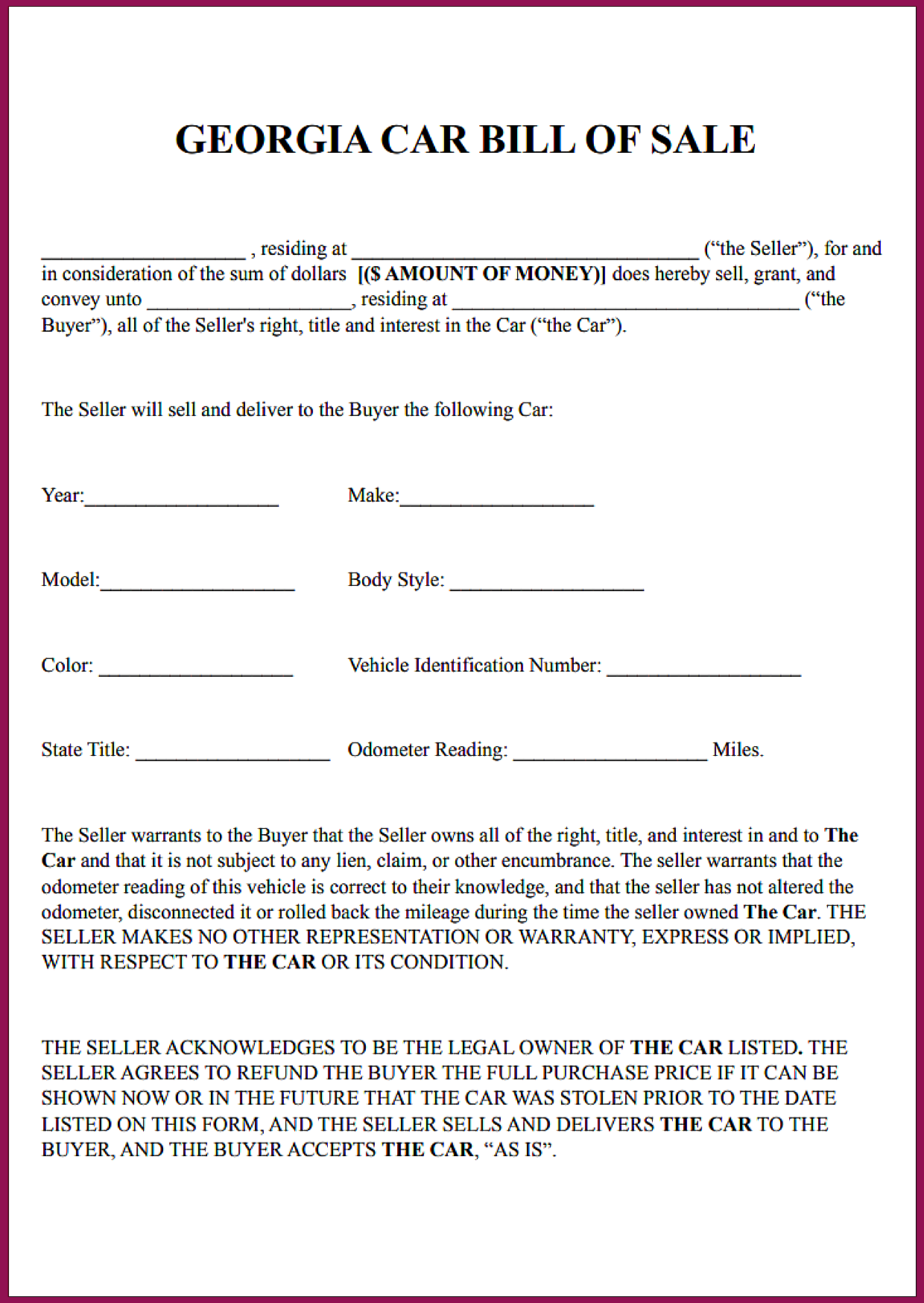
Used Car Bill of Sale GeorgiaUsed Car Bill of Sale Georgia

Free Printable Used Car Bill of Sale Georgia Template
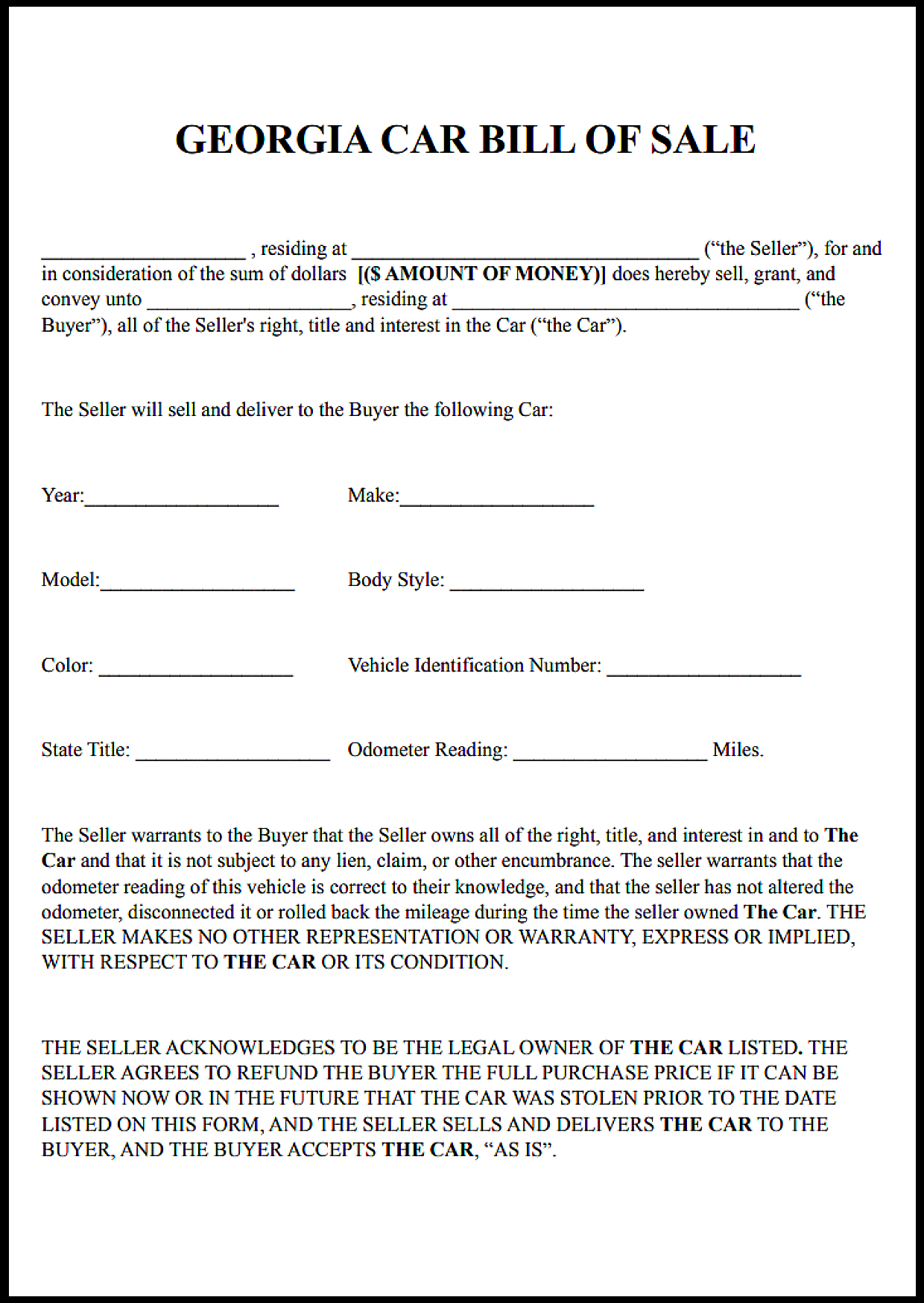
Free Printable Used Car Bill of Sale Georgia Template

Over the years, I’ve learned that most people walk into my office with one simple request: “Dale, can you just give me a clean, legally sound bill of sale so I don’t mess this up?” And honestly, I get it. Georgia private sales can move fast, and having a free printable used car bill of sale Georgia template ready to go makes the whole process feel calmer and more controlled. I’ve used variations of this template in real cases, especially when folks want something straightforward but still dependable in the eyes of the DMV.

This template covers all the essentials—VIN, mileage, condition terms, buyer/seller details—and it protects you when things get messy later. If you prefer keeping things organized, you can grab a polished copy in PDF or Word format right from here, so you don’t have to create one from scratch. Think of it as your safety net before handing over the keys.

Get PDF | WORD

Georgia Used Car Bill of Sale PDF

Georgia Used Car Bill of Sale PDF

A lot of my clients tell me they’d rather have something “official-looking” when they walk into a Georgia tag office. That’s why the Georgia used car bill of sale PDF version is one of my personal favorites. It prints clean, it’s easy to email, and it’s hard to accidentally alter—which is a big advantage when you’re dealing with mileage disclosures or purchase disputes. I’ve seen people avoid long DMV arguments simply because they brought a tidy, structured PDF instead of a handwritten note.

This PDF layout mirrors what we use in real-world Georgia vehicle transfers, and it’s designed so both parties feel confident signing it. If you like your paperwork neat and consistent, there’s a downloadable PDF version you can access anytime. Saves you a trip to my office, honestly.

Get PDF

Sample Bill of Sale for Used Car Georgia
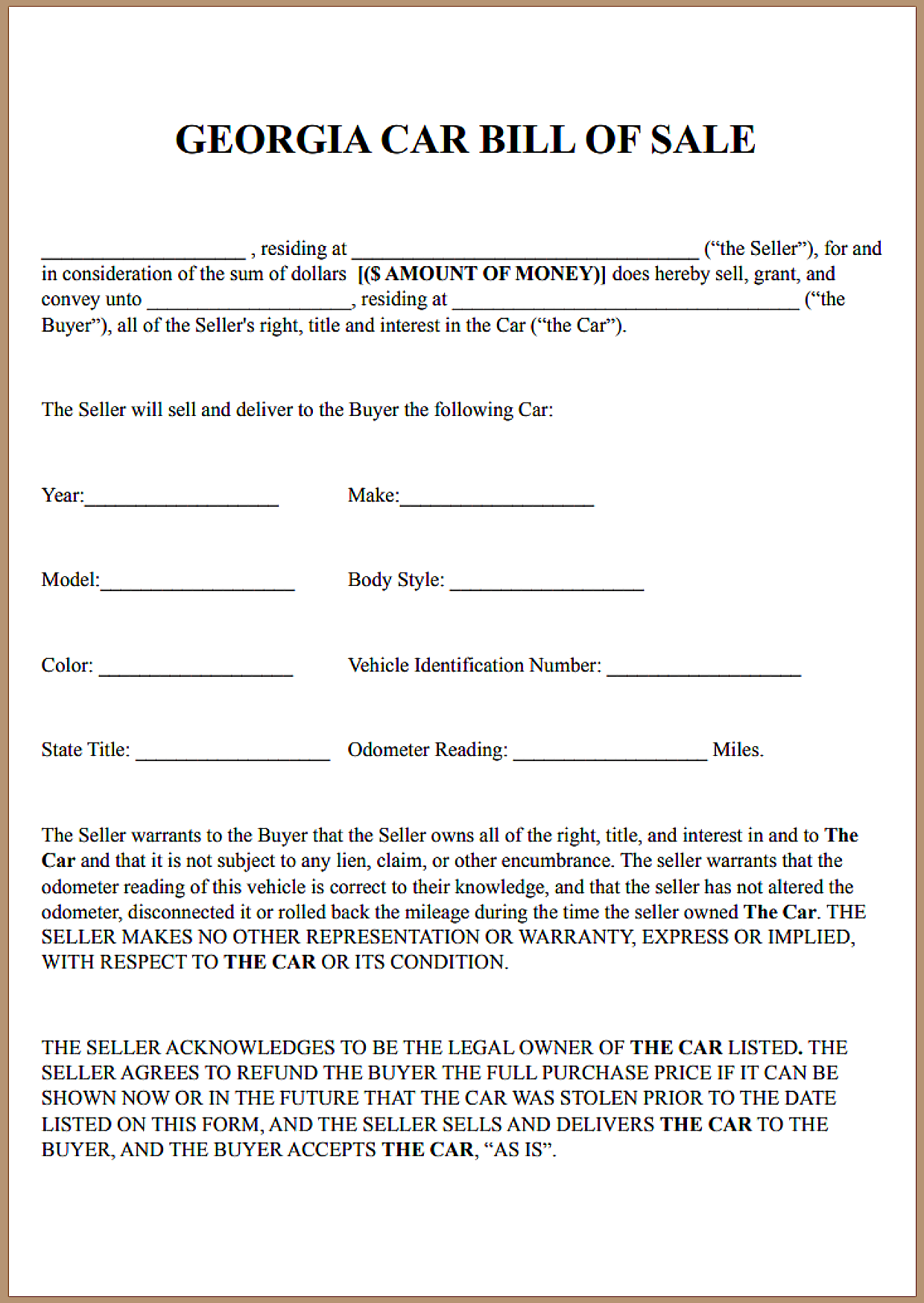
Sample Bill of Sale for Used Car Georgia

Sometimes folks come to me not because they need a form, but because they want to see an example of how a real Georgia bill of sale for a used car should look—one that reflects how deals actually happen here. This sample bill of sale for used car Georgia shows the real structure I rely on when guiding clients through private-party transactions. It’s simple, clean, and easy for both buyer and seller to understand.

A good sample gives you confidence that you’re not missing the small but important details—like proper “as-is” wording or the exact format Georgia expects for vehicle information. And if you’re someone who likes having different file options on hand, I’ve made this sample available in both PDF and Word, so you can choose whichever version fits the way you work.

Get PDF | WORD

Why the Bill of Sale Matters More Than People Expect

Georgia doesn’t technically require a bill of sale for every private-party vehicle sale. That’s true. But in my experience, skipping it is like skipping the seatbelt just because the car isn’t yelling at you.

I’ve seen sellers stuck with old tickets because a buyer never transferred the title. I’ve seen buyers fighting over mileage disclosures because nothing was written down. And I’ve seen the DMV turn folks away simply because details didn’t match.

A solid bill of sale clears all of that fog. It documents:

  • Who sold what

  • When the car changed hands

  • For how much

  • And that both parties agreed to it

When trouble shows up later—and it often does—that one sheet of paper becomes your best friend.

What I Always Make Sure Goes Into a Georgia Bill of Sale

You’ll see plenty of templates floating around online (some good, some written by people who clearly never dealt with a Georgia tag office). But the essentials I insist on are:

  • Full legal names and addresses of both parties

  • Sale date and exact purchase price

  • VIN, year, make, model

  • Odometer disclosure (don’t gloss over this—Georgia takes mileage fraud seriously)

  • Condition statement: “sold as-is with no warranties” unless otherwise agreed

  • Signatures from both sides

Personally, I prefer a handwritten signature over digital for private sales—DMV clerks rarely question ink.

A quick note: Georgia’s Form T-7 is the state’s own bill of sale. Many folks don’t know it exists, but I use it all the time when the situation feels even slightly risky. It’s clean, official, and reduces questions at the tag office.

A Story I Tell Almost Every Week

A few years ago, a gentleman came to me furious because he sold his old truck and later received a notice about unpaid tolls and a late insurance cancellation fee.
Turns out the buyer never transferred the title, and because the seller had no proof of the exact sale date, the state treated him as the owner for weeks afterward.

If he had handed me a simple bill of sale that day, I could’ve cleared his name in minutes. Instead, we spent two months untangling everything.

That’s why I always tell sellers:
As soon as the car drives away, file a Notice of Transfer (Form T-200).
It’s free. It’s fast. And it protects you like armor.

My Advice for Buyers

Buyers often assume they’re the ones at risk of being scammed—sometimes they are—but the bigger problem I see is buyers being too trusting.

When you’re the buyer, I always recommend:

  • Match the VIN on the car, the title, and the seller’s ID

  • Make sure the title has no surprises—no open assignments, no scribbled-out sections

  • Verify there are no liens (I’ve seen more hidden finance-company headaches than I care to admit)

One young buyer once told me, “The seller seemed nice.”
Well, nice doesn’t clear a lien. Paperwork does.

A Few Things People From Georgia Ask Me Over and Over

“Do I need to notarize the bill of sale?”
Not usually. But if the buyer or seller lives out of state, I often advise it. Georgia may not require notarization—other states do.

“Can I drive home with just the bill of sale?”
In Georgia, yes—but insurance and a temporary operating permit situation can get messy quickly. I always tell folks to plan ahead instead of relying on luck and a friendly officer.

“Should I keep a copy?”
Absolutely. Scan it. Email it to yourself. Stick one in your glove box. I’ve seen people lose deals because they trusted the wrong manila folder.

What I’ve Learned After Years of Watching These Deals Go Right—and Wrong

The bill of sale isn’t just paperwork.
It’s clarity.
It’s protection.
It’s the difference between a clean sale and a stress-filled phone call months later.

Every used-car sale in Georgia has its quirks—different counties have different tag office personalities (I’m looking at you, Fulton and Cobb). But a well-prepared bill of sale smooths out 90% of the bumps.

Casual Lawyer Disclaimer

Everything I’ve said here comes from real cases and real Georgia practice, but it’s not personalized legal advice. Every situation has its own twist—if yours has one, talk to a lawyer who can look at your documents.

If you’ve got a question, a strange situation, or just want to make sure you’re not stepping into a pothole, feel free to drop a comment below or reach out. I’m always happy to help folks avoid the messes I’ve cleaned up far too many times.

FAQ

Do I actually need a Used Car Bill of Sale in Georgia if the title is signed?

In many cases, the title alone is enough for the DMV—but I’ve seen too many deals fall apart without a proper bill of sale. In my practice, the Used Car Bill of Sale Georgia acts as your proof of the exact sale date, price, mileage, and agreement terms. When someone later claims “I never bought that car” or “That wasn’t the mileage,” this one piece of paper saves you.

Can I drive the car home in Georgia with only a bill of sale?

Legally, yes—you can drive with just a bill of sale as long as you have insurance. But here’s where people get in trouble: a bill of sale is not a license plate, and officers in some Georgia counties are stricter than others. I always tell buyers to plan the trip carefully and transfer the title as soon as possible.

Does my bill of sale need to be notarized?

Georgia doesn’t require notarization for a used-car bill of sale, but I’ve handled enough cross-state transactions to know that notarizing avoids arguments later. If the buyer or seller lives outside Georgia—or if you’re dealing with a high-value vehicle—I strongly recommend getting it notarized. It’s a small step that prevents big problems.

What information MUST be in a Georgia bill of sale for a used car?

From experience, the common mistakes are missing VINs, bad mileage entries, or vague “condition” statements. At minimum, I insist on:

  • Full legal names & addresses

  • VIN, year, make, model

  • Purchase price

  • Exact sale date and time

  • Odometer reading

  • “Sold as-is” wording (unless you’re giving a warranty)
    A clean, complete bill of sale keeps the DMV happy and protects you if anything resurfaces later.


Leave a Reply

Your email address will not be published. Required fields are marked *