
If you were sitting across the desk from me here in Georgia, this is probably how I’d start the conversation. I’m Dale Preiser, and after years of handling real private sales, title disputes, and DMV problems across this state, I can tell you one thing clearly: Mobile Home Bill of Sale Georgia issues cause more confusion than almost any other transaction I deal with.
A Mobile Home Bill of Sale in Georgia is more than just proof that money changed hands. It’s a legal document that helps establish ownership, supports title transfers, and protects both the buyer and the seller when questions come up later—which, in my experience, they often do. The problem is that Georgia treats mobile homes differently depending on their age, location, and whether they’re classified as personal property or real property. Most people are never told that part upfront.
Over the years, I’ve handled mobile home bill of sale problems tied to family transfers, mobile home park sales, private cash deals, and even situations where a buyer had already moved in—only to find out later that the paperwork didn’t line up with Georgia law. Those are tough conversations to have, and I’ve learned that most of them could have been avoided with the right understanding from the start.
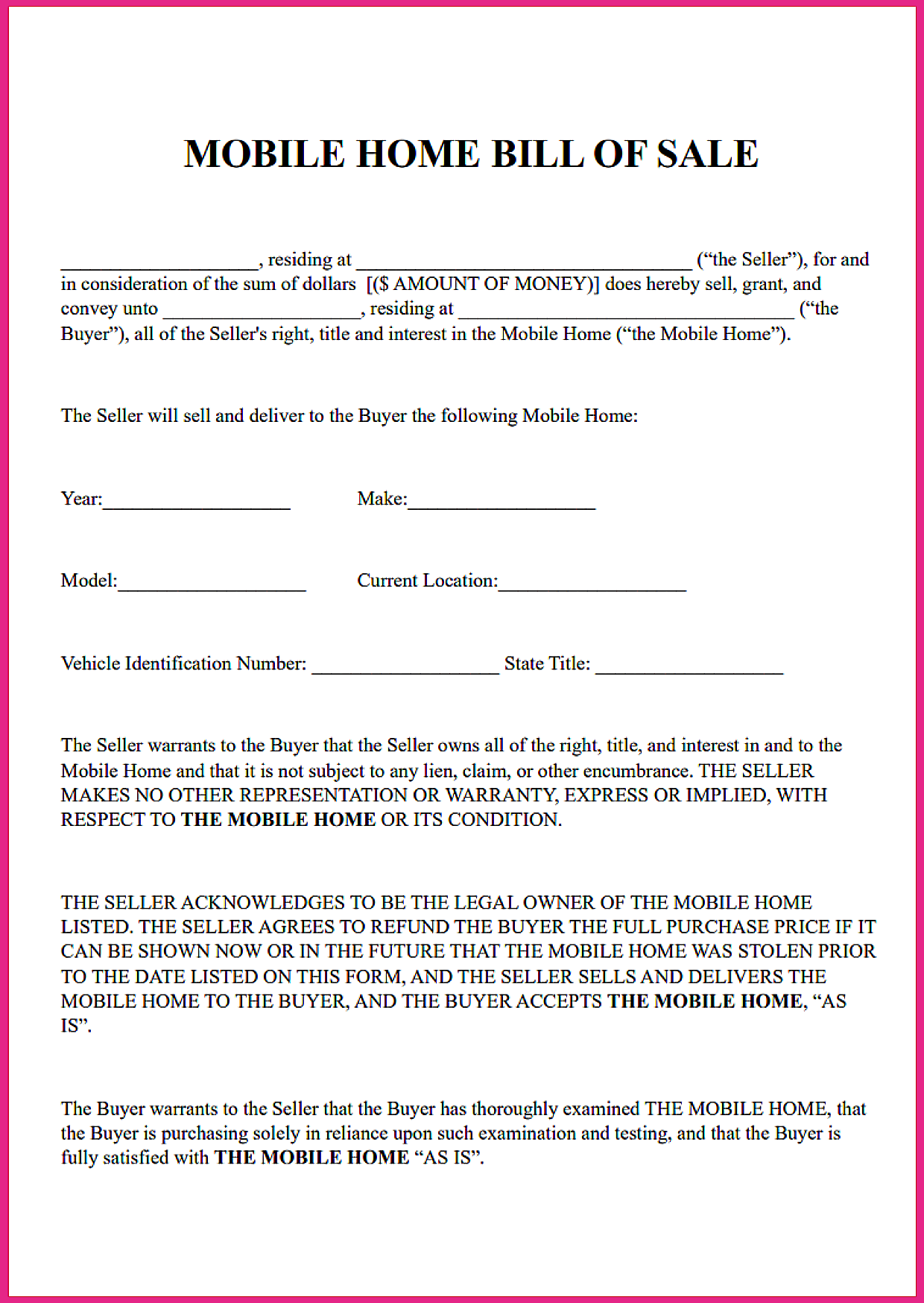
Free Printable Mobile Home Bill of Sale Georgia Template
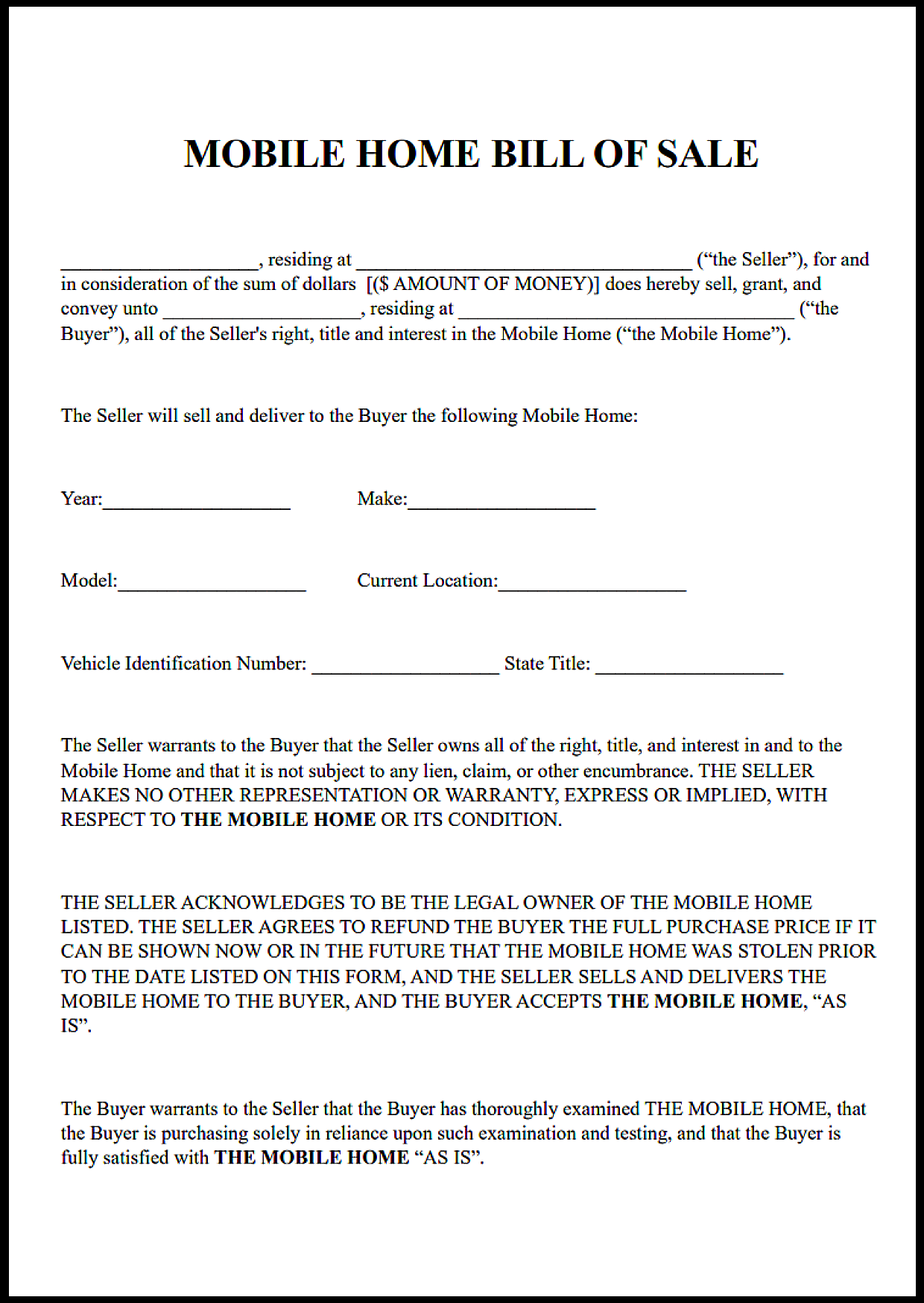
When clients ask me for a starting point, this is usually where I guide them first. A free printable Mobile Home Bill of Sale Georgia template gives people something concrete to work with—especially in private sales where there’s no dealership paperwork to lean on. I’ve seen far too many handwritten agreements or WhatsApp messages being treated like legal documents, and that’s where problems begin.
That said, a template is only as good as how it’s used. In my experience, this form works best when all details are filled in clearly—buyer and seller information, mobile home identification numbers, purchase price, and the date of transfer. I always remind people that this document supports the transaction, but it doesn’t replace proper title transfer where required under Georgia law.
For convenience, I’ve included this template so you can download it in both PDF and Word format, allowing you to choose what’s easiest to fill out and keep for your records.
Bill of Sale for a Mobile Home in Georgia PDF
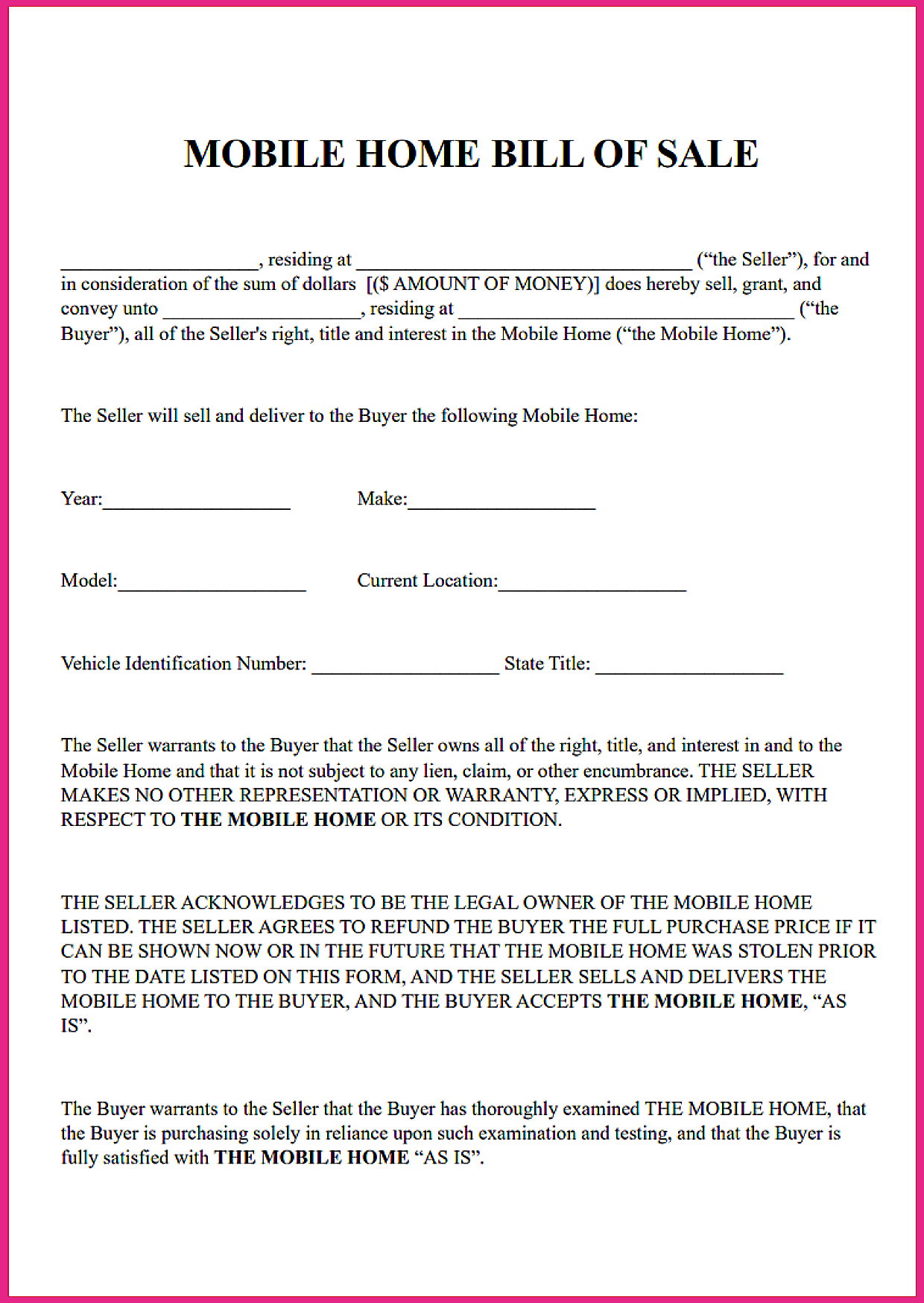
A bill of sale for a mobile home in Georgia PDF is something I often recommend to clients who want clean, professional documentation that won’t be altered later. PDFs are especially useful when the sale involves cash payments or family transfers—situations where memories can change but documents shouldn’t. I’ve handled disputes where the only thing that saved a buyer was a properly preserved PDF copy of the bill of sale.
From a legal standpoint, having a fixed-format document helps avoid arguments about changed terms or missing pages. Still, I always stress this point: the bill of sale supports ownership—it doesn’t automatically complete it. If the mobile home is titled personal property, you’ll still need to handle the title correctly through the Georgia Department of Revenue or county tag office.
To make things easier, this bill of sale is available for download in both PDF and Word versions, so you can either print a finalized copy or edit it before signing.
Why a Mobile Home Bill of Sale Matters More Than You Think
In my experience, people often say, “It’s just a trailer—do we really need formal paperwork?” That’s usually when I slow things down. In Georgia, a Mobile Home Bill of Sale isn’t just proof of payment. It’s often the only thing standing between a smooth title transfer and a long, frustrating mess with the county tag office.
I’ve seen buyers pay in full, tow the home, and then learn the seller never properly signed off the title—or worse, didn’t actually have the legal right to sell it. A solid bill of sale helps protect both sides, especially when memories fade or disputes pop up later.
Georgia’s Big Divide: Personal Property vs. Real Property
Here’s where most people get tripped up. In Georgia, mobile homes built after 1962 are typically titled, much like vehicles. If that home hasn’t been permanently affixed to land and converted to real property, it’s still personal property in the eyes of the state.
That means:
-
A bill of sale alone is not enough
-
The title must be properly assigned
-
The transfer usually goes through the Georgia Department of Revenue or your local county tag office
I’ve handled cases where someone had a perfectly written bill of sale—but no title transfer. Legally, ownership never changed. That’s a painful surprise after money has already changed hands.
What I Always Include in a Georgia Mobile Home Bill of Sale
Personally, I strongly prefer bills of sale that go beyond the bare minimum. The ones that hold up best include:
-
Full legal names and addresses of buyer and seller
-
Mobile home details (year, make, model, VIN/serial number)
-
Purchase price and payment terms (especially if not paid in full)
-
Clear “as-is” language (this matters more than people realize)
-
Date of sale and signatures from both parties
I once handled a dispute where two family members argued over whether payment was a “loan” or a “sale.” One extra sentence in the bill of sale would have prevented months of stress.
Common Georgia Pitfalls I See Again and Again
Let me be blunt—these mistakes come up constantly:
-
No title check before payment
-
Using a generic online template that doesn’t match Georgia rules
-
Forgetting to verify liens on the mobile home
-
Assuming the land sale automatically includes the home
-
Not notarizing documents when the situation clearly calls for it
What I’ve learned is that most problems don’t come from bad intentions. They come from assumptions. Georgia law is not forgiving when paperwork is incomplete.
When the Mobile Home Is on Private Land
This is where things can get legally tricky. If the mobile home is permanently attached and has been converted to real property, the bill of sale may not even be the controlling document anymore—the deed might be. I’ve had clients come in shocked to learn their “mobile home sale” was actually a real estate issue.
That’s usually when I say, “Let’s slow down and make sure we’re doing this the right way.” It saves time, money, and stress later.
A Friendly Legal Reality Check
I’ll say this casually but clearly: every situation is different. What worked for your neighbor or cousin might not work for you. I’m always happy to explain options, but nothing replaces reviewing your specific documents and facts.
If something feels unclear or rushed, trust that instinct. I’ve seen too many people wish they’d asked one more question before signing.
Final Thoughts From My Office in Georgia
If you’re buying or selling a mobile home in Georgia, take the paperwork seriously—but don’t panic. With the right bill of sale, proper title handling, and a little patience, most transactions go smoothly.
If you’ve got questions, a unique situation, or just want a second set of eyes on your paperwork, you’re welcome to reach out. Drop a comment, ask a question, or contact me directly. I’ve spent years untangling these exact situations—and I’m always glad to help someone avoid becoming the next cautionary tale.
FAQ
Do I legally need a Mobile Home Bill of Sale in Georgia?
In my experience, yes—you absolutely should have one, even if the law technically requires a title transfer. A Mobile Home Bill of Sale Georgia acts as written proof of the transaction itself: who sold it, who bought it, when it happened, and for how much. I’ve seen deals fall apart later because there was no clear record of the sale terms. When disputes come up—and they often do—the bill of sale is usually the first document everyone asks for.
Is a bill of sale enough to transfer ownership of a mobile home in Georgia?
This is one of the biggest misunderstandings I see. A bill of sale by itself usually isn’t enough. If the mobile home is titled personal property, the title must be properly signed over and filed with the county tag office through the Georgia Department of Revenue. I’ve handled cases where buyers had a perfect bill of sale but no valid title transfer—legally, ownership never changed.
Does Georgia require a mobile home bill of sale to be notarized?
Georgia law doesn’t always require notarization, but personally, I strongly prefer it—especially in private sales. I’ve dealt with situations where one party later claimed a signature was forged or the deal never happened. A notarized bill of sale helps shut those arguments down quickly. It’s a small step that can save a lot of trouble later.
What if the mobile home is on private land—do I still use a bill of sale?
That depends, and this is where people get caught off guard. If the mobile home has been permanently affixed to land and converted to real property, the transaction may fall under real estate law instead. I’ve seen clients use a bill of sale when a deed transfer was actually required. When land is involved, I always recommend slowing down and confirming how the home is legally classified before signing anything.

Dale Preiser is the Assistant Director of Legal Services at the Southern States Police Benevolent Association, where he provides legal support and counsel for law enforcement professionals facing job-related legal issues. With a strong foundation in law and public service, Dale brings years of experience working across legal and professional sectors, including law enforcement and healthcare industries. He holds a Juris Doctor degree from Oklahoma City University and previously ran a private law practice in McDonough, Georgia before joining SSPBA in 2012. Dale is also the voice behind Bill of Sale Georgia, a dedicated resource on bill of sale forms and legal documentation for Georgia residents and businesses. His commitment to legal clarity and member advocacy underscores his contributions to both the website and the law enforcement community.