
By Dale Preiser, J.D. | Assistant Director of Legal Services, SSPBA
If you were sitting across from me in my office right now, you’d probably be doing one of two things — either rifling through a folder of papers hoping the document will magically appear, or staring at me with that look I’ve seen hundreds of times over the years. The look that says: “I know I had it. I just can’t find it.”
Losing a bill of sale happens more than people realize. A move, a flooded garage, a house fire, a divorce — life gets messy, and paperwork gets lost. The question I get asked most in situations like this isn’t really about the document itself. It’s about the consequences. What does this mean for me now?
The honest answer: it depends on what you’re trying to do, and how long ago the sale happened. But in most cases, it’s fixable — if you know the right steps.
Let me walk you through it the same way I do with my own clients.
First, Understand What a Bill of Sale Actually Does in Georgia
Before we talk about losing one, it helps to understand why it matters in the first place.
In Georgia, a bill of sale is a written record of a private transaction. For vehicles, it typically works alongside the title — it’s not a substitute for a title, but it supports it. It documents the sale price, the date the sale happened, and who was involved. For personal property, boats, firearms, trailers, or equipment where no title exists, the bill of sale is often the only written proof that a sale ever took place.
Georgia’s Department of Revenue uses the official T-7 Bill of Sale form for motor vehicle transactions at tag offices. But plenty of private sales use custom forms, handwritten notes, or templates — all of which are legally valid if properly completed.
When you lose that document, the problem isn’t always immediate. It surfaces when you need it most: when you’re trying to sell, register, dispute a claim, or prove ownership.
A Client Story I Won’t Forget
A few years back, a woman came into my practice — let’s call her Sandra. She had sold her late father’s pickup truck to a neighbor shortly after he passed. It was a straightforward deal, cash in hand, handshake at the driveway. She had completed a Georgia vehicle bill of sale and signed the title over properly.
About eight months later, the neighbor — now wanting to sell the truck himself — called Sandra claiming she still owed him money from the original deal. He said the sale price was different from what Sandra remembered. Sandra was certain of the amount. But when she went to find her copy of the bill of sale, it was gone. She’d moved twice since then.
Without that document, she had no written proof of the agreed price. The neighbor had his copy — with a number Sandra disputed. It became a he-said-she-said situation that cost more in stress and time than it ever should have.
That’s the quiet danger of a lost bill of sale. It doesn’t always cause a problem right away. But when a dispute comes — and sometimes they do — you want that piece of paper in your hands.
So What Happens If You’ve Lost Your Bill of Sale?
Here’s the practical breakdown depending on your situation.
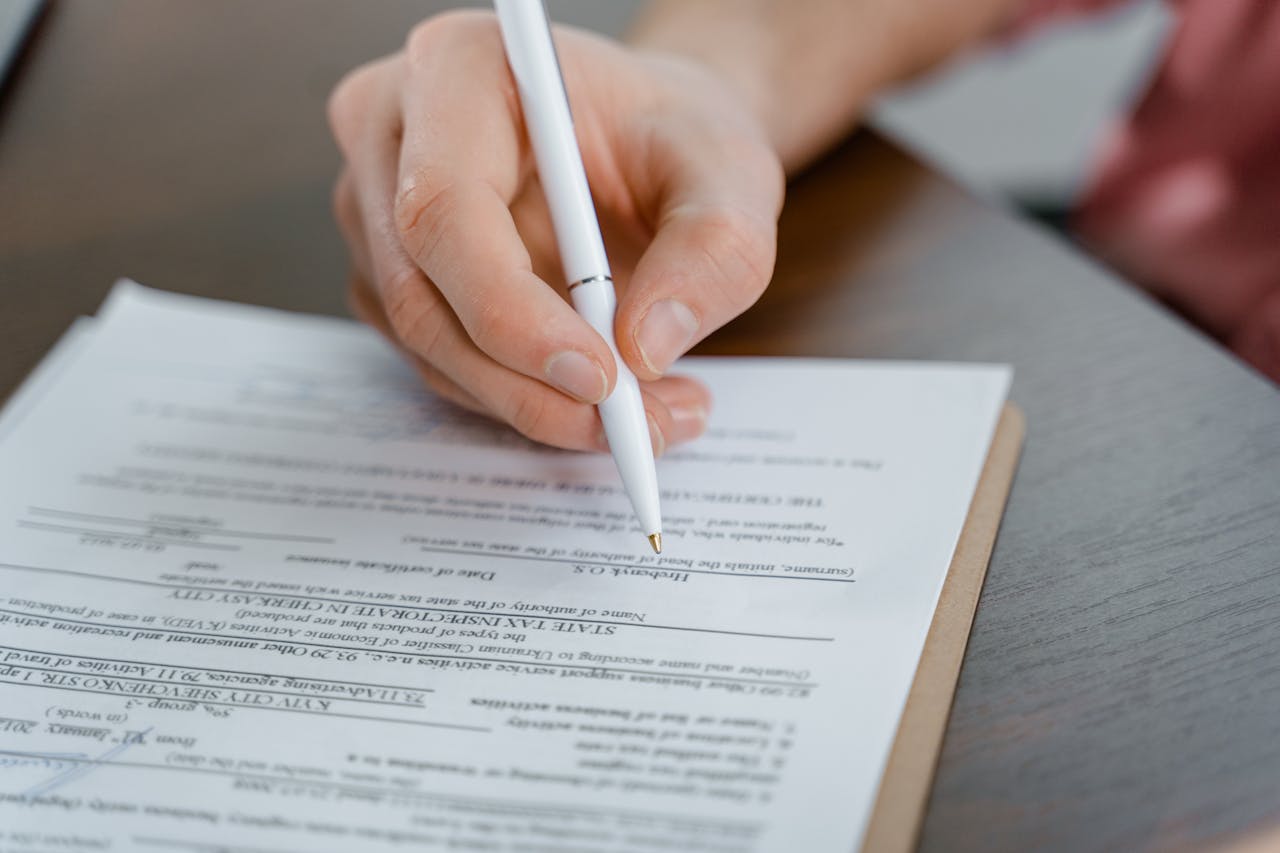
If You’re the Seller
If you sold a vehicle and lost your copy of the bill of sale, your main exposure is a future dispute about the sale price, date, or condition of the vehicle. Georgia sellers can also face liability for traffic violations, tolls, or even accidents if the buyer never transferred the title.
Your first move: check whether the buyer registered the vehicle in their name. You can contact the Georgia DOR Motor Vehicle Division or visit your county tag office to confirm a title transfer was completed. If it was, you’re largely protected. If it wasn’t, that’s a bigger issue — and you may need to file a voluntary title cancellation or consult an attorney.
Even without the original bill of sale, a duplicate can sometimes be reconstructed. More on that below.
If You’re the Buyer
This is where things get more complicated. If you bought a vehicle and lost your bill of sale, you may have trouble at the tag office if questions arise about the transaction — especially if the title paperwork is also incomplete.
For 1986 and newer model year vehicles, Georgia law requires a title for registration. The bill of sale alone won’t get you registered. But it does serve as important supporting documentation if the title process hits a snag.
If you purchased a used car, trailer, boat, ATV, or motorcycle and lost your bill of sale, the first thing to do is contact the seller and ask them to provide a copy of their version — or to sign a new one confirming the original terms. Most sellers will cooperate if you approach it correctly.
If You’re Dealing with Personal Property (No Title Required)
For items like furniture, equipment, tools, firearms, or a mobile home where there’s no separate title, the bill of sale may be the only proof of ownership you have. Losing it in these cases is more serious.
If you can reach the other party and they still have their copy, ask for it. A photocopy is better than nothing. If they’re willing to sign a replacement, even better — make sure it has the original transaction date on it, not today’s date, and note it as a “replacement” document.
How to Reconstruct or Replace a Lost Bill of Sale in Georgia
The good news: there’s no official government process to “replace” a lost bill of sale the way you’d replace a lost title. That cuts both ways — there’s no formal channel, but there’s also no bureaucratic process you have to navigate.
Here’s what actually works:
1. Contact the other party Reach out to the buyer or seller — whoever you transacted with. Ask if they kept a copy. In my experience, one party often has it when the other has lost theirs. A photocopy of a signed original is legally usable in most circumstances.
2. Draft a replacement document If both parties agree on the terms, you can create a new bill of sale with the original transaction date and details. Both parties sign it, and note clearly on the document that it is a replacement for a lost original. This isn’t a forgery — it’s a reconstruction of a legitimate transaction with mutual consent.
For vehicles, use the Georgia DMV bill of sale format, or the official T-7 form from the Georgia Department of Revenue. For general property, a general bill of sale or generic bill of sale template works fine.
3. Gather supporting documentation Even without a bill of sale, other documents can help establish the transaction: bank records showing a payment, text messages or emails referencing the sale, photos of the item taken at time of sale, or a Zelle/Venmo/PayPal transaction record. These won’t replace a bill of sale in every situation, but they support your position if a dispute arises.
4. For vehicle titles: use Form MV-1 If the lost bill of sale is creating problems with a vehicle title, the Georgia DOR’s Form MV-1 (Title/Tag Application) is your tool. Submit it to your county tag office with valid photo ID and the $8 replacement fee. If there’s no lien on the vehicle, a replacement title will be issued in your name. For situations with no documentation at all, Georgia does offer a bonded title process — more complex, but it’s the legal path when there’s no paper trail to work from.
When the County Doesn’t Accept Your Purchase Price
Here’s something that surprises a lot of buyers. Even if you replace a lost bill of sale, your county tag office is not automatically required to accept the sale price for Title Ad Valorem Tax (TAVT) purposes. If the purchase price appears unusually low or the documentation is incomplete, the county may calculate TAVT using the vehicle’s fair market value under Georgia’s valuation procedures instead of the amount you say you paid. That can mean paying substantially more tax than you expected.
I’ve seen this happen after family sales, cash transactions, and deals where the original paperwork disappeared. A reconstructed bill of sale helps, but it is only one piece of evidence. Bank records, cashier’s checks, text messages discussing the agreed price, and dated advertisements for the vehicle can all strengthen your position if the county questions the value.
If you believe the county assessed the vehicle too high for TAVT purposes, ask the tag office about the county’s valuation review or appeal procedure before paying more than necessary. Those reviews are handled locally through the county tag office and tax officials rather than by issuing a new bill of sale. Georgia’s TAVT system is governed under O.C.G.A. § 48-5C-1 et seq. and administered through the Georgia Department of Revenue and county tag offices.
For Specific Vehicle and Property Types
The process above applies broadly, but the stakes and specifics differ by transaction type. A lost bill of sale for a private car sale is different from losing documentation on a gifted vehicle, a vessel, a camper, or a firearm.
Firearms in particular require careful handling. While Georgia doesn’t mandate a bill of sale for private firearm sales, losing that documentation removes your written record that a transfer occurred — which matters if the firearm is later used in a crime or reported stolen. If you’ve lost a firearm bill of sale, reconstruct it with the other party as soon as possible.
For auto sales more broadly, I always recommend using a printable Georgia bill of sale in PDF format that you can save digitally as well as print — that way you always have a backup copy that can’t be physically lost.
The Lesson I Tell Every Client
After years of handling transactions gone wrong — and plenty that went right — I always say the same thing before anyone leaves my office: make two copies, keep one somewhere you’ll actually find it, and photograph the signed document with your phone the day it’s signed.
A photo on your phone isn’t a legal document on its own. But it’s evidence. And in a dispute, evidence matters.
If you don’t have a solid bill of sale template for your next Georgia transaction, don’t guess. Use a simple Georgia bill of sale that captures the basics, or download a blank bill of sale you can customize. You can also browse our full Georgia bill of sale form library or grab a sample bill of sale to see exactly what a completed document looks like.
The two minutes it takes to fill it out properly — and the extra thirty seconds to photograph it — have saved more than a few of my clients from situations a lot worse than Sandra’s.
Dale Preiser is the Assistant Director of Legal Services at the Southern States Police Benevolent Association and a Georgia attorney with years of experience in vehicle transfers, private sales, and legal documentation. He is the voice behind BillOfSaleGeorgia.com.
This article is for informational purposes only and does not constitute legal advice. For guidance specific to your situation, consult a qualified Georgia attorney.